
By Neshamos:
In recent years, our community has become more open about a reality many have long carried quietly: emotional pain is real, and it affects people across all ages and stages of life. While there has been meaningful progress in awareness and professional care, many individuals still feel there is something missing—a space that supports emotional healing in a way that feels accessible, safe, and fully aligned with Torah values.
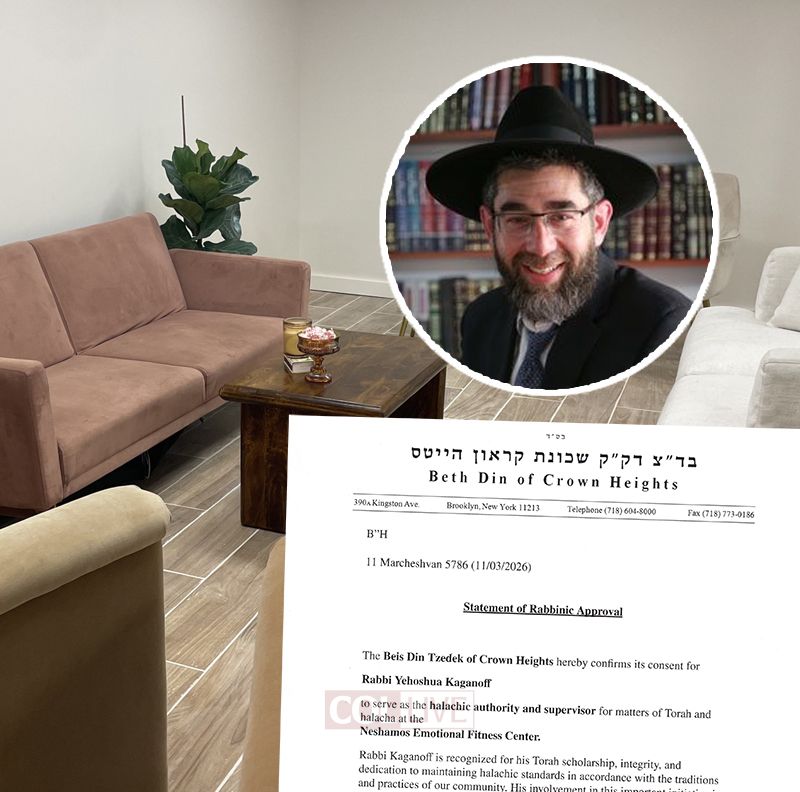
It was with this understanding that Neshamos opened the Emotional Fitness Center, a carefully designed space created to serve the emotional needs of the community with sensitivity, responsibility, and rabbinic guidance.
Making Healing Accessible to the Community
One of the primary reasons Neshamos established the Center was accessibility. Many supportive emotional services are either not covered by insurance or are financially out of reach for individuals and families already under strain. When help feels inaccessible, people often delay or forgo support altogether.
Neshamos believed that emotional healing should be within reach. The Emotional Fitness Center was therefore designed to offer supportive services at an affordable cost, allowing more individuals to seek help with dignity and without added pressure.
Freedom to Address Real Emotional Needs
Traditional, insurance-based systems play an essential role in mental health care, but they can also be limited in scope. Insurance requirements often restrict what types of support can be offered, leaving little room for complementary approaches that focus on emotional processing, self-regulation, and personal growth.
By opening an independent center, Neshamos created the ability to offer additional tools that help people move forward emotionally—without being constrained by what insurance does or does not recognize.
Protecting the Spiritual Sensitivities of the Community
A major concern that motivated the establishment of the Emotional Fitness Center was the rapid growth of healing and wellness spaces in the broader world. Many of these spaces incorporate spiritual philosophies, meditation practices, or belief systems that may be incompatible with Torah values. Often, individuals enter these environments without fully realizing what they are being exposed to.
Neshamos recognized the responsibility to protect members of the community from inadvertently encountering practices that conflict with their beliefs or halachic observance.
For this reason, the Emotional Fitness Center was established with the guidance and oversight of the Badatz of Crown Heights. Every modality, group offering, and practitioner is carefully reviewed to ensure that all services are appropriate for the halachically observant Jew.
A Rigorous Screening Process Guided by Expertise and Halacha
Beyond general oversight, Neshamos applies a rigorous and deliberate evaluation process before any modality or practitioner is introduced into the Center. This evaluation is conducted by an expert with deep knowledge in both healing modalities and halacha, ensuring that professional standards and Torah values are considered together—not in isolation.
Each practitioner is carefully reviewed, including research into their background, training, professionalism, and experience working with individuals in vulnerable emotional states. Attention is given to their awareness of potential emotional or psychological pitfalls, their approach to boundaries, and their sensitivity to the needs of a Torah-observant community.
Each modality is also examined closely—both in its underlying concepts and in the way it is presented in practice. This includes assessing whether the modality has roots in ideas that run contrary to halacha, whether it incorporates language or frameworks that could be spiritually problematic, and whether it can be offered in a manner fully consistent with Torah values.
In addition, consideration is given to whether a modality has a meaningful track record of effectiveness or is a recognized and responsible method, rather than something experimental or unproven. Only offerings that meet these standards are introduced into the Center.
A Range of Thoughtfully Reviewed Modalities and Groups
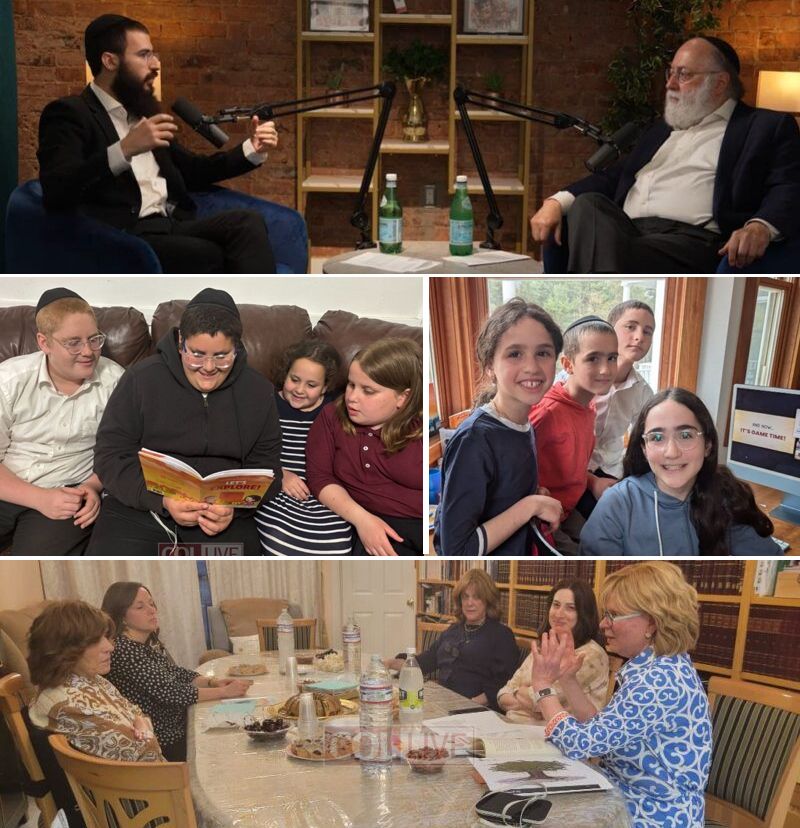
Since opening, the Emotional Fitness Center has already hosted numerous sessions and group supports, serving individuals at different stages of their emotional journey. The Center offers a variety of carefully selected modalities and group experiences, recognizing that emotional healing does not look the same for everyone.
Some individuals find strength and comfort in guided group settings that reduce isolation and foster connection, while others benefit from specific modalities that help them regulate stress, process emotions, or gain clarity. Each offering is introduced thoughtfully and reviewed with care to ensure it aligns with the sensitivities and values of the community.
An Adjunct to Care, Not a Replacement
It is important to emphasize that the Emotional Fitness Center is not intended to replace medical care, therapy, or psychiatric treatment. Rather, it serves as an adjunct—a supportive addition for individuals who may already be in treatment, or for those who feel “stuck” and are seeking additional emotional tools or insight.
The Center is not presented as a necessity for everyone, but as a resource that can be meaningful and helpful for some, at the right time and in the right way.
Looking Ahead—With Care and Guidance
B’ezras Hashem, Neshamos hopes to continue expanding the Emotional Fitness Center, adding additional offerings as needs arise. Any growth will take place under the continued guidance of the Badatz of Crown Heights and strictly within the framework of halacha, ensuring that the Center remains aligned with its founding principles.
A Community Service Rooted in Responsibility and Care
At its core, the Emotional Fitness Center reflects Neshamos’ deep commitment to the emotional well-being of our community. It is a space built with intention—balancing compassion with responsibility, innovation with tradition, and healing with halachic integrity.
By opening a center that is already actively serving the community, and by applying rigorous care in how services are evaluated and offered, Neshamos is providing something deeply needed: a place where emotional healing can be pursued safely, respectfully, and in alignment with our values.
For those carrying silent pain, the message is clear: you are not alone, and help exists—created with care, guidance, and the community’s best interests at heart.




I wish there are some activists out there that can be against this mishagas!
You mean to say that you know better than the רבנים
Just because nosh has a hechsher doesn’t mean it is good for you
and just because an apple doesn’t have a hechsher doesn’t mean it’s not kosher or not good for you. delegating responsibility completely to packaged hechsher is also not a good thing. anyone remember when there was no such thing as hechsherim on most things? And yet generations of chassidim lived….
11th of Marcheshvan 5786 would be 11/02/2025, not 11/03/2026
Look at Hebrew letter
It’s dated יא תשרי תשפו
From this year
the photo
In the subject line, the “which” should have a capital W and a question mark, and in “the photo”, there should also be a capital and a period.
Thanks for adding nothing to the discussion.
Thank you! May Hashem bentch you with continued success!!
You can dress this up in new clothing, even the most tznius clothing but it is still the same chazor. It’s important to remember that this is a ‘profitable business’ masquerading as concerned healer. Sadly those who get caught up in these ‘scams’ are not helped in the long run and even worse, become more distressed when they realize they were fooled. This smacks of “call of the shofar’ just different players with different fancy terms. What happened to us? When did this cult like healing centers become acceptable? Poor Rabbi Hecht, these keep popping up like a virus. He… Read more »
Title says it all
As a frum Lubavitcher who needed – and needs- healing, I want to express my sincere and deep appreciation to the Neshamos Emotional Fitness Center. While talk therapy has helped me, I knew it wasn’t enough. I needed a deeper modality that would really be able to release and heal what my body and subconscious was holding onto. But I was faced with a problem. How could I really know if the other modalities are in line with Torah values? I’ve heard about people who were helped. Truly helped. But the risk of getting involved in something that isn’t Torah… Read more »
I don’t get it, what is a “modality”? is it therapy? Group therapy? meditation? Hypnosis? Why not call it what it is?
What modalities? Are they proven? Peer reviewed? You write its NOT therapy or psychiatrics care, do you make sure your participants are getting REAL care they need?
The Rabbanim will probably look into his work again.
Neshamos.org is actually doing the work of making healing experiences available to the community.
They are doing it properly, responsibly, with and advisory board with a wide array of medical and mental health proffessionals, and under the auspices of the C.H Beis Din.
If someone “knows better” than all the healing professionals, and also all the rabbonim, and also the psychologists, therapists, and doctors, parhaps it may prove valuable for them to do some personal introspection . . . or they could just continue to spout verbal throw up all over themselves if that makes them feel better.
“The Emotional Fitness Center does not replace medical or psychiatric care and is not intended for situations requiring emergency intervention.”
All the people that don’t understand what it is all about – good for you, you are not the target audience.
For those who are struggling, however, those can be very helpful. Are there guarantees? No. Again, someone in the parsha knows that already, and if you are not, these things exists to help the struggling. Much in the same way as you don’t call out a conventional doctor for helping you in exchange for money, as long as it helped, same has to apply here.
however it still must be in accordance in halacha, because otherwise you are not healing but doing the opposite
Even if it’s done with rabbinic supervision is not enough. It must be accompanied with a plan of positive day to day action of how to move fwd.
And,
Also the focus of searching, searching and more searching to find and gather all the negative stuff in order to heal can have the opposite effect of healing.
May Hashem help everyone find a path fwd to heal that is fully in line with the Torah. Otherwise, what you think is healing, can actually c”v hurt you.
Until Moshiach is fully here, and may it be now, we do need to acknowledge that not everyone is going to choose to find healing and growth through learning Torah and Chassidus. We still go to doctors, therapists etc There are Yidden that for whatever reason don’t have a mashpia, and/or are not using Tanya and Maamorim and Sichos… to help them grow emotionally and mentally. So we do as a community need to ensure that there are places and ways for everyone to have a safe space to work on their growth, that is completely in line with the… Read more »
It’s strange people are ok with traditional therapy knowing full well it is heavily based on secular science, but are against alternatives therapies, even when a Rabanim sanction it. There is nothing wrong with learning from techniques found in other places and adapting them to Torah if there is a need for it. It is known the Rebbe encourage kosher forms of meditation to help keep people away from non kosher forms. If people in the community need emotional therapy, for whatever reason, then why not have options for them to choose from, as long it is all with in… Read more »
…
Please be more concise and to the point
One person writes an ad-style op-ed, and another says their product is trief, and a third comes up with a ‘kosher’ version. This takes away business from the first, who also seems to be an ehrlicher yid.
He’s the guy who’s approved
Since when do we need hechsheirim on health?
It’s the person giving the breathwork, did they learn it through the lens of Buddhism? Or through a pareve lense? Or a kosher lense. Meditation is. Not necessarily kosher, it can be kosher. Yoga is not necessarily kosher, without its origins it can be kosher. So it’s not the practice , it’s the facilitator. And that is why each person is vetted.
Rabbi Hecht said breathwork is assur. This place says it’s kosher. What makes one kosher and one not.
Not everyone lives in Crown Heights. How does know how to judge which is halachically acceptable?
Neshamos has the explicit approval — in writing — of the Beis Din of C.H. who appointed a specialized expert posek to oversee it.
Shea Hecht is rambling his insecurities all over the public.
Which would you trust?
Rabbi Hecht is not a Rov, Rabbi kaganoff is.
obnoxious thing to say!!!!!!!!!!!!!!!!!!
God bless Rabbi Hecht!!!!!!!!!!!!!!!!!
Rabba Kaganoff of course
The letter says nothing about breath work
Is the name Kahanov or Kaganoff??
I’m sure the Rabonim didn’t write this letter. Someone wrote it for them and asked them to sign.
I don’t believe they are endorsing any specific technique used..
Breathwork was not endorsed. Rabbi Kaganoff was hired by the crown heights rabbanim to interview each facilitator and see wether his specific approach is kosher. so far some breathwork was given a hechsher, others not…
Before doing anything that may be halachically questionable, speak to a Rav that knows the person, family or situation. This is why the Rebbe wanted everyone to have a rav. I personally don’t ascribe to most of what is considered “alternative”. I think that there are psychiatric illnesses that need expert intervention and possibly these doctors should weigh in about Breathwork or other alternatives on an individual basis. I am not sure that Breathwork therapists are qualified to recognize when the person needs psychiatric care by an MD. This question needs to be answered; how often does a Breathwork therapist… Read more »
First of all the headline is misleading.
The Badatz did not endorse breath-work. All the old letter says that this rabbi is okay
To give rabbinic guidance for this organization. That’s all this old letter says.
In addition it’s interesting that we can rely on a Megulach rov for this but can’t rely on chasidishe dayonim and rabonim of large frum communities to give a Hechsher on the “Brooklyn” eruv?
I am not referring to CH eruv.
he is a mashgiach not a rav
No, he’s a rav
I am a healthcare provider and have been involved with breath work and other therapies. The major issue is too many untrained and unlicensed people are trying to make money and gain spiritual influence doing these things. I have an nyc license, I spent years in school, I have malpractice insurance. What do these guys have to keep them straight? Shea Hecht may be too extreme but no offense the rabbonim who signed have no knowledge of these things. The best would be to train licensed medical professionals in crown heights to do modalities like breath work. Halacha requires licensing.… Read more »
ved the Torah, people wouldn’t have the problems they now have!!!!!!!!!!!!!