
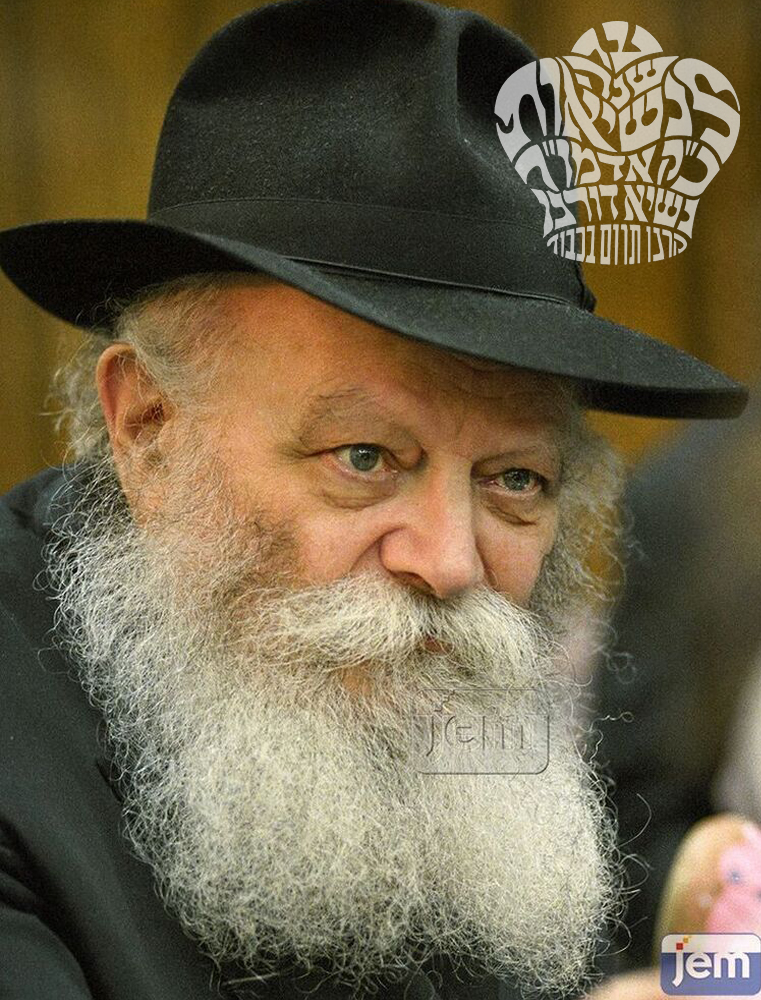
Tonight, Yud Shevat (the tenth of the Hebrew month of Shevat) marks the 76th anniversary of the passing of the Previous Lubavitcher Rebbe, Rabbi Yosef Yitzchak Schneersohn.
For Chassidim today, however, the primary significance of Yud Shevat is that it is the day on which the Rebbe accepted the reins of the leadership of the Chabad-Lubavitch movement.
CUSTOMS FOR YUD SHVAT:
In a letter from Rosh Chodesh Shvat, 5711, the Rebbe lists customs for Chassidim on Yud Shvat (Translated by Sichos In English).
* The congregation should choose someone to lead the prayers on the day of the yahrzeit. It is proper to divide [the honor, choosing] one person to lead Maariv, a second to lead Shacharis, and a third — Minchah. In this way a greater number of Anash will have the privilege.
* A [yahrzeit] candle should be lit that will burn throughout the twenty-four hours. If possible, the candle should be of beeswax.
* Five candles should burn during the prayer services.
* After each prayer service (and in the morning, [this means] after the reading of Tehillim), the sheliach tzibbur should study (or at least conclude the study of) chapter 24 of Mishnayos Keilim and chapter 7 of Mishnayos Mikvaos. He should then recite the mishnah beginning “Rabbi Chananyah ben Akashyah…,” followed silently by a few lines of Tanya, and Kaddish deRabbanan.
* After Maariv, part of the maamar (Basi LeGani) that was released for the day of the demise should be recited from memory. If there is no one to do this from memory, it should be studied from the text. This should also be done after Shacharis, and the maamar should be concluded after Minchah.
* Before Shacharis, a chapter of Tanya should be studied. This should also be done after Minchah.
* In the morning, before prayer, charity should be given to those institutions that are related to our Nassi, my revered father-in-law, of sainted memory. Donations should be made on behalf of oneself and on behalf of each member of one’s family. The same should be done before Minchah.
* After Shacharis and the recitation of the maamar, each individual should read a pidyon nefesh. (It goes without saying that a gartl is worn during the reading.) Those who had the privilege of entering [the saintly Rebbe’s study] for yechidus, or at least of seeing his face, should — while reading the pidyon nefesh — picture themselves as standing before him. The pidyon nefesh should then be placed between the pages of a maamar or kuntreis, etc., of his teachings, and sent, if possible on the same day, to be read at his graveside.
* In the course of the day one should study chapters of Mishnayos that begin with the letters of his name.
Click here to learn Mishnayos in Hebrew/English or download Mishnayos by Yagdil Torah.
Audio Mishnayos by Rabbi Mendy Yusevitz click here
* In the course of the day one should participate in a farbrengen.
* In the course of the day one should set aside a time during which to tell one’s family about the saintly Rebbe, and about the spiritual tasks at which he toiled throughout all the days of his life.
* In the course of the day, people (to whom this task is appropriate) should visit synagogues and houses of study in their cities and cite a statement or an adage drawn from the teachings of the saintly Rebbe. They should explain how he loved every Jew. [Furthermore,] they should make known and explain the practice that he instituted of reciting Tehillim every day, studying the daily portion of Chumash with the commentary of Rashi, and, where appropriate, studying the Tanya as he divided it into daily readings throughout the year. If possible this should all be done in the course of a farbrengen.
* In the course of the day, people (who are fit for the task) should visit centers of observant youth — and, in a neighborly spirit, should make every endeavor to also visit centers for the young people who are not yet observant — in order to explain to them the warm love that the saintly Rebbe constantly had for them. It should be explained to these people what he expected of them; they should be told of the hope and the trust that he placed in them — that they would ultimately fulfill their task of strengthening the observance of Judaism and disseminating the study of Torah with all the energy, warmth and vitality that characterize youth.
* If prevailing conditions allow, all the above should of course be continued during the days following the yahrzeit, and particularly on the following Shabbos.
May G-d hasten the coming of our Redeemer, and then “those who lie in the dust will awaken and sing joyful praises.” And our Nassi among them will give us wondrous tidings, and lead us along the path that leads up to the House of G-d.
[Signed:] Menachem Mendel Schneerson
——
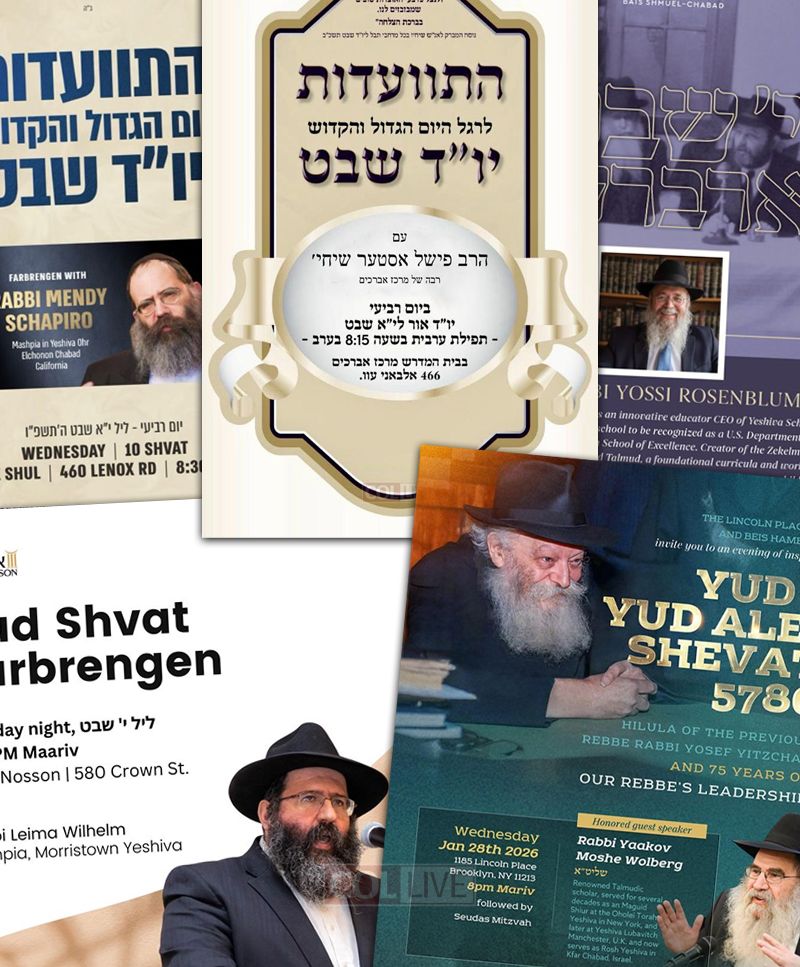
JOIN A YUD SHEVAT FARBRENGEN
See flyers and information here.
LIVE ONLINE FARBRENGENS:
NCFJE Yud Shevat Zoom Farbrengen
8:30 PM ET:
Yud Shevat Farbrengen with Rabbi Leibel Schapiro, Rosh Yeshiva of Yeshiva Gedola of Miami and the Rebbe’s chozer and Rabbi Yitzchak Schochet, world-renowned speaker and Rabbi of Mill Hill Synagogue in London.
——
Farbrengen with Rabbi Yosef Greenberg, from Houston, TX
Live at 9:15 PM ET
Click here to watch live
——
N’Shei Chabad Yud Shvat Online Farbrengen
Live at 8:30 PM ET
STUDY BASI LEGANI
Study this year’s Basi Legani in-depth with Rabbi YY Jacobson.
———
RESOURCES
Visit YudShevat.org for a collection of resources for learning related to Yud Shevat compiled by Vaad Or Vechom Hahiskashrus
Visit Basilgani.com for over 72 resources in Hebrew, English, Yiddish to learn Basi LGani of 5746, 5726, 5711, 5710.
Resources from the Rebbe: Audio, video, text, as well as many Shiurim in audio, video
770 Yeshiva’s dedicated Yud Shevat website BasiLegani770.com
————
DOWNLOAD:
Yagdil Torah Publication containing the full Mishnayos for the Frierdiker Rebbe, along with a specially selected portion of the Frierdiker Rebbe’s Torah. Click here.
Yad Menachem publication Umedayeik BaMaamar, a publication of Basi Legani 5726 in the Rebbe’s original Yiddish wording. Click here.
Download this year’s Basi Legani booklet from Lahak
Resources from JEM
JEM’s Yud Shevat mini-site brings together short films, special moments, and featured farbrengens — all in one destination.
Experience this year’s Basi L’Gani maamorim directly from the Rebbe, with enhanced audio and English or Hebrew subtitles.
JEM.tv/basi-legani
JEM’s growing WhatsApp channel is marking Yud Shevat with a special weeklong series titled “Making This World a Garden.”
Click here to join:
https://bit.ly/JEMWhatsAppEnglish
Click here to see previous posts in this series:
https://whatsapp.com/channel/0029Va4gM5N5kg7CWVf2b50o/347


Bs’d FYI: That crown was designed by Rabbi Yisroel Teitelbaum in the early 70’s, while working for Chabad in California.