Heavenly Force
“On the way, you will do all your ‘calculations.’ Then you will throw them into the sea, along with all your negative thoughts and concerns, and when you arrive there, you will start afresh all over again!”
The Rebbe
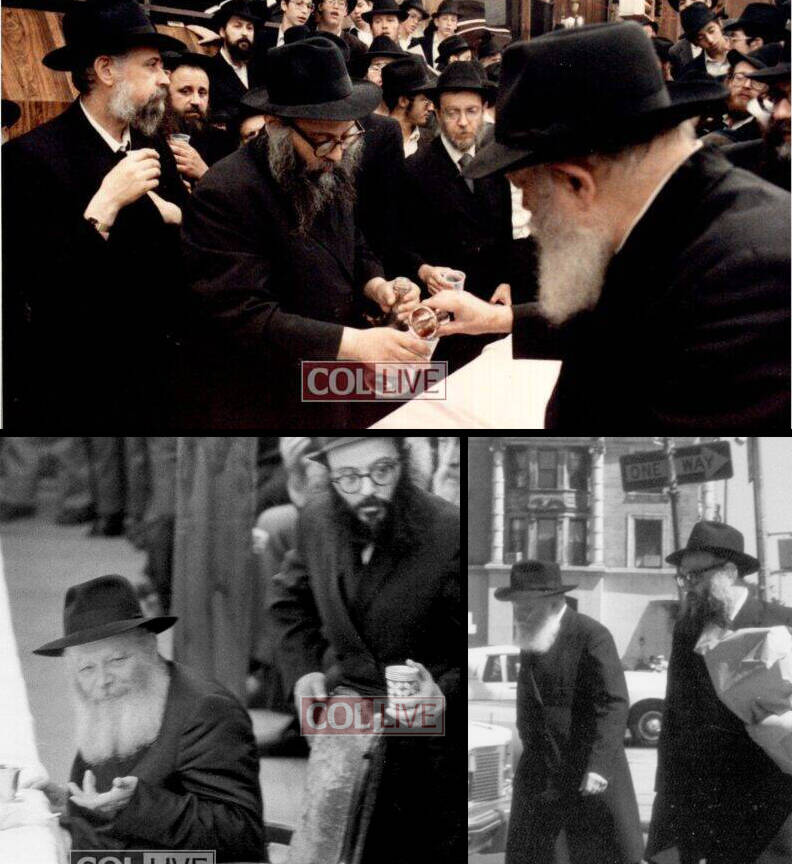
This Sunday marked Yud-Alef (11) Nissan, the 118th birthday of the Lubavitcher Rebbe Menachem Mendel Schneerson. Born in Ukraine, the Rebbe escaped the clutches of Nazi and Communist Europe to help rebuild a Chassidic legacy on American soil and found countless Chabad Houses around the world. Every year, before Passover (until this year’s tragic outbreak of coronavirus), a parade of “mitzvah tanks” would roll down the streets of New York, paying homage to their leader who redefined Jewish outreach, while countless boxes of matzah were distributed to Jewish families and individuals. The Avner Institute presents warm anecdotes from various soldiers of “The Rebbe’s Army” – Chabad emissaries and employees who recall the Rebbe’s amazing vision, wisdom, and compassion.
Four Questions
When it came to greeting special visitors, the Rebbe broke tradition.
Rabbi Mordechai Shmuel Ashkenazi, Chief Rabbi of Kfar Chabad, once related:
It was Passover, 5732 (1972). The Rebbe farbrenged on the first days of the holiday — something out of the ordinary, given the conflicts involving Seders. Usually the Rebbe saved this activity for Moshiach Seudah, the last meal on the eighth day.
That year, however, he had special visitors: Reb Berke Schiff and his family, who had immigrated from Russia a short time earlier, after much hardship, and settled in the Holy Land. Therefore, the Rebbe decided to pay special honor.
At that farbrengen, the Rebbe asked those children to recite the Four Questions, the famous opening lines of the Haggadah.
I remember when they started saying, “Tatte (Father)… I want to ask you,” tears rolled down from the Rebbe’s holy eyes.
Lost Shoe
The Rebbe never forgot the cries of a child – or the craziest of incidents.
Rabbi Yitzhak Raskin, born into Chabad emissary family from Morocco, once related:
I came to the Rebbe for Tishrei 5727 (1966). As a child from Morocco, I was not accustomed to the lively and crowded atmosphere in 770, and at the pre-Simchat Torah farbrengen, I found myself separated from my father. The Chassidim “transferred” me atop their heads until I “body-surfed” over to him.
During the ordeal, my shoe loosened and fell off. I burst into tears, which caught the Rebbe’s attention. He stopped and looked towards me. I didn’t find the shoe, but the crying subsided.
A few days later my family had yechidus, private audience, with the Rebbe. As soon as we entered, the Rebbe turned to me and asked: “Did you find your shoe?”
Above & Beyond
An Chabad emissary’s work is never done, as the Rebbe stressed.
Rabbi Yitzchak Cogan once related:
My wife, peace be with her, was by nature very modest, quiet, and shy. But at the end of our first, lengthy private audience with the Rebbe, she was so overwhelmed that she could not hold herself back.
The Rebbe had been assigning to us a series of tasks to prepare us for our emissary work. At the end of a considerable list, my wife tearfully blurted, “Rebbe, we will do everything we can!”
To which the Rebbe immediately replied: “A Chassid does more than he can!”
Mental Calculations
Traveling means time spent wisely.
Rabbi Yitzchak Dovid Groner once related:
I had just ended my first visit to the Rebbe after becoming head shliach, emissary, of Australia. As the time to return home approached, I entered the Rebbe’s room to receive a final blessing.
The Rebbe asked, “What do you plan to do during the long voyage?” These were the days before easy air travel, so he knew that this young shliach would be on a ship.
I remained wordless, and the Rebbe continued:
“On the way, you will do all your ‘calculations.’ Then you will throw them into the sea, along with all your negative thoughts and concerns, and when you arrive there, you will start afresh all over again!”
Act of Mercy
Sometimes, life’s problems can prove overwhelming to even the holiest of people.
The Rebbe’s secretary, Rabbi Yehuda Leib Groner — (May the Al-mighty grant him a speedy recovery: Yehuda Leib ben Menucha Rochel) once related:
There was a Chassid by the name of Yitzchak Goldin, who was very close to the Rebbe’s father-in-law and predecessor the Sixth Rebbe — Yosef Yitzchak Schneersohn (Rebbe Rayatz) — back in Russia. Upon Reb Goldin’s initial arrival to the U.S., immediately following the current Rebbe accepted the mantle of leadership, the latter instructed the secretaries that at seven p.m. this Chassid be granted private audience without waiting in line.
The Rebbe stated, “Yitzchak Goldin is something else.” Apparently he was like a member of the Rebbe’s household.
After a half hour with the Rebbe, the Chassid emerged from the office, stood by the wall, and wept.
I asked him: “Reb Yitzchak, why are you crying? You just came out from yechidus with the Rebbe. You should be happy!”
Then I added, “Go inside 770 and farbreng with the Chassidim.”
R. Yitzchak raised his tear-streaked face and replied:
“I was now with the Rebbe. The Rebbe told me that it is known by Chassidim that ‘you should not have mercy on the Rebbe.’”
I understood. This meant that when there was an issue one normally avoided disclosing to a family member in order not to sadden him or her, to the Rebbe one makes that exception. The issue must be disclosed, even it causes the Rebbe the greatest pain, since the Rebbe can contain everything.
I asked, “So why are you crying?”
Rabbi Yitzchak answered, “Because the Rebbe went on to say, ‘But we saw otherwise. Had we had mercy on my father-in-law, the Rebbe Rayatz would still be with us.’”
Eye-Opener
While new roles may be challenging, some require a tremendous leap from the comfort zone, and a willingness to accept other’s views.
Rabbi Yosef Wineberg, who served as one of Chabad’s emissaries and chief fundraisers, once related:
In the period immediately following the passing of the Sixth (Previous) Rebbe, I visited the Holy Land. Upon returning, I met with our current Rebbe, who was still debating whether to take on the mantle of Chabad’s leadership. I related to the Rebbe the fervent request of the Chassidim in the Holy Land – that the Rebbe do accept the mantle.
The Rebbe’s face became serious. “But I need to receive instructions,” he argued, meaning from the Previous Rebbe, the Rebbe Rayatz.
At that moment, I mustered my courage and told the Rebbe a story:
“At the Tomchei Temimim (Lubavitcher) yeshiva in Warsaw, there was a teacher named Rabbi David Teitelbaum, a Kotzker Chassid and truly G-d-fearing individual known for his righteousness. After the passing of the Kotzker Rebbe, the Chassidim turned to Reb David and asked him to become their new Rebbe.
“At first, Reb David refused, but as the pressure mounted, he decided to consult the Rebbe Rayatz.
“When he entered the Rebbe Rayatz’s office for a private audience, the Rebbe instructed him, ‘Sit,’ motioning to a chair.
“But Reb David refused, explaining that he never sat during a private audience.
“The Rebbe Rayatz insisted, ‘I will not hear you until you sit down.’
“Reb David sat, then explained his personal dilemma.
“The Rebbe Rayatz answered, ‘If Jews are clinging to you, that is proof that you have special powers.’”
The current Rebbe listened to this story intently. Then he asked, “Is that all my father-in-law said?”
Immediately I understood that nothing can be concealed from the Rebbe’s eyes. At that instance the Rebbe knew the rest of his father-in-law’s words:
“But in order to discover these powers, the eyes need to go out of their sockets.”
To receive this to your inbox, email [email protected]