
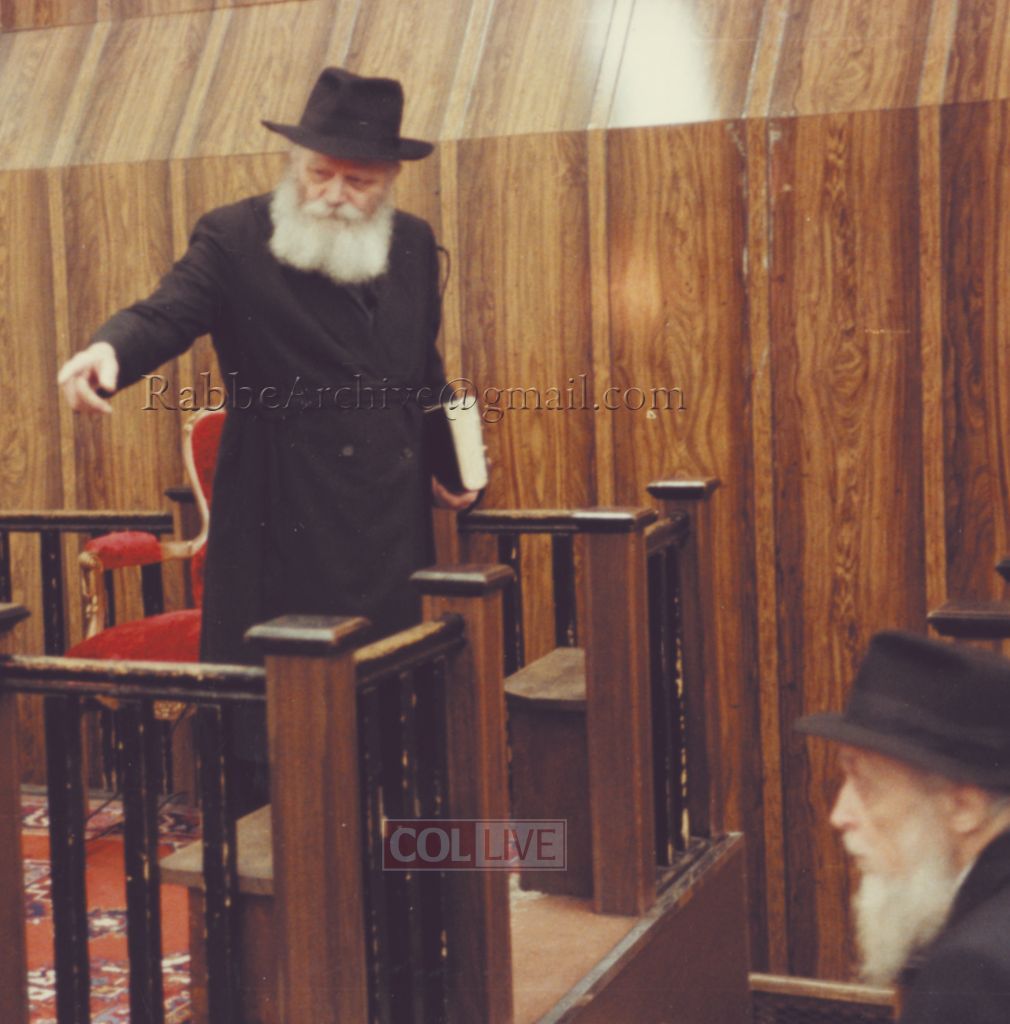
As the New Year approaches, we know that fate rests in Divine hands. Nevertheless, the welfare of a leader, let alone his very life, may depend not only on the help of Heaven but of his followers, who may in this matter resort to all means necessary. The Avner Institute presents a series of letters centering around the rescue and liberation of the Previous Lubavitcher Rebbe from Soviet prison – the tense communications between American rabbis and foreign individuals, the calculated sums necessary, and the fervent prayers for a successful outcome.
In loving memory of Hadassah Lebovic A”h
“Are we in any way responsible?”
After his release from prison on Yud Bais Tamuz 5687 (July 12, 1927), the Previous (Frierdike) Lubavitcher Rebbe, Rabbi Joseph Isaac Schneersohn, also known as the Rebbe Rayatz, found himself in imminent danger. As head of Judaism in Soviet Russia, he had financed many clandestine activities, from Jewish schools to ritual baths and kosher slaughterers. The regime, which had just released him, was now looking for a reason to arrest him again. Securing his exit from the USSR with his family and library was of utmost importance.
Was the American Joint Distribution Committee (JDC) partially responsible for the Rebbe Rayatz’s arrest? We include here some communication between the heads of the JDC regarding this issue, as well as a record of a meeting of the heads of Chabad leaders in the USA with the JDC. These fascinating documents are part of the JDC Archives (which were digitized and uploaded online, thanks to a grant from Dr. Georgette Bennett and Dr. Leonard Polonsky CBE).
mye
Make Every Effort
In a cable sent by Dr. Bernard Kahn (director of the JDC in Europe) to the JDC offices in New York, given to Dr. Joseph Rosen (director of the JDC operations in Russia) on August 23, 1927 [25 Av 5687], Dr. Kahn writes:
Orthodox groups are still much worried about Lubavitcher Rebbe. They urge you to make every effort that permission be given to Rebbe Schneerson to leave Russia with family and library. Please write.
The following day, August 24, 1927 [26 Av 5687], Mr. Joseph C. Hyman (JDC New York) wrote a “Memorandum” to the JDC officers, quoting the response from Dr. Rosen (who was in New York at the time):
With reference to the cablegram which came yesterday from Dr. Kahn to Dr. Rosen, in which Dr. Kahn advises that the Orthodox group urge Dr. Rosen to make every effort to secure permission for Rabbi Schneersohn to leave Russia with his family and library, I communicated this message to Dr. Rosen. I have this word from him today:
“Dear Mr. Hyman:
I am not going to do anything about this matter now. Please advise Dr. Kahn that when I return to Moscow, I will see what the situation is, and if I find it possible, I will do whatever I can. I am writing Dr. Kahn a personal letter on this subject.”
Pressure from Riga
Three weeks passed, and nothing happened. Therefore, Rabbi Dr. Meir Hildesheimer, leader of the Orthodox Community in Berlin and director of the local Beis Midrash L’Rabonim, sent a telegram to Dr. Rosen (who was still in New York), dated September 16, 1927 [19 Elul 5687]:
Rabbi Schnersohn, who is now in Moscow, is still in danger. Therefore, the rabbi of Riga deems it necessary to influence the Russian government to liberate the [Rebbe] and his entire family, consisting of eight persons, as well as his library. We are sending a commissioner to Moscow and beseech you likewise to cable to Moscow. Cable us if and to whom and what you have cabled.
The same day, Dr. Rosen responded, reiterating his commitment to help when back in Russia and advising Rabbi Hildesheimer to contact Mr. Pyotr G. Smidovitch, a Russian politician who was very friendly with Dr. Rosen:
I think it [is] inadvisable for me [to] cable Moscow [in] connection [with the] Schneersohn matter. [I] would advise your delegates to take this up [with] Smidovitch. I expect [to] be [in Moscow [in] November, and when there, will help as much as possible.
Meeting with JDC
In a long letter dated September 16, 1927 [19 Elul 5687] and addressed to Dr. Cyrus Adler (Philadelphia), Mr. Joseph C. Hyman (JDC New York) discussed a meeting he had with Rabbis Chaim Schneur Zalman Kramer and Menachem Mendel Lokshin, leaders of Agudas Chassidei Chabad (Aguch) in the USA, in regards to securing the Rebbe Rayatz’s release from Russia with his library and ensuring the financial viability of Judaism in Russia:
A Mr. H.S. Kramer of Brooklyn, New York, telephoned me, asking for an interview for Rabbi Lokshin and himself to discuss the situation of the Lubavitcher Rebbe and the needs of the Rabbinical budget for Russia.
I made clear to Mr. Kramer over the telephone (and I happen to know Mr. Kramer personally) the general financial situation of the Joint Distribution Committee and our difficulty in arriving at any budget or making any new commitments at this time.
With respect to Rabbi Schneersohn, I told Mr. Kramer that I knew that Dr. Rosen, who had already met Rabbi Lokshin and discussed the situation with him, had done everything that he personally could to assure the liberation of Rabbi Schneersohn. Mr. Kramer asked, however, that he be permitted to come here and discuss the whole situation in full, and Rabbi Lokshin and he met me yesterday.
I went over the same ground with them. Rabbi Lokshin’s plea was threefold: first, that we do whatever might be possible to assure Rabbi Schneersohn’s freedom of movement from Russia to Latvia. He had assurances, he stated, that the Latvian Government was ready to offer Rabbi Schneersohn asylum. He was not certain, however, that there were not a number of difficulties still to be overcome with respect to getting Rabbi Schneersohn out of Russia. I was able to point out to Rabbi Lokshin and his associate that the Jewish Telegraphic Agency was in receipt of a message from its Riga correspondent that the Latvian Government had agreed to permit Rabbi Schneersohn entry, and that the Soviet officials had likewise sanctioned his departure.
Since I dictated this letter to you last night, we received a message from Rabbi Hildesheimer of Berlin addressed to Dr. Rosen in which Rabbi Hildesheimer again expresses a fear that Rabbi Schneersohn is still in danger, and he urges Rosen to cable Moscow. I took this up directly with Dr. Rosen, who asked me to cable Dr. Hildesheimer that he would regard it as inadvisable to cable Moscow from here about the Schneersohn matter, but that when he returned to Russia (and he expected to be there in November), he would do as much as possible to help. In the meantime, he suggested that Rabbi Hildesheimer and the delegation ought to approach Mr. Smidovitch.
The second thing Rabbi Lokshin wished to take up with me was the matter of securing approximately ten thousand dollars, which he stated would be necessary in order for Rabbi Schneersohn to take with him his immense library of Hebrew, religious, and theological books and manuscripts. The third matter was a request that the Joint Distribution Committee make a further substantial provision for the budget of the Rabbinical Committee in Russia.
As to the two latter matters, I again referred to our present situation — the fact that we had made no budgets for any activities in Eastern Europe or elsewhere (with the exception of the agricultural work in Russia) for next year. I pointed out likewise that in the minds of certain members of the Committee, there was considerable doubt whether the Joint Distribution Committee, even if it had the means at this time, could legitimately make an appropriation for the purpose of enabling Rabbi Schneersohn to leave Russia and to take his library with him.
I stated that I personally recognized the particular esteem and respect accorded Rabbi Schneersohn. I said that I also knew that a number of members of our Committee might be expected to be sympathetic to a plea for the preservation of this undoubtedly great collection of writings and manuscripts. I could not, however, hold out any hope or give the gentlemen any assurance on this score or with respect to the Rabbinical Committee budget for next year.
Rabbi Teitelbaum had promised Mr. Kramer and Rabbi Lokshin that he would personally present their plea at the next meeting of the Cultural Committee, and I would undertake likewise to present to the Committee a memorandum concerning our present interview and discussion.
Rabbi Lokshin ventured the hope that, prior to the meeting of the Cultural Committee, you could find it possible to grant him a brief interview. I take it that he will write to you asking you to give him a few minutes of your time at your convenience next week.
May I add personally, although I made no commitment to the gentlemen, I would regard it as quite within the scope and function of the Cultural Committee, if it had the means, to make a modest subvention toward the preservation of Rabbi Schneersohn’s library.
Somewhat Responsible?
Three days later, on September 19, 1927 [22 Elul 5687] Dr. Adler responded to Mr. Hyman and entertained the idea that perhaps the JDC shared some responsibility for the arrest of the Previous Rebbe:
I have your letter of September 16th about Rabbi Lokshin. I have read it carefully. I had written to Rabbi Lokshin some weeks ago – when he wanted to see me at once with a Committee of Rabbis – that if it was about JDC matters, he could present them to you. Today I received another letter from him, and I have written to him that I could see him at the Seminary on Wednesday . . . .
Since dictating a letter to you this morning about the Schneersohn matter, this aspect of the subject has occurred to me: Are we in any way responsible for Rabbi Schneersohn’s difficulties, due to the fact that he handled money he received from us indirectly? And if so, does this not rather put a different aspect upon the matter? You need not write me a letter about this, but just think it over, and if you want to talk to me, you can reach me on the telephone at the Seminary on Wednesday, at 12 o’clock or afterwards.
To receive to your inbox email: [email protected]