

The Extent of Tznius Rules
Rabbi Nachman Wilhelm of Online Smicha reviews some unknown topics that many are not aware of in the laws of tznius. Video
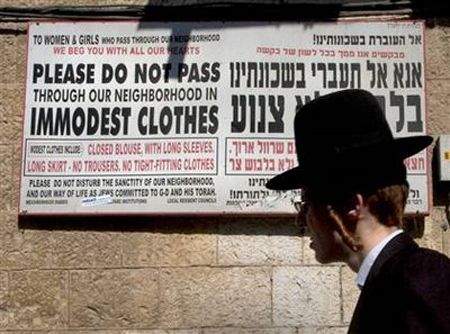
Rabbi Nachman Wilhelm of Online Smicha reviews some unknown topics that many are not aware of in the laws of tznius. Video


Surly halacha says that you are not allowed to send regards to any woman – for such a thing creates a improper closeness. But generally asking how are you or how is she should be ok. I asked a posek once about the halacha concerning not saying good morning or even Sholom Aleichem to someone before davening – to which he responded was alright because it’s not today what it used to mean -that it enveloped into a whole nostalgic conversation. Today it’s just a simple greeting so to speak.
Very interesting. I would like to hear Halachos in regards to controversial situations in Israel. Women on buses, and how the sages want us to act when someone is dressed innapropriately. I often get asked such questions.
he clearly said when you write a letter you should not mention a woman for her first name..what does that have to do saying hello to someone in the street? because he also said definitely a heter when it is l’shem shamayim to say hello to a woman the street..with all of the enormous confusion and pressure everyone feels these days everything we all do is l’shem shamayim.. (PS never forget shimshon stock! The man the Rebbe called the ‘gabbi of 770! 🙂 )
A cursory understanding of halochoh would answer your supposition.
According to halochoh certain prerequisites must be met, for example, for korbanos to be brought. Since these prerequisites have not been met, we do not bring korbanos.
The truth is, people are working to reinstate the korban Pesach today (the other korbanos require taharah, which we apparently don’t have yet.
In conclusion, you are incorrect.
Halochoh did not change in these instances, it is being fulfilled as we were taught, even in things which we do not fulfil today like we used to.
peoples reaction to hearing the truth… now that is scary! People are too familier these days, even 3 year olds calling seniors by their first name, daughters-in-law calling their mother-in-law by her first name? Where there is no derech eretz, there can be no Torah. Thank you Rabbi Wilhelm! Maybe if we all take your words to heart the sorry state of our youth will take a sharp turn for the better. Amen, Selah.
THATS AMAZING
Rabbi Wilhelm has given us the opportunity to be more aware
of how our language and behavior can rectify a huge problem
occuring in many marriages today, especially in the country.
In the book 9-5 it also reiterates that an employer should not
call his female employee by her first name, but rather call
her Mrs. Schwartz or Miss Gross etc. Lets be proatvie and
do as Halacha states. Thank you Rabbi Wilhelm!
“The Beis Hamikdash was destroyed because yiden weren’t noheg lifnim mishuras hadin” (bava metzia end of ailu metziyus)
No halachah doesn’t change!
The same halachah which tells u to bring a korban pesach also tells u when not to.
Halacha Doesn’t Change,,???????
What about Chadash,,,When was the last time your braught a Korban Paisach? , and many others,,,
Your right Halacha doesn’t change it EVOLVES…
Loh am Haaretz Chasid…
But that is the halacha – you dont need a reason. It may not be a good idea, but that’s not what halachah is about. And secondly, the problem with the Karaism isn’t that they followed shulchan aruch to the letter of the law – then they would be called regular frum yidden; their problem is they DIDN’T follow halachah – only the Torah Shebichsav.
Be very careful before calling someone an am haaretz . Especially when they are correct – and you aren’t.
Based on your opinion (taking the word of the law as if, like the Karaism would do):
You can divorce your wife if she burnt a slice of pizza (according to Beis Hillel) or if you found a prettier woman (R’ Akiva) –Gittin 90a
Or as our Sages said, לא עם הארץ – חסיד. Learn and understand,
I am surprised that people think this is extreme-I grew up this way,in modern days,in usa.My father either said’antshuldikt” or Mrs.——.Even if we were close neighbours and friends.Family members were very close but there was always a formality and no chaver-lap kind of chitchat.its time to remeber who we are,where we come from and where we need to go.thank you Rabbi Wilhelm for your brave words
I’m not sure if you are aware that there a marked difference to the salutation that the rebbe uses in letters to women. It begins with ‘bracha usholom’ instead of the regular ‘sholom ubracha’. – not to ask in ‘shlom isha’…. Mekarvan l’torah! Means we bring people closer to torah and not chas vesholom the opposite. We don’t change torah – and halacha is torah- to fit people chas vesholom. rabbanim do pasken halacha based on all the details provided in a specific situation, but halacha isn’t brought down chas vesholom! Looking at some of the crazy stories out there,… Read more »
How don’t you see how caught up in your hetairim that even when one reads the halacha straight out the text, and still u try find a way to twist it
Ein hochi nami, Halacha doesn’t change. But it’s still advisable to bear in mind that the way one applies it, particularly if they are an authoritative figure, should be with the savvy befitting the fifth chelek of shulchan aruch.
My computer blocks these videos. Can COL please print out what the main points of the video are?
Thank you, Rabbi Wilhelm, for reminding us of these important halachos, and for giving them over in such a clear, kind and non-mussar-y way. Speaking as a woman who’s spent awhile on the planet and seen a thing or two, in the frum world and in the not- frum world, these halachos are so true and so vital. If someone needs clarification, let them speak to a Rav. If someone needs to know menschliche and non-nerdy ways to interact in the world while keeping these halachos, let them ask a Rav or “farbreng” with friends about it.
Shulchan Aruch does not change period. with your logic you may as well join shlomo carlebach or the reform movement.
Interesting, if you look close to all the ltters the rebbe sents, the rebbe always wrote “brocho vesholom” to woman in the beginning of the letter and to men the rebbe wrote “Sholom Ubrocho” at the beginning of the letter.
By writing Brocho vesholo, it makes it a blessing and not just hello.
Just pointing this out.
Wow! Aleph Bais in Yiddishkeit became “Gutz”.
It’s the same shulchan oruch that gives us hilchos Shabbos – kashers and all 613 mitzvos.
I guess we tend to pick and choose.
Thank You Rabbi
Dear Rabbi Wilhelm and comment #2:
We are told that the Torah has 70 ‘sides’ (ponim) and that these and these are Hashem’s (Eiruvin 13b).
Anyone can open a sefer and quote an halacha to his advantage. The greatness of a posek (one that also knows the “5th shulchan aruch”) is how to properly adapt halacha to the people.
It would be advisable to consult an actual posek before quoting from seforim and not offering an interpretation.
Like with history, the lessons we learn are the only ones we want to take.
To # 1
For once someone has the guts to stand up and quote from thesholchon oruch what’s right and what’s wrong, why stop him
This is a big problem, and in halacha it says “meod meod ” tzorich lehisrachak mahem
Yasher koach Rabbi Wilhelm, as always right on
The Rebbe wrote thousands of letters to women, addressed to the actual name of the person. Also, bringing up relatives: If their husbands are around, there is no issue at all.