
By COLlive reporter
In the late 1960s, Chabad Chassidim in the Soviet Union heard a rumor or testimony that the Rebbe was interested in the condition of the holy tziyunim (gravesites) in Lubavitch (Lyubavichi), the rural village in Russia’s Smolensk Oblast that was headquarters of the Chabad-Lubavitch movement.
The chossid, Reb Mottel Kozliner, took the initiative and devised a secret plan to restore the holy tziyunim of the Tzemach Tzedek and Rebbe Maharash and their families. This plan was carried out at the end of 1968 by the Shliach in Uzbekistan, Rabbi Abba Dovid Gurevitch, who recently passed.
Rabbi Gurevitch later described the immense difficulty in locating the site, his shock upon suddenly discovering the sacred tombstones hidden among the overgrown bushes, and the tremendous challenge of secretly transporting the iron fence from the city of Rudnya to Lubavitch without drawing the attention of the Soviet authorities.
He cleared the entire area of vegetation, reinforced the tombstones, and enclosed the holy tziyunim with an iron fence. After leaving the Soviet Union, he arrived at 770 Eastern Parkway in Tishrei 1971 and sent the Rebbe a detailed report about the fence’s installation. The Rebbe responded with the words: “Teshuos chen” (Many thanks).
This mission was a great privilege for him, and he felt its significance throughout his life.
Over the years, an additional iron fence was added by the late Reb Meilech Tamarkin, likely in 1980. Rabbi Michael Greenberg noted in his book Kivrei HaTzaddikim BeRussia that when he visited the site in 1988, he expanded the fence.
In 1989, when Rabbi Dovid Nachshon and the late Reb Avi Taub erected an Ohel (structure over the tziyunim), both the first and second fences were still there.
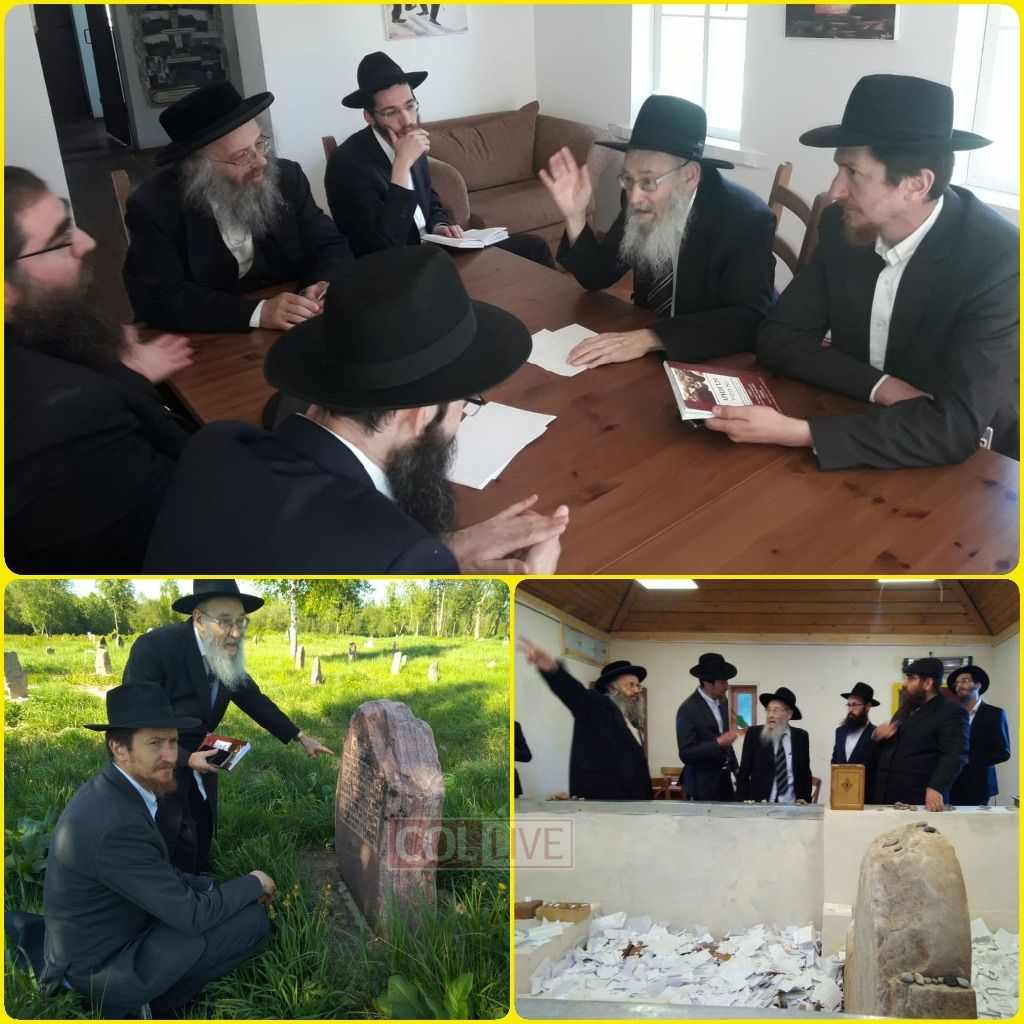
In recent months, renovations have been underway at the Ohel site to improve the experience for visitors, under the supervision of prominent Rabbonim—Rabbi Yitzchok Yehuda Yaroslavsky, Rabbi Yochanan Gurary, and Rabbi Moshe Havlin—together with the organizations Geder Avos and Oholei Tzaddikim.
These efforts have been generously funded by philanthropist R’ Yossi Popack of New York, who has taken it upon himself to support the site’s development with a full heart and sense of mission.
Rabbi Gavriel Gordon, who has overseen the holy sites in Lubavitch since 2000, reported that he had no idea where the fences had disappeared. He said that he assumed local residents had stolen them.
Then, an incredible act of hashgacha protis occurred. Just three days after Rabbi Gurevitch’s passing (on 16 Shevat), the fences were found buried in the ground of the Ohel itself.
It turns out that the workers who built the Ohel in 1989 buried the fences in the ground, likely under Rabbi Nachshon’s instruction, to reinforce the foundations due to a lack of other materials, Rabbi Gordon said.
And now, in a wondrous turn of events, the fences have been rediscovered—remarkably close to the passing of the very individual who self-sacrificingly erected them in honor of our holy Rebbes.