
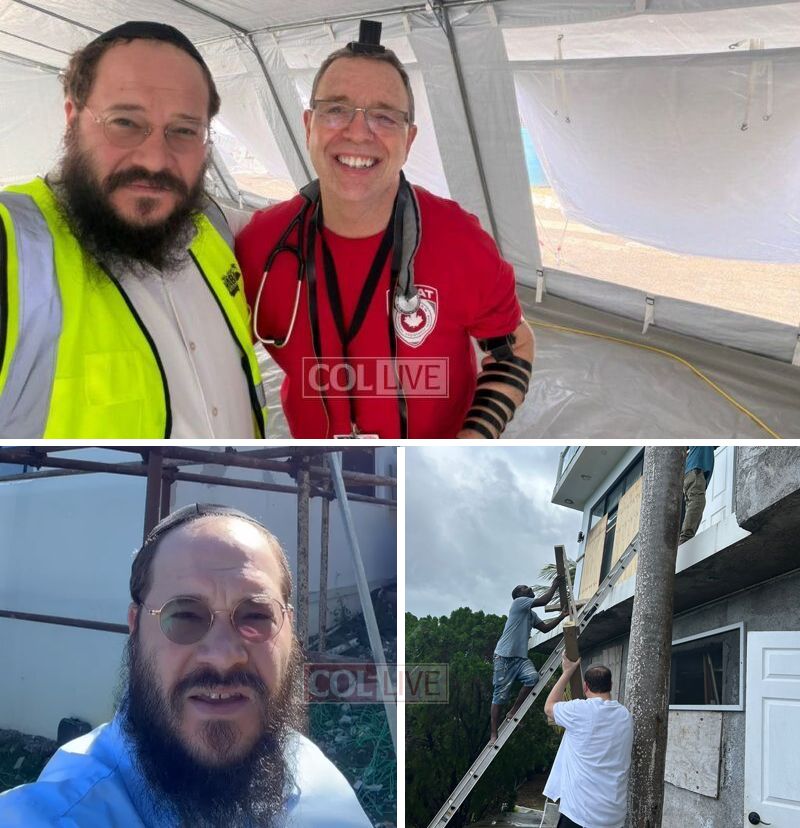
Rabbi Yaakov and Mushkee Raskin, Chabad of Jamaica, Montego Bay, Jamaica
Before Rosh Hashanah, the organizers of the International Kinus Hashluchim confirmed they’d be coming to Jamaica right after Simchas Torah.
They arrived on Monday to spend several days at the Chabad House, filming the work being done, daily Jewish life, and acts of goodness and kindness on a remote island. The plan was to create a short film to be shown at the Kinus.
At the time, nothing felt unusual. The Chabad House was busy, as it always is, serving locals and visitors. People came and went. Meals were prepared. Life moved forward.
There was no talk of a storm when they arrived.
It was only on Thursday, October 23, their last day with us, that we first heard mention of a tropical system forming in the Atlantic – Tropical Storm Melissa. Even then, it didn’t raise concern. Storms pass through Jamaica often.
We continued as usual. We showed the crew around, introduced them to community members, and sat for interviews.
None of us understood that this was the last ordinary day we’d see for a long time.
Thursday, October 23
At that point, the news was discussing nothing more than “Tropical Storm Melissa.” For arid countries, it may have been reason to panic, but for us, it was utterly unremarkable. I figured I’d fortify the one space that was prone to leaks and flooding, and that would be the sum total of our preparations.
“Rabbi, you’re always worried about everyone else,” Jack* told me. I learned with Jack weekly, and had just visited him, the day before, with the film crew. “It’s my turn to worry about you. Make sure your generator is full and your pantry stocked. Take care of yourself! They’re saying it’ll be a very bad tropical storm!”
“Thank you, Jack!” I said, and followed his advice.
Friday, October 24
By Friday, the storm had become the main topic on the news. There was still no panic, but there was tension.
Before Shabbos, I asked Adrian*, our non-Jewish driver, that if anything changed or worsened over Shabbos, he should come straight to the door and let us know.
Shabbos, October 25
On Shabbos afternoon, Adrian told us that the airports in both Kingston and Montego Bay would be closing that night. That was the moment things shifted.
Category 1 hurricanes are not unusual for Jamaica, but airport closures are. This meant it was being taken seriously. This meant people weren’t leaving.
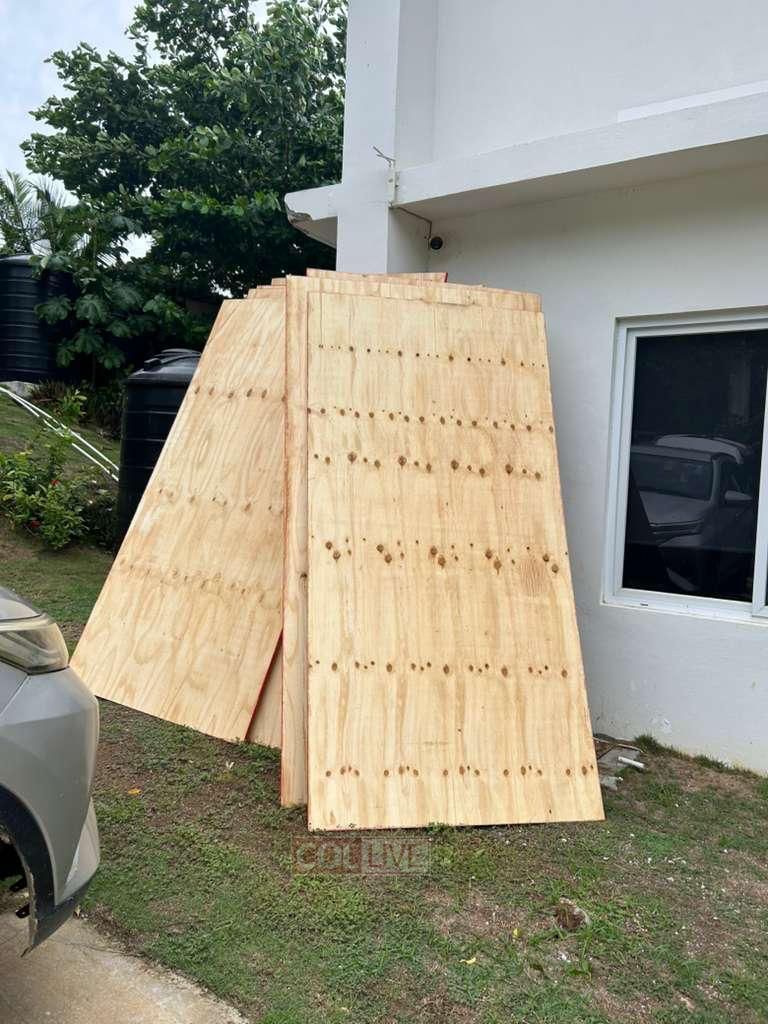
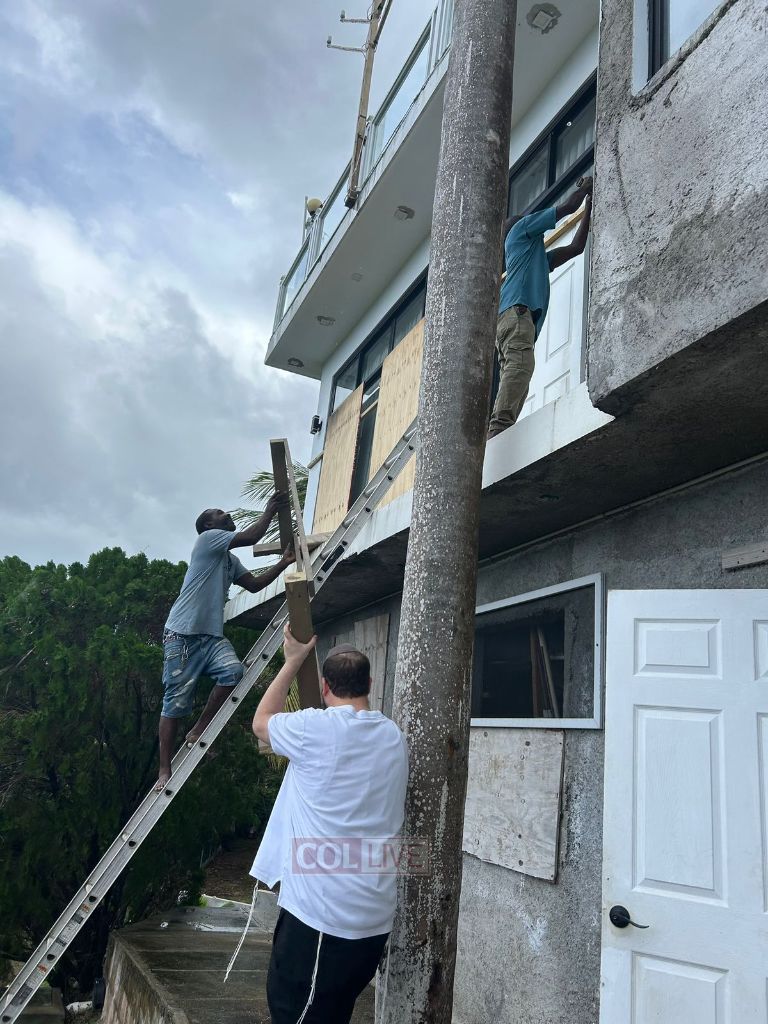
As soon as Shabbos ended, we went to work. We boarded up every window we could, using whatever materials were available. We worked late into the night, with no time to rest.
Sunday – Monday, October 26 – 27
We continued reinforcing the building. Every hour, news reports indicated the storm was growing stronger and stronger.
By Sunday, Melissa was upgraded to a Category 2. By the end of the day, it was being called a Category 3.
The airports were already closed. Leaving the island was no longer an option.
We began calling every Jew we knew across Jamaica – checking in, offering help, taking note of where people were located.
No one knew exactly what was coming, but everyone knew it was no longer just another storm.
Tuesday, October 28
The morning dawned bright and sweet, the perfect tropical day. The sun shone high in the sky, and barely a cloud could be seen. But the soft breeze soon turned into strong winds, and rain began to fall. Throughout the morning, the winds picked up speed, until they were howling around the covered window panes and sand-bagged doors.
The walls of our shul are made of reinforced glass, and the beautiful ocean view makes for an inspiring backdrop to davening. Although I knew the windows were strong and could withstand a lot, I was still worried. Before it got worse, I rushed to the shul and removed the Torahs, taking them to the mikvah, one of the only rooms without windows, to keep them safe.
The shul’s floor was already awash with water, and I wondered how bad the damage would be. As it turned out, the winds tore through one of the window panes, and rain lashed through the upper panes as well. Despite the swirling waters, the library, worth thousands of dollars, was virtually untouched which cannot be explained logically.
The sound of the wind was terrifying. It roared through the Chabad House, shaking the walls and drowning out everything else. Parts of the roof were torn away. Windows shattered. The living room door burst open.
The children huddled close to us. I stacked mattresses against the opening, pressing my body into them, trying to hold back the wind and rain. Everything was soaking wet. All I could think about was my children’s safety.
When the first area where we’d been sheltering became compromised, the children huddled next to my wife in the only windowless room, a small bathroom, quietly praying and asking Hashem for the nightmare to end.
Outside, the force of the storm was overwhelming.
Even though we’d covered the windows with wood before the storm, it made no difference. The boards were ripped away and thrown aside. We could hear and feel trees being uprooted around us.
Our baby’s nursery had glass walls we’d always loved. They shattered completely. Rain and debris poured in. Nothing was left in that room.
We’d built a beautiful wooden feature onto the Chabad House that both served as a gutter and lit up the building, so it could be seen from afar. It was ripped apart completely, without leaving a trace.
We watched as our neighbors’ roofs were torn away. By Hashem’s kindness, most of our roof was cement and held, although the solar panels and hot water tanks didn’t fare as well.
The entire landscape of Jamaica changed overnight, and it will take years for it to return. Some cities were left severely damaged, and even now, many areas are still without electricity.
While we still had some service, Merkos reached out and asked shluchim around the world to daven for us. We felt those tefillos through the entire storm. We had no doubt we would make it through with the prayers of so many people.
Holding down that window saved us from much worse flooding than we already had that night.
By then, the generator had stopped working. There was no electricity. The water wasn’t working either. We slept in standing water, even on the top floor. But we knew we’d experienced a miracle.
We gave the children coloring sheets, snacks, and headphones to block out the noise. They tried to stay calm, but every loud crash frightened them.
For hours, we listened, as the storm raged around us. The house shook violently. We said Tehillim nonstop, one chapter after another, begging Hashem to make it stop.
Words from the Rebbe’s kapitel we recited every day – “Lulei Hashem she’hayah lanu… azai hamayim shetafunu” – “If not for Hashem being with us… then the waters would drown us,” loomed large in reality as never before.
In those moments, we made a promise to Hashem and to the Rebbe. We’d double down, going bigger and stronger in our shlichus. We promised that no Jew or non-Jew on this island would be left without hearing about Hashem; without kindness or hope.
At a certain point, when it felt unbearable, I forced myself to focus on one thought: I was alive. My family was alive. That alone deserved thanks.
I began singing Hallel, crying and laughing at the same time. As I reached the final words of Keili Atah, the wind began to slow and the rain eased.
Even then, the storm didn’t fully stop. All I could ask was, “Hashem, please make it stop, not only for us, but for those whose roofs are already gone; for those who have nowhere to hide. Please have rachamim on them!”
That night, I barely slept.
Everything in the house was soaked. Anything loose had already been destroyed. But we were alive.
And we knew that what came next would be rebuilding – for ourselves, and for everyone else.
Wednesday-Thursday, October 29-30
The damage was devastating. Baruch Hashem, the storm had veered off sharply as it approached our area, sparing us the complete and utter desolation other cities had faced. Still, no building in the city was left untouched.
Debris had fallen on my car, and it was undriveable for weeks. There was no electricity or water. We had to survive off generators and buckets of water taken from the bathtub we’d prepared beforehand.
Clean, safe water suddenly mattered in a way I’d never thought about before. We’d filled up about 500 gallons of water, but the pump wasn’t working, so everything was done with buckets. We washed hands in a bowl, brushed our teeth carefully, and saved that same water so we could use it to flush the toilet. Every drop counted.
Baruch Hashem, the next morning, our gardener showed up with a few friends to help. They’d walked for close to an hour to reach the Chabad House because the roads were completely blocked – fallen trees everywhere, broken utility poles, flooding, and landslides all around.
I walked back with him through side roads, seeking oil for our generator and checking on fellow Jews along the way. Almost all the gas stations were closed. Only one was open, and even that barely functioned. The houses we passed all looked the same – damaged and dark.
When he was able to drive, he took me around to check on more community members and friends. What we saw in the streets was difficult to look at. There was destruction everywhere. People were tearful, telling us how they’d prayed during the storm – some saying they’d never prayed before in their lives. They shared miracle stories, cried openly, and thanked Hashem for their lives.
Amidst the devastation and ruin, it was incredible to see humanity reaching towards us with outstretched hands. Other countries poured millions of dollars into Jamaica, helping to recuperate and rebuild as quickly as possible. Food, medical supplies, and temporary shelters sprung up everywhere.
Our extended Jewish family all over the world flooded us with love, support, and, most importantly, necessary supplies. Chabad of the Cayman Islands sent two planes stocked full of supplies. Chabad of Hollywood, Florida loaded a Hatzalah Air with provisions. Kedem donated fifteen pallets of food and grape juice. Merkos helped our campaign go global, and were instrumental in providing funding and support. More supplies and support came from Jewish communities all over the world.
Friday, October 31
Hatzalah Air arrived with aid and more desperately needed medical resources. They brought two bochurim as well, who’d remain in Jamaica to help wherever they could. My family returned back to the U.S., while I stayed behind to help our community, who were still trying to find their feet amidst the chaos.
Erev Shabbos, I was hit hard with the difficult reality I now had to face. We had no running water or electricity, and our entire Chabad house served as a shelter for people who’d lost everything. We tried our best to keep up the Shabbos spirit, but it was difficult not to think about everything we’d lost.
Jews and non-Jews alike found refuge at the Chabad House. Among them was an elderly woman who hadn’t eaten in two days. When we heard her story, there wasn’t a dry eye in the room.
That Shabbos, we ate a meal made entirely from canned food. It was, in many ways, the most difficult and humbling Shabbos meal we’ve ever had. Yet, we sang. We danced. We thanked G-d that we were alive – and we declared, together, that we would rebuild.
At the time, we believed it would take at least six months for electricity to return. A massive fallen utility pole blocked the road in front of the Chabad House for weeks. Baruch Hashem, there was another way in, so we were still able to welcome in the hundreds who’d turned to us for help.
Neighbors we’d never met before heard the sound of our generator and came to charge their phones. Others came for water. We shared whatever we had – solar lights, food, warmth, and hope. We made sure every Jewish family had a generator, a tarp, and food. Their faces, when they saw our volunteers, were priceless. Thanks to the early shipment, we were one of the first relief groups on the ground, providing all that people needed.
———————–
Ten days after the hurricane, Prime Minister Netanyahu invested over half a million dollars to send 37 Israeli doctors to Jamaica. Over the years, we’ve built a close relationship with the Israeli Ambassador and Consul, so when I heard the doctors were coming, my first instinct was simple: invite them for Shabbos at the Chabad House.
But they were staying at a hotel in Kingston, too far to travel. So I said, fine. If they can’t come to Shabbos, we’ll bring Shabbos to them! We hadn’t spent Shabbos in Kingston since our first summer in Jamaica, over ten years ago.
We cooked all the food at the Chabad House, packed everything up, and drove nearly three hours to Kingston. That Shabbos was our first real shower in ten days. The hot water – finally no bucket or improvisation needed – was a luxury we’d very recently learned not to take for granted.
Many of these doctors were leaders in their fields. They told us they’d never imagined they’d experience such a beautiful Shabbos in Jamaica. After Shabbos, several of them put on tefillin with us. Some said it was the first time they’d done so since their bar mitzvahs!
I remember thinking to myself that it wasn’t worth the pain; nothing could be. But it was powerful to see that in the middle of all this, Jews we may never have met otherwise were putting on tefillin and experiencing Shabbos, some for the first time in their lives. That moment stayed with me.
Right before Shabbos, I sent a quick and informal voice note to local Jews in Kingston, saying we’d be at the hotel and were hosting Shabbos morning services at 10 A.M., followed by kiddush.
What happened next shocked me.
Jews who hadn’t been in shul for years showed up. People from different backgrounds, even those connected to other congregations, came quietly and joined. Some received an aliyah for the first time in their lives.
After davening, we sat down, and what was meant to be a short kiddush turned into a real farbrengen. We sang niggunim, learned together, and lifted each other up. The energy was powerful; the inspiration, palpable. Many attendees made heartfelt hachlatos.
January 2026
Jamaica is open, and at the same time, it’s rebuilding. Some areas are already welcoming visitors again. Other places are still dealing with real damage.
Our focus is clear: when you’re sent somewhere, you’re responsible for everyone there – locals and visitors alike. So we stay, help where help is needed, and focus on what will last. Many relief groups came and left. Thanks to our partners, we’re still here.
We saw what a few hours of wind can do to a country.
Now imagine what millions of mitzvos can do.
*Names changed to protect privacy





teared up reading this