

In honor of the fifth Yartzeit of Rabbi Shmarya Katzen obm.
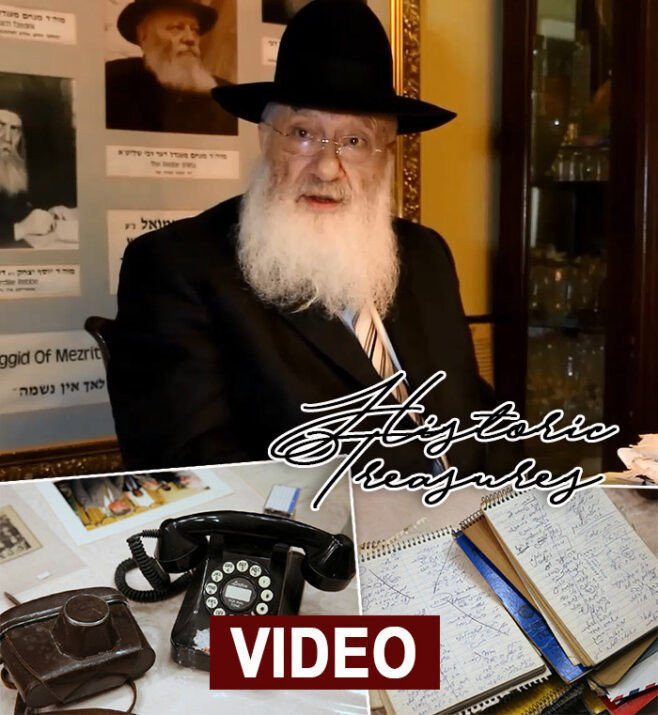
This article features an interview with his colleague Rabbi Moshe Schwartz, reflecting on his journey of teaching and their friendship.
Reprinted from the upcoming issue of Highlights Newsletter – Lubavitch Yeshiva of Crown Heights
Laser Focused- All of the Time
When I was younger, I heard the Rebbe speak about different sources of light and the lessons they can teach us. The Rebbe compared a light bulb to a laser beam, explaining that a light bulb radiates light in all directions, whereas a laser beam concentrates its energy on a specific point. The Rebbe suggested that we should emulate the focused energy of a laser beam and concentrate our efforts on one area. This idea inspired me, especially since I had prior experience teaching in camp, prompting me to consider becoming a Melamed.
Becoming a Melamed
My Mashpia, Rabbi Abba Paltiel, Sheyichiye, advised me to ask the Rebbe for a bracha and take a course in Chinuch, which I did. These courses helped me seriously contemplate a career as a Melamed. Thankfully, I received the Rebbe’s bracha and felt Rabbi Klein conveyed it to me positively.
Upon leaving Yeshiva, I initially accepted a position teaching English in a Boro Park Yeshiva. However, shortly after, I received an offer to teach at Landow Yeshiva in Miami. Seeking guidance
from the Rebbe, I received no response until I informed the Boro Park Yeshiva of my decision not to teach there. The next day, I received the Rebbe’s response: “K’atzas Yididim M’Vinim.” I consulted three respected individuals for advice; one said no, the other said yes, and the third encouraged me to decide for myself. Realizing the need to trust my own judgment, I accepted the offer in Florida, which turned out to be a rewarding experience.
Learning to Teach
Before starting to teach, I was given an Aleph Beis sefer and was instructed to teach it to the students. Despite not receiving guidance on its usage, I did my best. By the end of the school term, however, I realized I lacked sufficient knowledge on how to effectively teach Aleph Beis. Seeking advice that summer led me to Rabbi Katzen, who was teaching Pre 1A in Ocean Parkway.
When he introduced me to his lively songs combining Pesukim and Torah concepts with niggunim, his passion for teaching became obvious to me. We became friends, and later I was offered a parallel teaching position alongside him at Lubavitcher Yeshiva on Ocean Parkway.
While in Florida, seeing the financial stability of the non-Lubavitcher frum community, I considered the benefits of teaching there after marriage. I asked the Rebbe for a bracha to teach “In a Lubavitcher Yeshiva,” which obviously came to frustration. At Lubavitcher Yeshiva, Rabbi Moshe Bogomilsky, the principal of Lubavitcher Yeshiva at that time, had Rabbi Katzen and I teach our classes together, allowing me to learn from him. We supported each other in every possible way.
Rabbi Bogomilsky also guided us in using the sefer Movo L’Kriya for teaching Kriya, and we experimented with various techniques, some more successful than others. Rabbi Katzen once consulted the Rebbe about discontinuing Movo L’Kriya, to which the Rebbe responded, “Kdima Lo L’Shanos,” preferring not to change, which was enlightening for us.
Eventually, we sought guidance from Rav Marlow, He told us Rabbi Reitzes if the mumcha in Lubavitch is concerning Kriya. Rabbi Reitzes told us, “When you see an Aleph – say Aleph. When you see a Kahmatz, say Kahmatz. When you see a Kahmatz under an Aleph, say Aw.” That’s how it worked.
Recognizing the need for materials, I began creating stencils and preparatory sheets for each page of Movo L’Kriya by hand. Eventually, with guidance from Rabbi Katzen and renowned educator Rabbi Leibel Newman, I wrote the Aizer and I wrote to the Rebbe asking permission to print which I received.
A Shabbos Afternoon to Last a Lifetime
I became involved in the 770 Mesibos Shabbos in the early “Mems.” These gatherings were held in 770 during the Rebbe’s farbrengen and were very impactful. Rabbi Katzen wrote to the Rebbe about
the Mesibos Shabbos, receiving the answer «T’shuas Chein» nine weeks in a row. I remember standing in the hallway after Mesibos Shabbos as the Rebbe walked back to his office from Mincha, sensing the Rebbe’s satisfaction.
I’ll never forget it and will always cherish that memory. The arranging of the Mesiba in 770 took preparation. Rabbi Katzen would lead the 12 Pesukim and Niggunim. Rabbi Kass, Rabbi Barnett and I alternated telling the story. At the end of the Mesiba we gave out nosh.
Rabbi Katzen wanted to make sure that the letters on the bag wouldn’t rip – because it was Shabbos. But that didn’t always work. Finally, I told Rabbi Katzen, “We have to open the bags before Shabbos.” And that’s what we did.
The only drawback was that the children didn’t get to see the sight of living Yiras Shamayim as Rabbi Katzen struggled not to rip on the letters as he opened the nosh bags.
The Shabbos after Gimmel Tamuz I came to Mesibos Shabbos. But I was lost. I couldn’t figure it out. During the year of ל״ח after the Rebbe became unwell we sang, “Der Rebbe Zol Zein Gezunt,” until it changed to “Der Rebbe Iz Gezunt,” and that’s what happened.
We witnessed so many miracles, the Rebbe got better.
So I couldn’t believe that Gimmel Tammuz could possibly happen. I felt lost – until Rabbi Katzen started the song, “Dovid Melech Yisroel Chai, Chai V’Kayom”, at the Mesibos Shabbos following Gimmel Tammuz.
The Mesiba created amazing memories for so many. Last Chanukah, I had the zechus to visit Rabbi Yitzi Hurwitz, the Shliach who is battling ALS. His nephew, the Melamed Rabbi Levi Yitzchok Hurwitz, had told me that Yitzi “koched” in making his own Mesibos Shabbos before his condition developed. Towards the end of my visit to Yitzi, I looked right at him and said, “Iremember Yitzi – Mesibos Shabbos in 770.” It was a connection. To this day, men with children remind me about the Mesibas Shabbos we had in 770 with Rabbi Katzen, Rabbi Kass, Rabbi Barnett, and myself.
A Living Torah Requires Updated Worksheets
Rabbi Katzen was on fire with love for Hashem, the Torah, the Rebbe, and the Kinderlach. Rabbi Barnett and I once discussed how he conducted his class, and we agreed that we couldn’t figure out how he did it. He gave stars on the blackboard, and prizes, but I think that he just overwhelmed the children with his passion for teaching Torah and his love for them. His favorite Posuk in the davening was from Tehillim, Kapital 34, Posuk 12: “Come children, listen to me, I will teach you fear of Hashem.”
In later years, I pleaded with him to save his beautiful preparatory kriya sheets and his Parsha sheets so he could use them the next year and it would be easier for him to teach. I couldn’t figure out why he wouldn’t save them. Until he finally told me, “It has to be brand new, every time.”
I guess some things, you just can’t buy.
A Duo Unlike Any Other
During special gatherings with the Rebbe, such as on Chanukah or Tu B’Shvat, we would travel from Ocean Parkway to 770. Rabbi Katzen’s enthusiasm was palpable. We were all hoping that Moshiach would already come, and we anticipated it. When Rabbi Katzen left the class with his students lined up, he would swing his arm like the Rebbe and say, “This is it!” He was on fire.
As much as we worked together, we didn’t agree about everything. One time, we had a real argument. I said, “Rabbi Katzen, it’s the yeitzer hora.” He said, “You’re right.”
After that, no matter how much we differed, because we had decided to help the children and give nachas to the Rebbe – we never fought again.
At one point during my teaching career, I was suffering from terrible backaches and I didn’t know how I was going to be able to continue teaching. I mentioned this to Rabbi Katzen. He got serious and wrote to the Rebbe for me. Boruch Hashem, I received the Rebbe’s Bracha.
Before Gimmel Tammuz, Rabbi Katzen and I had made an arrangement that if we heard that something happened with the Rebbe we would call each other. We looked out for each other that way.
Years later, after the passing of Rabbi Katzen, I dreamed that the Rebbe stood inside 770 right by the Kingston Avenue entrance. In the dream, the Rebbe was pouring out large cups of wine with a ladle from a big pot to each of the Chassidim. I received a cup and asked Rabbi Klein, the Rebbe’s secretary, “Did Rabbi Katzen get?” He nodded his head and said, “Yes.”
I had once written to the Rebbe that I felt it would be good for me to have a true friend, and I feel that the work that we did together and our friendship was the Rebbe’s answer.
I will always be grateful to the Katzen family for letting me be there before Rabbi Katzen’s p’tira. After this, I couldn’t look at pictures of Rabbi Katzen without becoming upset. Now I realize what a privilege I had, and that we all had.
Zechuso Yagain Alenu.




This sparked a memory, it is regarding the mesibos shabbes. I remember my brothers taking me and I was a little girl (possibly the only girl- I can’t remember) anyhow one week I won the raffle though didn’t think much of it as it was something that happened shabbes and it was already mid week. The following week my brother came home with a prize saying that it was from the mesibos shabbes of Rabbi Katzen and that his sorry for the delay ( as my brother was not from the school he thought) I remember being so touched by… Read more »
A very special Yid with a very high Neshomo. May he have a Lichtige Gan Eden.
Rabbi Katzen was a legend. I was zoche to work in ULY, OP with him. He was humble despite being a giant of a person. Never raised his voice, and truly loved his students. Years later, he was my sons’ Rebbi in Crown St. He taught with an emiskeit. Even his writing of Yechi on his worksheets, came from a deep belief and place within. יהי זכרו ברוך
His mesibas Shabbos saved our Shabbosim. We were lonely kids with no relatives or anything . We would look forward to going to Mesibas shabbos . We learned , said pesukim and came home happy. I write this with tears in my eyes. Things were hard then but this was a bright spot for us
Rabbi Katzen was the true essence of a Torah Yid. We were all so lucky to have hadhim teach our children. Every child in his class benefitted greatly from his soft approach and his big smile.
He is greatly missed.