

By Sara Spielman
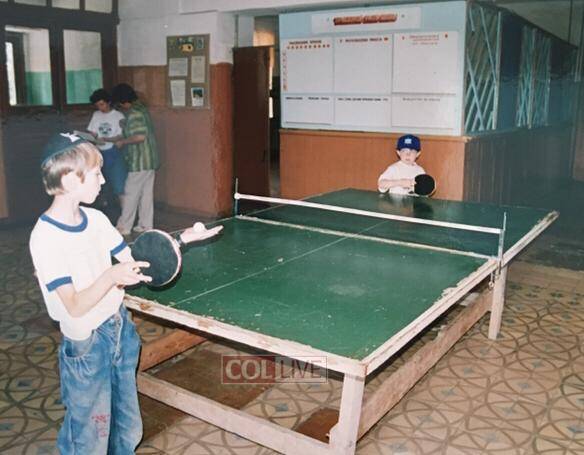
Nearing the twentieth anniversary of the first overnight camp in the town of Lubavitch, Russia its founder, Rabbi Mendel Bergovoy, is in search of the campers who were impacted by the incredible experience. Twenty years has passed and Bergovoy lost touch with the campers, yet he longs to reconnect and learn what became of them.
It began when Bergovoy was a seventeen-year-old Chabad student from Chicago, and spent a summer in Kharkov, Ukraine running a camp under Rabbi Moshe Moskowitz in 1999. It was a life altering experience and Bergovoy was hooked. Although he had to pay the airfare and fundraise for his summer experience there and towards the camp budget, he met the challenge and decided to return to another summer program in Russia the following year. This time he went to the town of Chelyabinsk known as the gateway to Siberia, in the middle of Russia, and before returning home visited Moscow.
“I thought it would be my last time there and wanted to see some historical sights, so I flew to Rostov, where the Rebbe Rashab’s Yeshiva used to be and then we wanted to see the town of Lubavitch,” Bergovoy said. “I took a train ride to Smolensk, the largest city and train stop nearest to Lubavitch, and went to the dining cabin in the back of the train during the five-hour journey and saw some friendly Jewish Russian boys.”
A conversation ensued and they asked what he was doing there. Bergovoy explained he helped run a camp that summer; they then suggested he return to the area of Smolensk, where they lived, to create a camp.
“I was 18, it was in the summer of 2000, and this idea stuck in my head,” Bergovoy said. The local Jewish boys he met that day arranged for friends to pick them up and take them to Lubavitch. They traveled through Rudnia, the last little town on the route, where they traversed through forested woods just like the Rebbeim did a hundred years ago. Upon arriving in Lubavitch he drove to the Ohel of the Tzemach Tzedek who Bergovoy’s named after. On his way back out after visiting other holy kevorim he saw a huge public-school right in the middle of the town of Lubavitch. “I got a flash of lightning that these kids need a camp,” he said. He decided that this building was just the right place for it. He left over a small river and bridge, the same one he heard about growing up in stories of Rebbeim, thinking he must do this.
The entire following year while studying at Oholei Torah, he envisioned and organized the camp, even meeting with Rabbi Lazar in 770. The Chief Russian Rabbi took his idea seriously, even though he didn’t quite understand “why there,” saying he was unaware of any Jews living there. Yet, Bergovoy insisted he met some fellow yidden while there and Lazar was open to the concept.
So, moving forward with his plan, Bergovoy went Pesach to make a seder in Smolensk for 300 people, organized by Chabad of Russia. He and his friend Shneur Weingarten cooked all the food on their own for the guests buying produce from the local outdoor markets. His goal was to recruit campers and get the community excited about the upcoming summer camp. Or Avnar Chabad of Russia, who granted him permission to do the camp, had a representative from the Federation who assisted with garnering excitement about the camp.
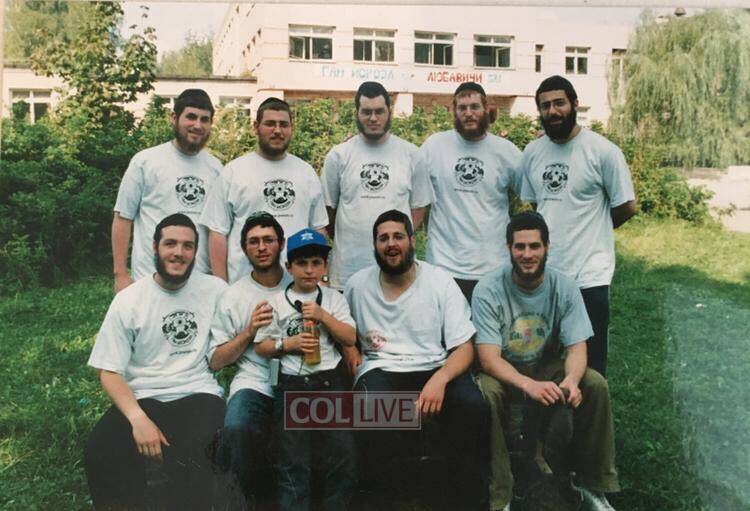
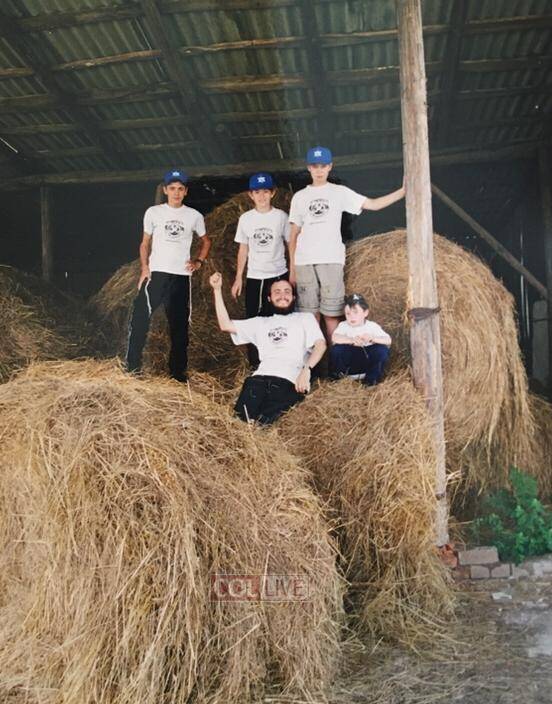
Or Avnar helped fund some of the camp, while Bergovoy, only 19 at the time, hired staff Moshe Sandhouse, Yehuda Green, Baruch Giddish, Meir Levine, Mendel Fishman, and Chanoch Hadar and an EMT Mendy Litzman, to join the team. He found Levi Kurinsky who spoke Russian to be the head counselor. Bergovoy organized logistics by night, while fundraising during the day.
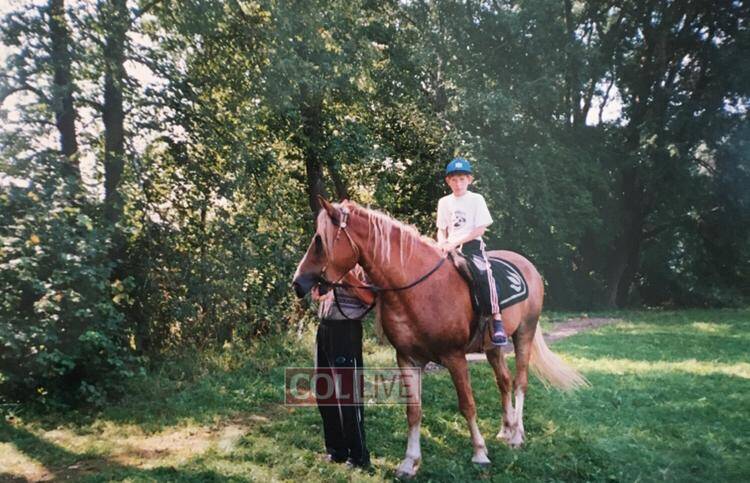
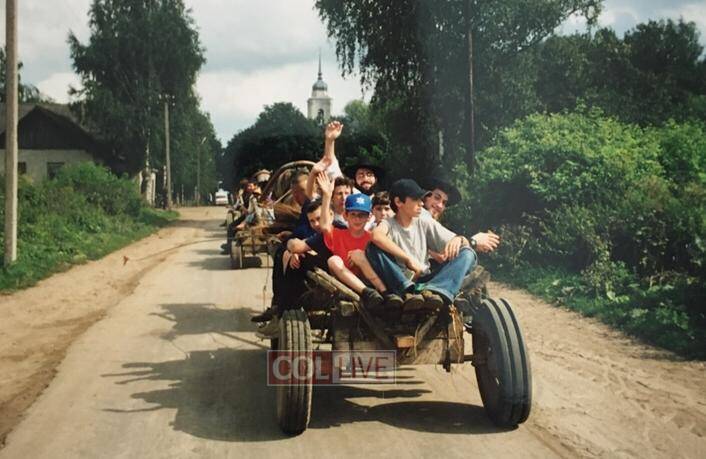
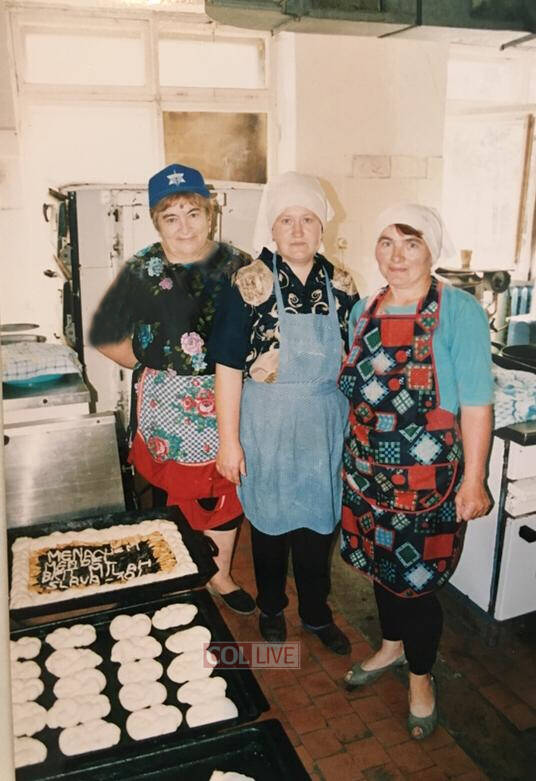
He traveled to Lubavitch two months earlier to organize camp, traveling to many towns and townlets, following up with Jewish kids to join the camp. He secured rights from the local governor to use the public school for the overnight camp, managed to purchase beds in the small, foreign town and get food staples for the delicious menu he designed. He even found a cook and horse and buggy to complete the experience.
“Chabad became global and so most people didn’t come back to the town of Lubavitch,” Bergovoy said. “The old cemeteries are ancient with many Tzadikim buried there and were only recently rededicated and historically preserved.”
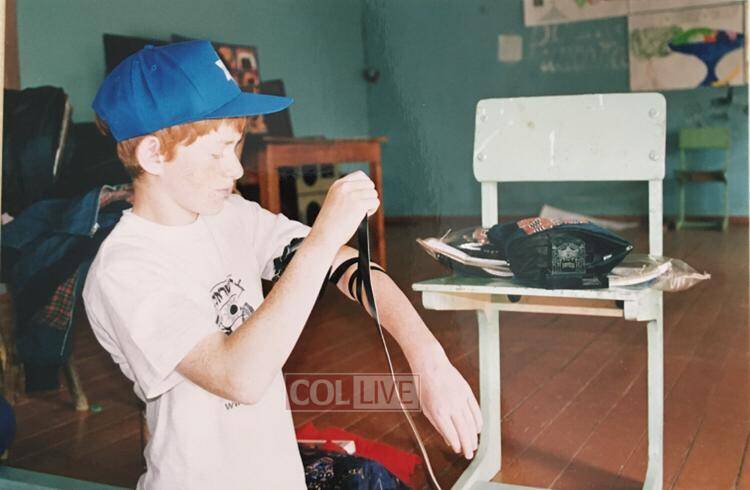
Lubavitch is a tiny village with only two or three dirt crossroads, where villagers still farm in the fields roaming with cows. Despite this, Bergovoy always had a minyan for staff members – with many miraculous stories along the way. One Friday morning before camp they were in Rudnia and needed a minyan. With teffilin on, standing outside looking for a tenth to join, the Lubavitcher Rebbe’s Secretary, Rabbi Binyomin Klein, drove by after visiting Moscow to visit the Ohel in Lubavitch there and joined their minyan with his entourage.
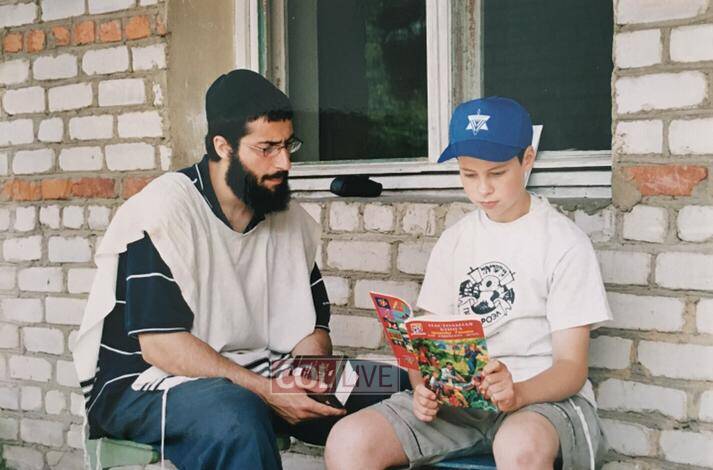
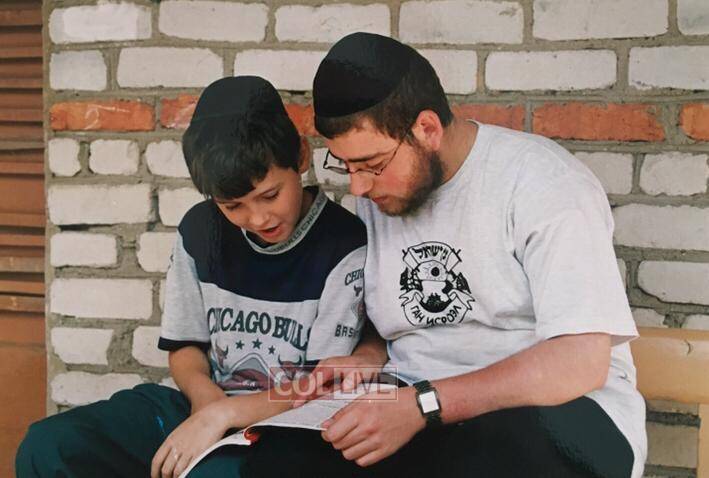
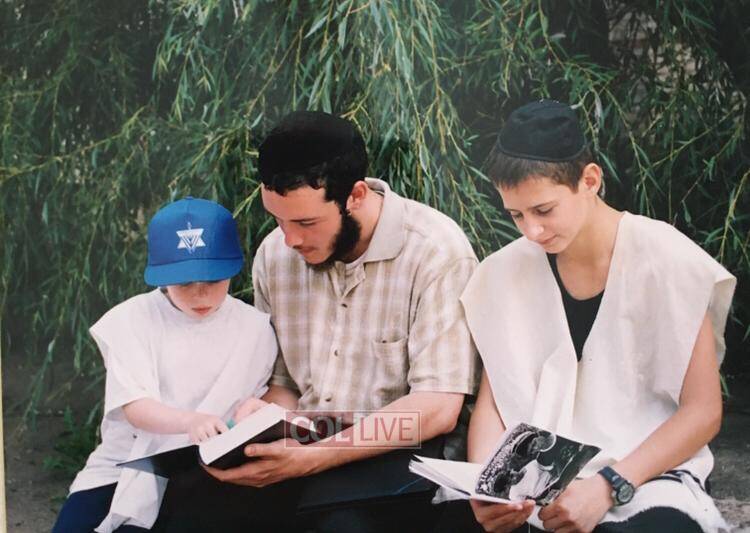
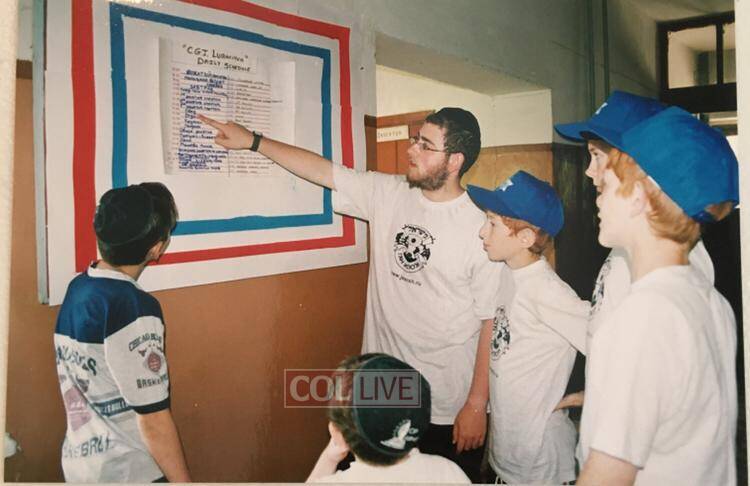
“These were kids we might never see again after camp,” Bergovoy explained. “They were from a secular heritage and because we had a great staff to camper ratio, we were able to teach them so much. Every day we taught them about a different Jewish month with its themes and customs and focused also on teaching them the Alef Beis. We gave the kids an amazing camp experience.”
The highlight of camp in Russia is getting a bris, since most boys do not receive one at birth. There are even camp songs that encourage it. “Growing up in the States we take for granted the religious freedoms afforded to us. Being in Russia only a few years after the fall of communism you were able to get a small taste of what the Jewish community had to endure,” Bergovoy said. Witnessing this firsthand in other camps in Russia, Bergovoy was amazed by the young campers’ mesiras nefesh, enduring local anesthesia for a half hour surgery and taking the added risk of being in the army with a bris, a mark of their Jewishness. So Bergovoy decided to offer it to kids in his camp.
He arranged a mohel to come down from Moscow the last week of camp. Campers usually choose a Hebrew name of a counselor to take on. Here they were in the middle of Lubavitch, Russia where Bergovoy and staff told stories of his namesake, the Tzemach Tzedek, who fought for the youth in this very town not to be forced into military inscription. The day of the planned bris, Bergovoy went with the head counselor, mohel and a few campers on a horse and buggy ride to visit the resting place of the Tzemach Tzedek and Maharash.
One of the campers walked up to the matzevah and started saying the whole alef beis after only two weeks of camp, then he turned around and said “I want a bris and I want my name to be Menachem Mendel.” Bergovoy was shocked. The mohel performed it the very next day on an Erev Shabbos morning at the museum, which was built where the courtyard used to be by the original Tomchei Tmimim of the Chabad Rebbeim. The museum is housed in a new structure that had just been built when Bergovoy was there, with an old map of Lubavitch and historical data on display. His counselor, Rabbi Yehuda Green, was the boy’s sandek.
Bergovoy believes the camp proved that there were enough Jews in the areas surrounding Lubavitch to set up a Chabad House and helped a revival there after camp ended. Chabad now has a Shliach in Smolensk, Rabbi L.Y. Mondshine, who was sent a short while later, which helped revive Jewish life in the area.
There is now a thriving community, when only twenty years ago Bergovoy had to search for Jews.
“I learned a powerful lesson that everyone has the potential to accomplish incredible things,” Bergovoy shared. “The Rebbe gave me confidence, so I didn’t question that I was going to be far away from home for months to make the camp in Lubavitch a reality.”
Because of lack of technology back then, unfortunately, Bergovoy was not able to keep in touch with the campers or the boy who became Menachem Mendel.
“The phone numbers weren’t correct, there were no emails,” Bergovoy explained. “I always wanted to travel back. I tried to connect, but I have not been able to be successful with that. I always wondered what happened with Menachem Mendel. I would love to reconnect with the kids from that camp.”
Approaching the twentieth anniversary of the camp, Bergovoy still fondly remembers the experience and the lives the camp impacted. He met everyone when he lived there that summer, including the town drunk, even interviewing people who were there when the Nazis came to Lubavitch and rounded up the Jews. Bergovoy found a mass grave and put a fence around it and cleaned it up. “They killed any collaborators and Jews there during the second world war,” Bergovoy said.
But the history of Chabad still exists there, even in the most intangible ways. “It made it real and alive when you’re there, you feel something special in the air. There’s something very mystical found within the small dirt roads and huts, but there’s also an energy that you can feel from just walking around.”
Since founding the camp in Russia, Rabbi Mendel Bergovoy has continued to build culturally diverse teams for businesses in the US, Africa, India, and other countries around the world. He guides Shluchim on fundraising campaigns and new initiatives as well. He lives with his wife Leah and four children in Hollywood, Florida. He is asking anyone with information on any boys who attended camp in Lubavitch twenty years ago in the summer of 2001 to please reach out to him with contact information. He can be reached at [email protected].







This important piece of Lubavitch history will surely lead to connecting with those whose lives you impacted !! Yashar koach to Mendel & the whole staff who worked so hard that special summer to write a new chapter in the history of the holy town of Lubavitch. So proud!