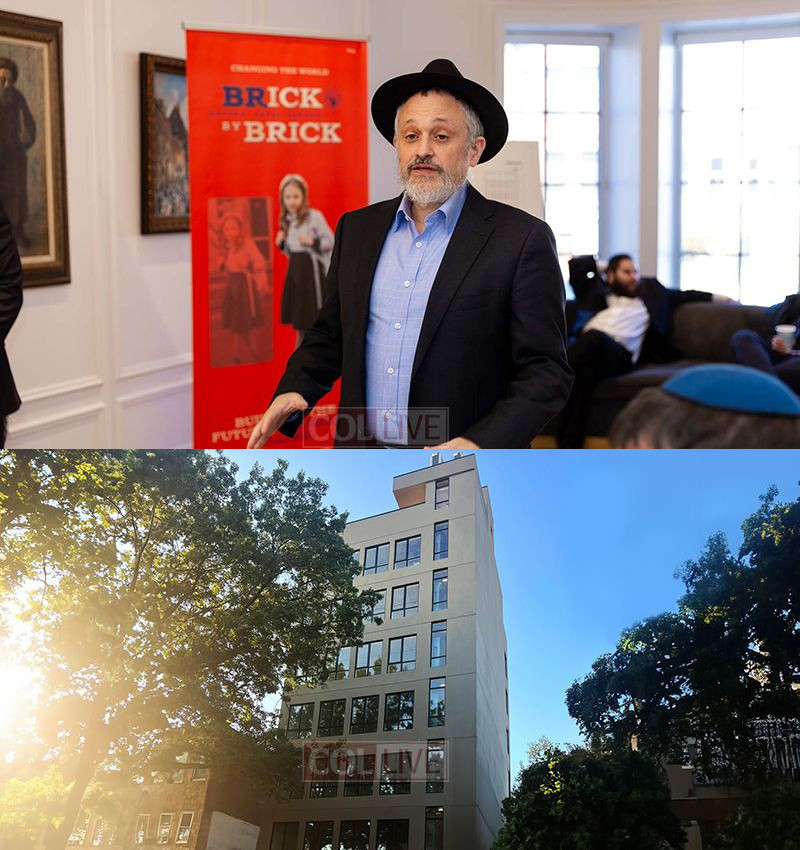

On Sunday, 1st of Adar, Georgetown hosted its first-ever Siyum HaRambam, marking a significant milestone in the local Jewish community. The event saw an impressive turnout of men and women, all gathered to celebrate the completion of the Rambam’s Mishneh Torah.
The evening began with opening remarks by Rabbi Avraham Holtzberg, the local Chabad Shliach. He concluded the final halacha of Rambam’s teachings and spoke about the structured and systematic approach of Rambam’s learning cycle. Rabbi Holtzberg encouraged participants to adopt the daily Rambam study, emphasizing the three available tracks:
• Three chapters per day (completing Mishneh Torah annually),
• One chapter per day (completing it in three years),
• Sefer HaMitzvot (a more concise option covering Rambam’s commandments).
As per tradition, immediately after the completion of Mishneh Torah, the new learning cycle was initiated. The honor of starting the first halacha of the new cycle was given to the Chabad Shliach of Bergen Beach, while Rabbi Menachem Mendel Weisberg addressed the Russian-speaking participants, offering a clear and insightful explanation of the Rambam’s opening words.
The guest of honor, Rabbi Gad Buskila, the esteemed rabbi of Netivot Yisrael in Ocean Parkway, delivered a moving speech about the significance of Rambam’s study and the Rebbe’s revolution in promoting its daily learning. He skillfully connected this idea to the acacia wood that Yaakov Avinu brought with him to Egypt—wood that would later be used to construct the Mishkan.
Rabbi Buskila also shared a powerful personal story about his father, who translated Tanya into Arabic and had a private audience with the Lubavitcher Rebbe. Reflecting on his father’s words from 45 years ago, immediately after his wedding, he recalled:
“My dear son, if you want to have true Yirat Shamayim (fear of Heaven), you must learn Tanya. Without it, true Yirat Shamayim is impossible.”
He went on to describe his childhood in Morocco, offering a firsthand account of the spiritual transformation that Chabad brought to Moroccan Jewry. He painted a vivid contrast between the state of Judaism in Morocco before Chabad’s arrival and the remarkable progress that followed, emphasizing that it was solely thanks to the Rebbe’s vision and leadership.
Rabbi Buskila also recounted his travels to Chabad emissaries worldwide, illustrating the global impact of the Rebbe’s mission. In his concluding words, he once again encouraged the audience to commit to daily Rambam study.
Later in the evening, Rabbi Moshe Buskila, Rabbi Gad’s brother, spoke about his own Bar Mitzvah meeting with the Rebbe, sharing personal stories of miracles and Divine Providence he experienced at the Ohel.
The evening concluded with Rabbi Yirmiyahu Levy, the rabbi of Congregation Tiferet Ovadia in Mill Basin, who highlighted the role of prayer in the Rambam’s early years and how it ignited his deep love for Torah study. He also shared a fascinating story from the Arizal about the spiritual power of sincerity in performing mitzvot. Rabbi Levy ended his speech with a heartfelt blessing for the community and its leaders.
As the event wrapped up, one of the attendees committed to donating an English-translated edition of the Rambam to the local Chabad House—ensuring that others would have access to its teachings.