
Tamar Runyan – Chabad.org
Food or shelter?
It sounds like an impossible choice, but for families hit hardest by the Great Recession, the reality is that someone may either go hungry or risk losing a home. Reflecting the trend, new community centered food banks are popping up across the country, with many synagogues leading the way.
In response to the growing needs of their communities, some organizations, like the Chabad Israeli Center of Miami, have started new food banks.
“For many months, we’ve been getting calls from families in the Miami area who just don’t have food to put on the table for their families, or know of families facing hard times,” says Chabad-Lubavitch Rabbi Menachem Cheruty, who opened a food bank in September. “The calls have increased and increased.”
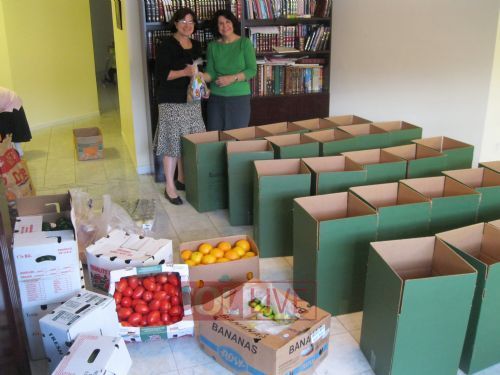
Cheruty, who directs the Chabad Israeli Center of Miami, Fla., and his volunteers deliver boxes of food – packed with fresh produce, canned foods, kosher chicken and meat, fish, challah bread, and pita, each parcel is designed to help families bridge the gap between economic realities and the religious custom of serving more celebratory food on the Sabbath and holidays – every week to about 25 families. Many of the recipients include orphaned children, single-parent households, handicapped individuals, homebound patients, and senior citizens.
“When it comes to food, I prefer to do without than to eat something that is not kosher,” says one local woman, who citing privacy concerns declined to provide her name for publication. Her family income barely covers the rent. “It is a very important to me. I thank G-d every time the rabbi comes.”
Because community volunteers both package and deliver the boxes, they also gain the satisfaction of helping their fellow Jews.
Chaim Berkowitz of North Miami drives his pick-up truck weekly around the neighborhood to deliver the food. Before holidays, he drives almost an hour each way to Homestead to pick up fruit and vegetables from Farm Share, a non-profit organization that accepts produce donations from local farmers and in turn donates the produce to other non-profit organizations to be distributed to those in need.
Berkowitz says “it involves a lot of physical labor.” With the high price of gas, the 120-mile roundtrip is costly.
“Single women with children get first,” relates Berkowitz, pointing out that a lot of families who were donating money to provide food for others are now recipients of the food bank.
Because many local families have multiple children who attend Jewish day schools or yeshivas, they are still struggling to get by even with both parents working.
Says Berkowitz: “They have big children and small wallets.”
Anonymity and Gift Cards
Across the country in California, Chabad of the Conejo in Agoura Hills recently opened a food bank in response to the financial difficulties faced by local families. It had been helping more than 40 local families financially, but saw the need to do more.
According to the U.S. Department of Agriculture, California and Florida are two of nine states whose rates of “food insecurity” are larger than the national average.
“We knew there was a need,” says Chabad of the Conejo director of development Rabbi Yisroel Levine. “In the last two years we have been receiving five times more calls from families in need than in my first 15 years here. When it comes to putting food on the table, we want to be there for them.
“This is this is the call of the hour,” adds Levine, noting that a third of those receiving food are not Jewish. “We care about everybody.”
Levine describes a system that ensures anonymity to those in need. He is the only person that families meet to talk about their needs.
Recipients fill out forms on-line to request the foods they need for the week. Volunteers then head over to the local markets where they purchase shopping carts of the requested items and bring them back to the Chabad House where everything is carefully laid out and placed in bags that are identified only by an assigned number for families to pick up on Thursdays. Deliveries are also made for those who are elderly or handicapped.
Community member Debbie Winderman, who coordinates the food bank, first got involved after she heard about a little girl in public school who waited for her friends to finish their lunches so that she could eat their leftovers.
“We’re talking right here, in the affluent Conejo Valley,” remarks Winderman, who will receive the Chabad House’s Woman of Valor Award at its annual gala next month. “Can you believe that?”
Over at Chabad of the Capital District in Albany, N.Y., Rabbi Yisroel Rubin has yet another method to help families in need. Before each Jewish and national holiday, he hands out gift cards to local grocery stores to dozens of families in need.
“A lot of people are embarrassed [to receive food shipments],” he explains. “They find this way to be very dignified.”
Cheruty explains that the sole operating principle of Chabad Houses the world over is to help people in need, whether spiritually or materially. Economic realities, however, have also placed the organizations helping in need of help.
“We believe in the kindness of people,” says the rabbi. “We survive simply on the goodness of the hearts of the community and on that which we feel there is a need for, people respond.
“We simply ask people to help,” he says. “We take contributions right back out there for the people.”




BS’’D
And we should hear much more!
Shkoyach
MOSHIACH NOW!
What nice work you are doing for your community! Much Hatzlacha!
Thank you for letting us participate in this mitzvah!
And you’ll see many, many more Yidden in desperate situations.
Dedicated Shluchim, this is only a drop in the bucket of what they do. Mendy and Chaya, May continue to see success in your work.
From strength to strenth
wow! this is only a small part of what you do! keep up the great work! we are all so proud of you!
Keep up the great work!!