
By Chavi Chamish, Mishpacha Magazine’s Family First
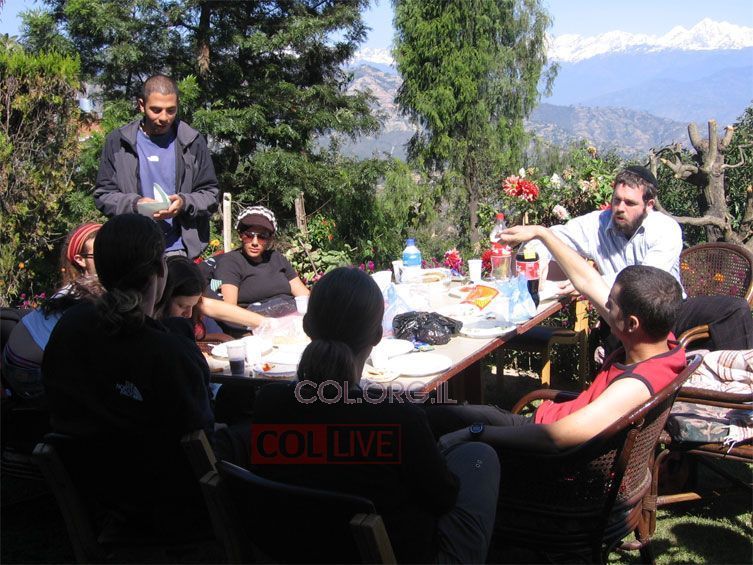
We were spending Shabbos amongst the splendor of the Himalayas, in Changspa, a tiny village known to Jewish travelers because of the Bayit Yehudi, run by a Breslover Rav and his wife.
What stays most powerfully in my mind, when memories of India come to me, is not so much the beautiful rivers and lakes and villages with Tibetan people in their traditional dress, rather it is a story we heard on our second Shabbos there, surrounded by hundreds of Jews of all ages.
Alex Silenski, an older man, had joined our group. As his story unfolded, I was, as usual moved to silence by the awe of Hashem’s precise and detailed arrangements for His people.
Alex’s family was originally from Lithuania. In the late fifties they’d been able to reach Ireland where they had relatives. Alex’s older brother, age fourteen, was left behind to care for the elderly grandmother. His brother’s cries of “come back for me” had haunted Alex ever since.
There had been no phone contact, and after the grandmother passed away, the parents lost all contact with their son, and Alex had never seen his brother again.
Now, decades later, Alex was widowed, his only son living in the US. Over the previous months, his son had called several times to say, “Dad, I keep having a dream that you’ve moved to Israel.”
“That’s nice son,” Alex had said, but I think I’ll go to India instead.”
Two weeks before we met him, Alex had been in the ancient Indian village of Pushkar when two young men on bikes saw him trip and fall. They stopped to help him up. As they pulled Alex to his feet, he’d said, “oy.”
“That ‘oy’ has got to be Jewish!” They’d said, and invited him to Shabbos dinner at Chabad. “It was amazing, Alex told us.
After Pushkar, he’d continued on to Manali. That Friday, among the crowds in the market, he bumped into the same two young men. This time he joined them for Shabbos at Chabad in Manali.
That night, while at Chabad, he heard some people mention the Bayit Yehudi in Changspa, and thought, “I’m getting addicted to these Shabbosos. Why not go there next?”
“I arrived earlier today and came straight to the Bayit Yehudi,” Alex told us. “As soon as I got here a Frenchman came up to me and said, ‘I thought you’d returned to Israel already! I still have your siddur.'”
“What siddur? I don’t have one,” Alex had said.
“‘Then you look exactly like someone who was here last Shabbat,’ the Frenchman said. He went over to the low wall there and brought me this siddur so I could see the name on the inside cover.”
We at the Shabbos table looked on as he opened the siddur. Inside was written Moshe Silenski. “My older brother, the one who stayed with my grandmother, his name was Mikhail Silenski. It was too much of a coincidence.” Alex’s lips were quivering.
“The Frenchman called Israel and got Moshe Silenski’s phone number for me, and yes, it’s my brother. We spoke for the first time in sixty years. I’m going to Israel – like in my son’s dream. To see my brother; my greatest dream.”
We, the listeners at the table, sat back in silence, each of us trying to comprehend the strange chain of events. It was hard to express the feelings inside us at that moment, at the edge of the breathtaking Himalayas, so far from home, so close to the wonders of Hashem…
Last we heard, Alex is still in Israel with his brother, who is seriously ill.

Very moving
May Moishe be have a reuah xhleimah.
Is it possible to find the name of his mother to include in davening for his coming into fulness of health.