
By Mayer Fertig, The Jewish Star
When word got out Saturday night of the shocking loss of Levi Yitzchok Wolowick, administrators of Yeshiva Darchei Torah, where he was a fourth grader, had to prepare their staff and their students to deal with his death.
Rabbi Dovid Morgenstern, the menahel of the fourth and fifth grades, himself a trained grief counselor, said the yeshiva immediately sought guidance from Chai Lifeline’s bereavement and crisis intervention team, led by Dr. Norman Blumenthal and Mrs. Zahava Farbman.
Blumenthal met that night with administrators and teachers, Rabbi Morgenstern said. The next night “we had a meeting…in the yeshiva for parents specifically of the fourth grade,” though it was open for all who wished to attend.
When school resumed on Tuesday following the snow storm, Dr. Blumenthal, a psychologist, and Mrs. Farbman, a licensed clinical social worker, planned to spend the day at Darchei offering counseling.
Parents of children who don’t attend that yeshiva but who knew Levi or otherwise learn of his passing should “not fish” for a reaction, Dr. Blumenthal advised.
“Don’t ask kids aggressively ‘are you sure you’re not upset.’ Don’t tell your child how to respond. Respect who your child is and how your child copes, like we would with adults,” he said.
Also, he advised, “don’t give your child more information than they need. Don’t try to explain [Levi’s death] theologically or medically if they’re not asking.”
“There is no normal reaction to an abnormal situation,” Mrs. Farbman said. “Kids, like adults, will react differently. How children will react will also depend, in large part, on their age.”
Preschoolers often act out their feelings in their play. “After the Chanukah Wonderland accident we had kids playing crashes,” she said, “while “school-aged kids are very focused on the facts, the details, what happened, how it happened. They’ll listen to every rumor possible. You want to be as clear as you can on their age level. In their thinking, if they understand how it happened, why it happened, then it won’t happen to them.”
Some children will have a delayed reaction, perhaps a week later.
“Parents should validate whatever they’re seeing,” she said. “Whatever you’re seeing, especially in the first week, is fine and normal.”
Parents often ask if it’s OK to cry in front of their children. Yes, Blumenthal and Farbman both said, but…
“Make sure you as the parent are clear yourself about how you’re reacting,” said Blumenthal. “There’s nothing wrong with being sad or even crying in front of your child as long as you’re in control.”
“A rule of thumb is…if you can cry for a minute and then stop, then it’s OK. It’s OK for children to see their parents cry but if you feel yourself getting hysterical, then walk away,” Farbman advised. “It’s scary for children to see their parents not in control.”
Finally, if you are planning to bring a classmate for a shiva visit, “prepare your child,” said Dr. Blumenthal.
“If they know what they’re going to see they handle it well. Try to paint a picture for them ahead of time. Often children’s fantasies are worse than reality.”
—————————————————-
+ Levi Wolowik, 9, OBM (Feb 28, 2009)
+ Thousands at Wolowik Funeral (Mar 1, 2009)
+ Crying, Dancing in the 5 Towns (Mar 3, 2009)




he was in my bunk by the 3 weeks
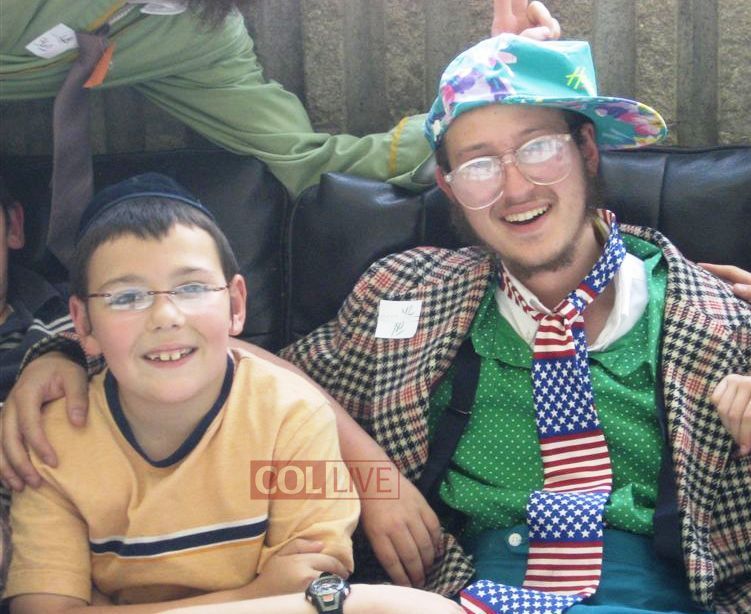
these pictures are from 2nd month of detroit in a store were the kids were asked to buy old clothes to dress up the counsler (shmuli greenberg) i was there in his brother mendel’s bunk( 1st month)
mendy m
texas
good article bless you
these are pictures of him in camp in detroit