
By Mayer Preger for COLlive.com
In this week’s Parsha it states “לא תעמוד על דם רעך – You shall not stand idly by when the blood of your fellow is in danger”. The question is, to what extent is one supposed to extend themselves in a dangerous situation to help another.
Rashi uses the example of a person witnessing another drowning and is able to save them. The reason Rashi needs to give a sample scenario is because there are situations whereby one need not or should not get physically involved to help another in distress. For example, if one sees another being robbed by armed assailants or attacked by wild beasts. In such situations, the potential rescuer can exacerbate and worsen the situation. They are not capable of helping and will put themself in mortal danger as well. In such situations, one is allowed to stand by and not physically intervene.
On the other hand, drowning scenarios mostly occur because the victim is usually lacking the strength to continue to stay afloat. By jumping in, one is likely to help by giving the drowning victim the extra strength needed.
But since rescuing, in general, is a risky endeavor one might opt to stay put and not endanger themselves. The Torah therefore emphatically states, “You shall not stand idly by when the blood of your fellow is in danger”. We are obligated to take this risk, we are literally not allowed to stand idly by.
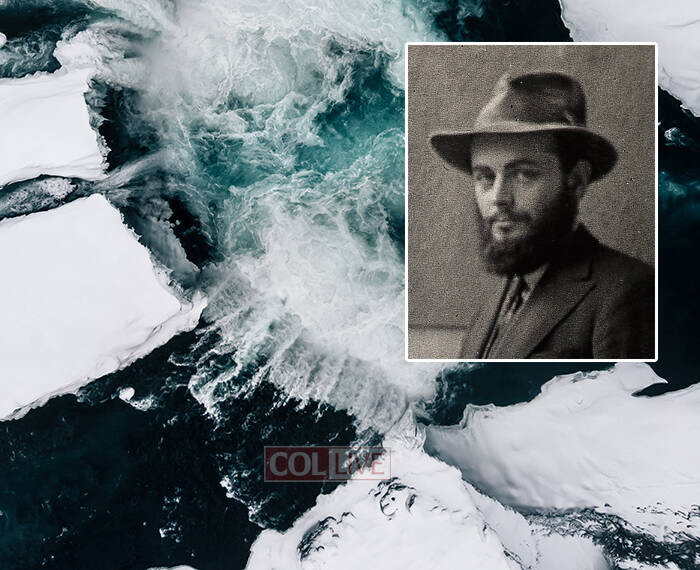
This insight comes from the Rebbe. Based on recently published personal memoirs of the Rebbe’s mother (Memoirs of Rebbetzin Chana Schneerson from Kehot) we see that the Rebbe had very intimate personal knowledge and experience of a potential drowning disaster. She reveals an incredible story about the Rebbe which occurred when he was only 9 years old:
“In 1911, my son accompanied me to a health clinic in Balaclava, [Crimea]. There was a cave that led to the sea. The narrow stream of water flowed between the two walls [of the cave] and rolled into the sea. The place where the stream and the sea met was very dangerous; even experienced swimmers were cautious.
“One time I was at the shore, where we gathered to spend time. I heard that a boy was drowning, and went to see what was happening. I heard from others, and saw for myself, that a small child had rowed out in a single-person boat with one oar [a kayak]. As I said before, [the place where the stream and the sea met] was a very dangerous place. The boat began to sink with the child inside.
“When my son noticed this, he swam out to the boat, climbed inside, and took the oar from the exhausted, barely conscious boy. Taking control, he steered it out of the danger zone and brought it to the shore, saving the passenger.”
“But after this difficult—extraordinary, I would say—rescue, my son was physically and emotionally strained. With no warning or forethought, he had to create a strategy to determine in which direction he could safely steer to a less dangerous area. My son, therefore, became very weak, and he himself began to [struggle from] drown[ing] close to the bank. When I saw him, he was exhausted and pale, and his clothes were drenched. Thank G‑d, we had brought him [to the shore that day].”
Putting this story into perspective, it is truly mind-boggling that in the face of clear and present danger whereby even adults are standing by dumbstruck at the sight of a pending disaster, a 9-year-old boy that had already been so ingrained with a true Torah perspective, instinctively jumped into the raging waters to help save another, one he had never even met.
By using the “lens” of the Baal Shem Tov, whereby everything a Jew encounters is Divine Providence, no encounter is accidental. If Hashem enables someone to be witness to a situation in which another needs help, then that witness is definitely able to help. Be it physically, financially, emotionally, spiritually… Whenever one sees or hears of another’s trouble, it states: “לא תעמוד על דם רעך – You shall not stand on their blood..”
Not doing anything is tantamount to trampling on another’s blood. If one does help the challenged with whatever possible, even if risks abound, the verse ends with the proclamation: “אני ה׳…” Hashem personally promises to reward that individual with limitless rewards in all aspects of their life.


Thanks for sharing, and everyone should have a good and healthy Shabbos!