
Hope & Redemption
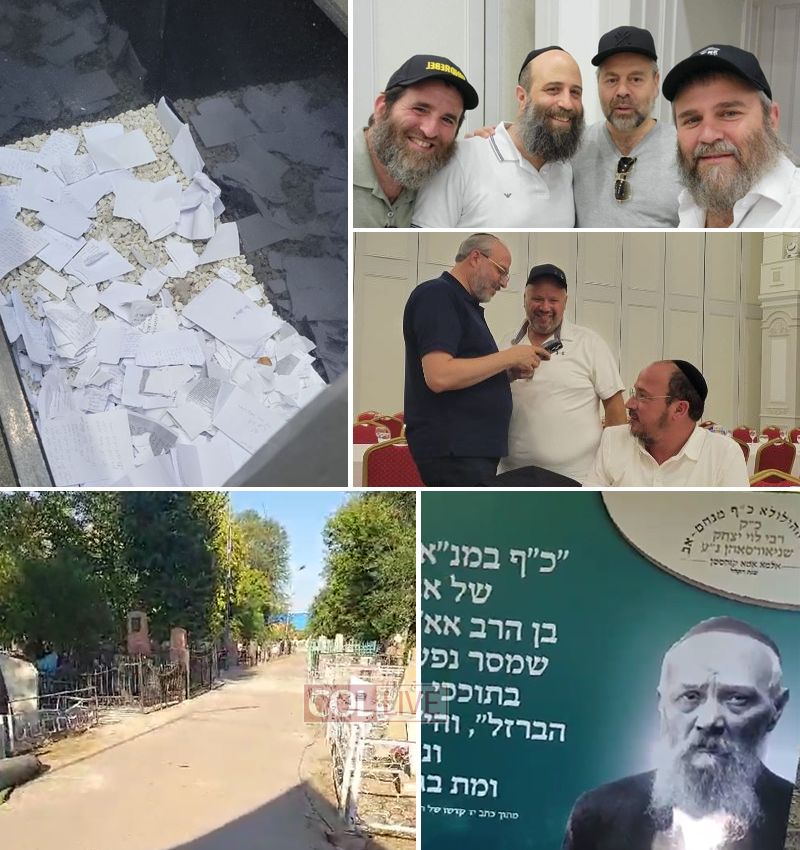
Long before the “Save Soviet Jewry” campaign of the 1970s, Chabad was devoted to the spiritual survival of those trapped behind the Iron Curtain. The Avner Institute presents two letters, where the Rebbe sadly comments on the religious freedoms taken so much for granted in the West and the need for Jewish pride and outreach at home.
Dedicated in memory of loving memory of Hadassah Lebovic A”h
“Tremendous powers of a Jewish soul”
By the Grace of G-d
18th of Menachem Av, 5725
Brooklyn, N.Y.
Mr. . . .
Bellerose, N.Y.
Greeting and Blessing:
I duly received your letter, and I was pleased to note in it your sincere concern for the plight of our fellow Jews. I cannot let this opportunity pass without bringing up a certain question, which is particularly relevant to those who wish to do something constructive in their behalf. Moreover, this painful question is being asked by the young generation of our fellow co-religionists in that part of the world. It is this:
How is it that insofar as they are concerned, they are expected to risk everything for the freedom to study the Torah and fulfill its commandments, yet their fellow Jews who live in happier circumstances and have complete religious freedom, seem to be quite unconcerned about their own religious duties? It is hard for them to understand that the younger generation especially, who have no economic responsibilities as yet and are free to dedicate themselves to the study of the Torah and to living a full religious life, nevertheless show no interest or inclination to do that.
Incomprehensible?
For, according to the information which our brethren receive and judging also by the tourists whom they see, it seems to them incomprehensible that American Jews are not eager to show that they are observant Jews, to the extent that there are such who, on seeing a Jew with a beard and peyos, or one displaying his tzitzis instead of admiring him, ridicule him. In the light of these circumstances, many of our co-religionists, who are really suffering martyrdom for their religious convictions, as well as others there, including authorities, cannot help wondering how sincere are the efforts of their fellow Jews in their behalf.
It is superfluous to add that this state of affairs has greatly shaken the determination of large numbers of our young people and has undermined the state of Torah and mitzvoth in that part of the world to a considerable extent. Much more can be said on this painful subject, but the above must suffice.
Reward of Mitzvah
Needless to say, it is the rule of the Torah that “A transgression does not extinguish a mitzvah.” Those of our fellow Jews who have alienated themselves from the Jewish way of life nevertheless deserve credit for wishing to help their fellow Jews
who are loyal to their Jewish heritage and every good deed carries its own reward. However, the question is not of merits and rewards. But the issue here is that the impression which our brethren aboard receive with regard to their fellow Jews here,
insofar as the younger generation is concerned, are most damaging and are a direct factor in weakening their determination to preserve the Jewish way of life at such a cost.
It is surely unnecessary for me to add that I am not in the habit of looking for faults in anyone or to condemn anyone, G-d forbid. What I have said is not merely an expression of my own painful feelings, but rather the expression of hope that sooner or later our Jewish youth in the free countries of the world will recognize the truth. And there can only be one truth, not two, nor can there be any concessions insofar as the truth is concerned.
I hope and pray that our youth will recognize the truth of the Torah, called Toras Emes [Torah of truth] and with the characteristic qualities of youth, will draw the inevitable conclusions and will live up to them in the fullest measure. To be sure many of them will see the challenge, which requires them to make a complete reversal in their daily life. I am certain, however, that they are capable of doing it.
If the few lines in this letter will help someone in this direction, it will have justified my writing them. No one can really evaluate the tremendous powers of a Jewish soul, the Divine soul with which every Jew is endowed.
With blessing,
[signature]
“Fullest advantage of this freedom”
[5730]
Mr. . . .
Stockholm, Sweden
Greeting and Blessing:
I am in receipt of your letter. In it you write about your strong feelings of compassion for our brethren who find themselves in circumstances where they cannot live freely according to the way of the Torah. You further write that you do not intend to be a passive idealist, but an active one.
All this is, of course, very commendable. Indeed, on the basis of the teaching of our Sages that “All Jews are responsible for one another,’’ we have been assured that a firm resolution to live up to this responsibility, to which there can be no alternative, in itself opens new channels making enabling one to acquit oneself to the fullest degree.
When this principle that Jews are responsible for one another is actually practiced by Jews in a positive way, there is then no room left for the nations of the world to implement the same principle in a negative way. Unfortunately, where even one
solitary Jew fails to live up to the laws of the Torah and commits some sort of wrongdoing, non-Jews are ready to invoke the above principle and condemn all Jews wherever they may be and use this as a justification for their anti-Jewish bias.
Active Assistance
In regard to the question of rendering active assistance to our brethren who are deprived of the opportunity to live up to and fulfil the standards and requirements of Torah and mitzvot, the first and most effective form of assistance that can be given by those who are fortunate enough to live in the free world, and under conditions of religious freedom, is that they themselves should take fullest advantage of this freedom. By this I mean not only to observe the Torah and mitzvot in the fullest measure in everyday living-and not merely on certain days of the year, such as on festivals and Shabbat-but that they should also use their good influence to spread and strengthen Torah-true Yiddishkeit.
And since, as mentioned above, all Israel is responsible each one for the other and in fact constitutes one organism, every extra effort in this direction on behalf of our unfortunate brethren, who are not free to observe the Torah and mitzvot, will directly benefit them, in precisely the same way as any benefit to one part of the body benefits the whole body.
Harm or Benefit?
Furthermore, the virtue of providing this kind of benefit to our brethren is that it does not entail any of the problems which other forms of activity may sometimes involve, since it is hard to foretell what the ultimate reaction to them will be beneficial or harmful. It is clear that those who protest against religious
discrimination and demand freedom of religious practice for other Jews, but who themselves do not observe or practice the Jewish way of life, do not support Torah institutions in their own country, or do not give their own children a Torah-true
Jewish education, etc.; all their protests and demands have a hollow ring to them, are, in fact, nothing more than empty words, for their efforts cannot be considered truly sincere.
It is indeed too painful a subject to elaborate on. The above-mentioned
efforts are necessary for their own sake, even if there were not the added and compelling reason of trying to help our brethren deprived of their freedoms. But, as already mentioned, every additional effort that a Jew makes to strengthen Yiddishkeit in his own family and immediate surroundings, helps other Jews
everywhere.
May G-d grant you hatzlacha [success] in your efforts, referred to in your letter, as well as along the lines urged above, and may you have good news to report.
With blessing,
[signature]
To receive to your inbox email: [email protected]