By COLlive staff
The New York City Emergency Management Department issued a travel advisory for Tuesday, January 29 and Wednesday, January 30.
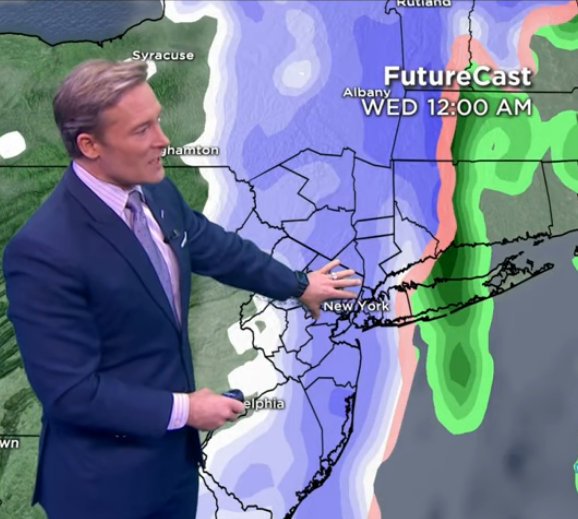
According to the latest National Weather Service forecast, a wintry mix of snow and rain could affect the New York City area Tuesday and Wednesday.
Light snow could begin Tuesday morning before transitioning to rain by mid-morning. Rain will continue through the afternoon.
As temperatures decrease Tuesday, the rain could briefly change over to snow Tuesday evening, causing for a messy evening commute.
The steady drop in temperatures will cause any liquid on roads to freeze, producing spots of black ice.
Precipitation will begin to taper off early Wednesday morning. A scattered snow shower cannot be ruled out Wednesday afternoon.
A total of a coating to two inches of snow accumulation is in the forecast, with a worst case of three inches possible. Strong winds are also in the forecast on Wednesday, with gusts up to 45 mph possible.
New Yorkers should prepare for slippery road conditions, exercise caution when driving, walking, or biking, and consider taking public transportation whenever possible, city officials said.
“We advise New Yorkers to take mass transit where possible, exercise caution, and allow for extra travel time,” said NYC Emergency Management Commissioner Joseph Esposito. “Frigid temperatures will also return. Stay indoors as much as possible. If you have to go outdoors, limit your time and bundle up.”
An arctic blast is also expected to move into the area Tuesday night through Thursday. Temperatures Tuesday night are in the lower 20s. Temperatures Wednesday will be in the mid-20s, with wind chill values as low as 10 degrees.
By Wednesday night, temperatures will drop to single digits, with wind chill values as low as 15 degrees below zero. Sub-zero to single digit wind chill values stick around on Thursday. Temperatures and wind chill values are in the teens on Friday and are expected to return above freezing on Saturday.
VIDEO: CBS2’s Lonnie Quinn has your weather forecast for January 28 at 6 p.m.
Here are a few safety tips from New York City:
· Small accumulations of ice can be extremely dangerous to motorist and pedestrians. Bridges and overpasses are particularly dangerous because they freeze before other surfaces.
· If you drive, use extra caution. Vehicles take longer to stop on snow and ice than on dry pavement.
· Four-wheel drive vehicles may make it easier to drive on snow-covered roads, but they stop less quickly than other vehicles.
· Use major streets or highways for travel whenever possible.
· Know your vehicle’s braking system. Vehicles with anti-lock brakes require a different braking technique than vehicles without anti-lock brakes in snowy conditions.
· If you are driving and begin to skid, ease your foot off the gas and steer in the direction you want the front of the car to go. Straighten the wheel when the car moves in the desired direction. If you have an anti-lock braking system (ABS), apply steady pressure to the brake pedal. Never pump the brakes on an ABS equipped vehicle.
· Try to keep your vehicle’s gas tank as full as possible.
· Pedestrians should exercise caution and avoid slippery surfaces; some ice may not be visible. Wear sturdy boots that provide traction to reduce slipping. Use handrails when using stairs.
· Seniors should take extra care outdoors to avoid slips and falls.
· Have heightened awareness of cars, particularly when approaching or crossing intersections.
· Be careful when shoveling snow. Follow your doctor’s advice if you have heart disease or high blood pressure. Cold weather puts an extra strain on the heart.
· If you go outdoors, wear dry, warm clothing and cover exposed skin. Keep fingertips, earlobes, and noses covered. Wear a hat, hood, scarf, and gloves.
· Shivering is an important first sign that the body is losing heat. Shivering is a signal to return indoors.
· Be safe at work. Workers who spend a lot of time outdoors are at risk for cold-related health impacts. If you are an employer, implement safe work practices, provide appropriate protective equipment, and train workers on how to stay safe during cold and winter weather.
· Limit alcohol intake. Drinking alcohol may make you feel warmer but it causes your body to lose heat faster. Alcohol also impairs your judgment, which limits your ability to take appropriate precautions or remove yourself from a dangerously cold environment in time. As a result, alcohol actually increases your chances of hypothermia and frostbite.
Power Outages:
· To prepare for a possible power outage, charge cell phone batteries, gather supplies, and turn your refrigerator and freezer to a colder setting. If you lose power, items that need refrigeration will stay cooler for longer.
· If your power goes out, disconnect or turn off appliances that would otherwise turn on automatically when service is restored. If several appliances start up at once, the electric circuits may overload.
· Make sure your flashlights and any battery-operated radios or televisions are working. Keep extra batteries.
· If you lose power & have a disability, access and functional needs or use Life Sustaining Equipment (LSE) & need immediate assistance, dial 911.