
By Dovid Zaklikowski for COLlive and Hasidic Archives
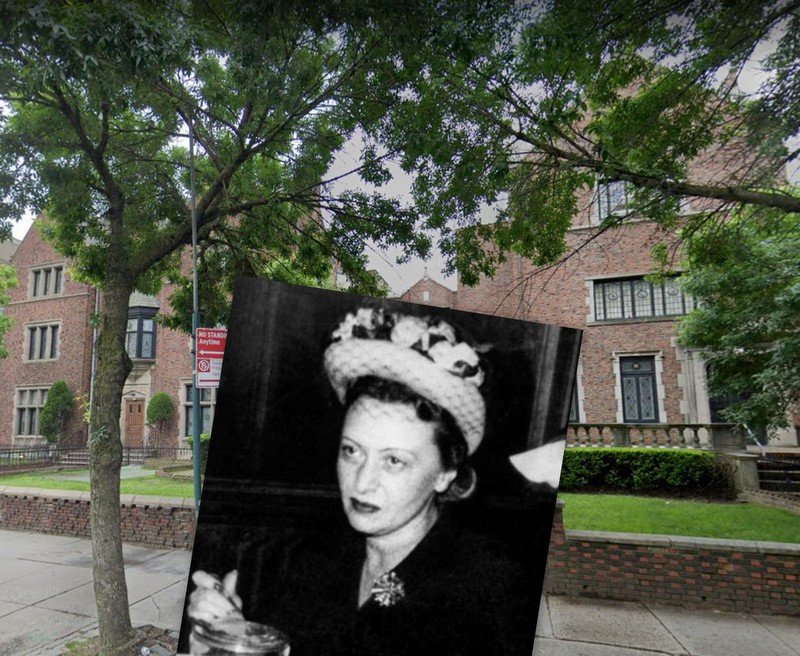
During a particularly cold and icy winter in 1980, the Rebbe and Rebbetzin Chaya Mushka Schneerson began to stay in an apartment next to “770” – Lubavitch headquarters on Shabbos. Finding it convenient, they were soon spending every Shabbos and holiday at 766 Eastern Parkway.
The weekly move was carefully choreographed. Around 40 minutes before candle lighting, the Rebbetzin was driven to Union Street, where she took a path through a courtyard at the back of the building.
To protect her privacy, an entrance had been made there. “In general, there was no one around then,” Rabbi Chaim Shaul Brook recalled, “because the students were just coming back from their weekly ‘route,’” referring to the Mitzvoim outreach visits to offices and businesses by Chabad Yeshiva bochurim.
Still, the Rebbetzin, “would quickly walk down the path, since she treasured her privacy.”
As soon as Shabbos ended, while everyone was still davening Maariv, “the Rebbetzin would very quickly head to Union Street,” Rabbi Brook said, where someone would be waiting with a car to pick her up.
(Later, when she began using a walker, she would enter the apartment through the front of the building, using a special driveway made for her. They also installed an elevator for her use.)
One time, a yeshiva student was rushing to attend services with the Rebbe and decided to take the shortcut from Union Street. Not looking where he was going in the dusk, the 17-year-old ran straight into the Rebbetzin.
The Rebbetzin quickly grabbed onto a fence that was bordering the path, averting her face. Having regained her balance, she continued on her way. By the time the student realized with whom he had collided, he could only call out his profuse apologies as she disappeared.
The next day, feeling terrible for the pain he must have caused the Rebbetzin, then an octogenarian, he wrote a short note asking for forgiveness. He gave it to one of the aides who worked in the Rebbe and Rebbetzin’s home, asking him to give it to her.
The Rebbetzin read the note with an air of disappointment.
“Why did he write his name?” she asked. In order not to have hard feelings toward him, even subconsciously, she said, “I deliberately turned my face so I should not see who it was.”
Find Hasidic Archives latest books on HasidicArchives.com Judaism in a Nutshell and The Edifice: Dating, Marriage and an Everlasting Home, also available on Amazon Prime




Great story with a very important lesson.