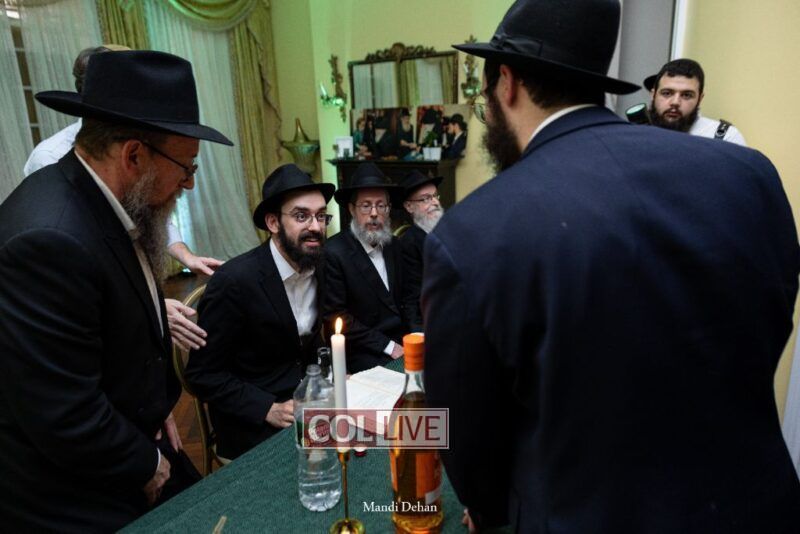
Rabbi Avrohom and Masha Rapoport, Chabad at the Shore, Atlantic City, NJ
By: Chaya Chazan
The gaming halls for which Atlantic City is famed were a gamble that resulted in a terrible fallout for the community and its families, but the Chabad house my parents started in the 80s paid off in full measure. When they first moved, there was a sizable Jewish ecosystem, complete with shuls and a day school. They questioned why Chabad was even necessary. My parents knew the Jewish infrastructure already in place was just the tip of the iceberg, and they were excited to reveal the Jersey Shore’s true potential as a lighthouse of Yiddishkeit.
Careful to respect the organizations already in place, my parents looked for ways to enhance Jewish life in the area, and fill in the blanks. Their first major project was to rebuild the mikvah, which had been abandoned and left in ruins years earlier. They focused on education and shiurim, especially for youths.
My parents involved us in everything they did. I remember accompanying my father to his matza bakery demonstrations as young as 10 years old. I felt so proud and accomplished, as I helped show the kids what matza was and how it was made. One year, my father was suddenly called away, and I was left facing a room full of curious 5-year-olds. Their teacher inclined her head, waiting for me to continue the presentation. With no other option, I picked up where my father had left off. From then on, I led the matza bakery presentations on my own.
We were always encouraged to develop our talents and interests, and, as I grew older, I became interested in directing and producing short films. I thought I’d found my forever job. Although I wouldn’t have the traditional Chabad house and shlichus, I was happy to blend these two themes by producing promotional films for shluchim all over the country.
In 2015, after my wife and I got married, we moved back to Atlantic City to assist my parents. I continued telling shluchim’s stories through the camera lens. There was something magical about the whole process – turning raw interviews into a dynamic, captivating video that helped shluchim reach even more Jews and teach them about Torah. As I stood behind the camera, focusing the lens on these brave couples, whose love for every Jew and incredible mesiras nefesh peeked out through every tidbit they shared, I became more and more enchanted by the Rebbe’s global vision. I was also becoming more involved in my parent’s community, and soon, I placed the camera on the ground and stepped in front of the screen, committing to a full-time shlichus, heart and soul.
My first project was to open a satellite Chabad house in Ventnor, NJ, a small beach town one mile from Atlantic City. We started off small, in a tiny storefront – and, baruch Hashem, with many blessings and miracles, we now have a gorgeous, large campus.
———————
I’d transitioned from a filmmaker to full-time rabbi, and I loved every minute. But then came 2020 and Covid quarantines. The shul I’d worked so hard to build remained shuttered and silent. But just because we couldn’t gather didn’t mean learning had to stop!
I pulled out my phone and began a Facebook live – the first video I ever recorded. It was a fascinating experiment! A crowd of 20 was impressive for an in-person shiur, but the engagement I was receiving for my virtual talks was much greater than that! I began doing livestreams more frequently, and set goals for myself. I was surprised to reach 500 views so quickly, and soon set my sights higher.
I logged into an Instagram account I’d forgotten I’d opened and began posting daily reels. I realized there was so much more to creating engaging content than just talking. With some time on my hands, I read all I could about the industry, and tailored my content to increase my following. I began posting all over social media – even Twitch, although I don’t know the first thing about gaming – and watched my subscriber numbers rise. It’s still somewhat surreal that I now have over 450,000 followers.
The TikTok universe is an untapped market for shlichus. Not only can I teach hundreds of thousands of non-Jews about important Jewish concepts, I can reach Jews who’d never dream of stepping foot in a shul. I pop up on their “For You Page” and hopefully, they’re interested in what they hear.
There’s a balance to creating content that will appeal to a wide, varied audience, while remaining educational and informative. Yes, there are the expected gimmicks, clickbait, and jokes, but I try to make sure every video ends off with a point to consider or some new information.
I’ve lost count of the number of times shluchim have told me a stranger had wandered into their Chabad house, saying Rabbi Raps had advised them to visit their local Chabad rabbi.
While social media has its pitfalls (I don’t let my kids have their own accounts), it’s also an incredible tool with unprecedented power. I can bring my following along through my daily life as a rabbi. If I’m going to a wedding, I record a short clip, interview the bride, and share some insights into Jewish ritual and celebrations. My subscribers follow me to the cemetery, where I respectfully share insights into Jewish mourning. One of my most powerful videos was only seven seconds long. It was a clip of me blowing the shofar with the caption How does the sound of the shofar make you feel? The comment section was an enthralling treasure trove of soulful connections and meaningful reflections.
For many shluchim, it takes months, or even years to build relationships. Every time they interact with a community member, they nurture that relationship, until, hopefully, it’s grown enough to bloom on its own. But for the average unaffiliated Jew, how often are they speaking to their rabbi? Once a year, when they come to shul on Yom Kippur? Perhaps for a few more minutes when the rabbi drops off matzah for Pesach?
When I started doing social media, I noticed something amazing. When I visited people I’d only met a couple of times before, they behaved like we were best friends! Oh, we watched your video on Judaism and Thanksgiving, and we were discussing it at dinner, they’d say. I realized that, while I had only met with them a handful of times, they were meeting me every day! I’m not the rabbi they meet twice a year; I’m the rabbi they watch while they’re waiting in the doctor’s office. They’re so much more open to strengthening their connection with Hashem because of some lighthearted – but meaningful – TikTok videos.
——————-
“Thank you!” Rabbi Arele Loschak of Chabad at Rowan University enthused. “There’s a kid in our college, Tommy*. He actually grew up in Lakewood, but his family was completely secular. They felt alienated from all the black hat people, and even though they were entirely surrounded by Torah and Yiddishkeit, they felt nothing positive towards it.
“Whenever Tommy walked by my table on campus, he deliberately turned away, and sometimes even glared at me. He was distant, cold; totally uninterested.
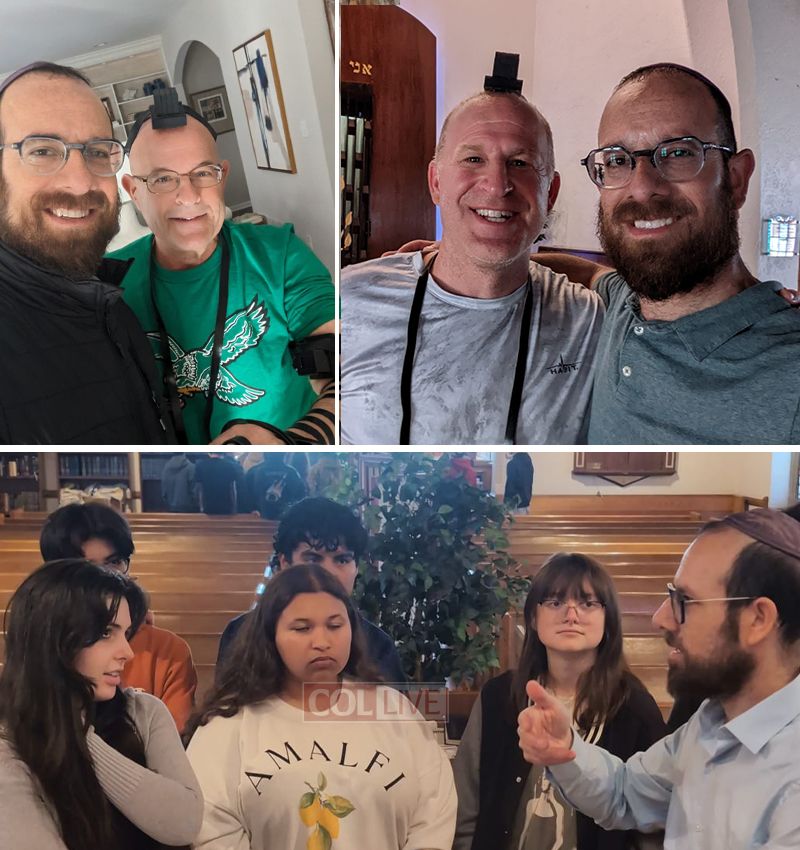
“At the start of the new school year, I was shocked when Tommy headed straight for my table, rolled up his sleeve, and said, Let’s wrap this up! Of course, I asked him what had caused such a considerable shift – and he told me he’d started following you on TikTok. He explained he’d never understood what tefillin were, but after watching your videos, he became inspired to try it for himself.”
A few months later, we hosted a Shabbaton for college students across the tri-state area.
“Hey, Rabbi Raps, I have someone I’d like to introduce you to,” Rabbi Loschak called, leading a student towards me. “This is Tommy!”
Tommy was a little star-struck, but I told him how proud I was that he not only put on tefillin, but was also attending a Shabbaton!
——————-
Emilia* found my account on Instagram and sent me a message. I live in Switzerland, she told me. I’m an elderly woman, and I live all alone. I was recently diagnosed with cancer, and I’m so scared. Can you please pray for me?
When I asked her to tell me more about herself, she explained that she was half-Jewish. Her grandmother was a Holocaust survivor who’d married a Swiss after the war.
I have a long list of people I daven for every day, most of whom I’ve never met in person, so I added Emilia to the list.
“I’m about to have a big operation,” Emilia shared one day, a few weeks later. “Do you know how I might pray for a speedy recovery?”
“Jewish tradition advises adding a name when someone is very sick,” I told her. “We can add the name Chaya. It means life.”
Emilia was thrilled with the suggestion!
That Shabbos, I turned to my congregation and said, “I want to introduce you to someone I’ve never met. Her name is Emilia. She’s bedridden, but she’s doing her best to learn more about Yiddishkeit. She’s lighting Shabbos candles, davening from her bed, and listening to online shiurim. She doesn’t have a shul; she doesn’t have a community. Let’s be her family. Let’s all daven for her, and add Chaya to her name.”
“I love that we can help another Jew halfway across the world!” one of my congregants remarked. “Thank you for this opportunity!”
Sadly, Emilia passed away a short while later. We arranged for her to have a kosher kevurah, and for someone to say Kaddish for her.
————————
Every week, my mother bakes batches and batches of challah and sells them to the community. Like Sara Immeinu’s dough, there must be a bracha in her challah, because people line up around the block to buy a loaf!
It’s turned into an open-air festival of sorts. There’s always music, and people chat about Israel and Judaism while they wait in line. We also sell other kosher foods, and there are stands with Israel T-shirts and other merchandise. We set up a tefillin booth as well, and it’s been heartening and uplifting to see how many people come up to the table, especially after October 7th. It may have felt bizarre to allow a stranger to wrap black boxes on their arm and head, but it was clear their neshamos were crying out to be heard, awoken from their sleep by the tragic fates of their brothers and sisters.
*Names changed to protect identity
Rabbi Avrohom and Masha Rapoport, Chabad at the Shore, Atlantic City, NJ
The Worst Best Thing, Chabad at the Shore Part II
By: Chaya Chazan
I’d become quite attached to the little storefront that served as our shul. Year by year, we remodeled it to fit our needs, and it became a haven of community, peace, and kedusha. Granted, it was situated behind a restaurant, and every person that walked through the door smelled vaguely of crab and pork, but it was our home. In the winter months, when it was just locals, it was spacious. In the summer months, when tourists visited in droves, it became a little more crowded. I knew we needed a bigger space, but it was virtually impossible to find property in a residential, beachfront, vacation city.
Eventually, the restaurant closed and I hoped we’d be able to buy the property from the bank. Despite all my efforts, it fell through time and time again. I was upset and annoyed – why didn’t Hashem want us to own the storefront? Wasn’t that the way forward?
One freezing December night, the frozen pipes had enough. As we completed the refrain of Lecha Dodi, the pipes burst and water began gushing through the walls. We rushed to save the sefarim, piling them as high as we could as the water pooled around our ankles. Seeing that the water was rising even higher, we grabbed the Sefer Torah and as much as we could carry and brought everything to my house, which, thankfully, was within the eiruv.
The shul was completely demolished. We turned our basement into a makeshift shul, but it definitely wasn’t ideal. The summer months, with their swarms of tourists, were fast approaching, and I was obsessed with finding a large building that could comfortably host our minyan.
I clicked endlessly on the website that listed retail space for sale, but the same two entries appeared every time. Neither of them were a viable option, and I spent almost every waking moment trying to find a creative solution around the problem.
One motzei Shabbos, I refreshed the website and was shocked and excited to see a third entry! There was an abandoned church for sale in a great location. I knew that was our new shul. It had to be. There was no other option.
The price tag was far beyond our means. That didn’t matter. The community staged an intervention, telling me it was a hopeless dream and they couldn’t, and wouldn’t, be able to give me the financial backing necessary. That didn’t matter. I spent hours in the Ohel, davening and begging for this plan to succeed.
Despite everyone telling me not to, I signed the contract. In my mind, there was no other option. This was the only way out. Through a long series of miracles, we fundraised the down payment. The building was in terrible disrepair and needed extensive work. We didn’t have the funds for that either, but somehow, through Hashem’s grace and the Rebbe’s brachos, we managed to renovate it into a gorgeous building, perfectly suited for our needs!
A few years later, we even bought a second church a few blocks away and transformed it into our youth center. Now, whenever I pass a church, my community members warn me to look away, scared I might try to buy it!
I thought the flood was the worst thing that could ever happen to us. In retrospect, it was the catalyst for amazing growth.
————————–
I admired Baruch* for his single-minded determination to ensure his mother heard megillah every year. He was a baal teshuva and his mother knew and cared very little for any part of Yiddishkeit, but he made sure she always heard the megillah. Every year, he’d ask me to arrange for someone to read it for her, or to pick her up and bring her to the main reading. After a few years, when she moved into a nursing home, the tradition continued.
Baruch’s mother was sickly and elderly, and she passed away a few years later. When he called to share the news, I condoled with him and asked how I could help.
“The levaya will be on Tuesday in the Jewish cemetery,” he told me. “Can you officiate?”
The cemetery was almost two hours away, and I had a packed schedule. He lived in a large Jewish community much closer to the cemetery, and I knew there were any number of qualified rabbis who could officiate in my stead. I tried asking if he could find someone else, but he insisted that it be me.
“Why?” I asked.
Baruch hesitated, and stumbled over his words. “I have a sibling, Brett*, who’s…. Not traditional. My rabbi isn’t used to dealing with such things, and I just don’t want there to be a whole awkward showdown at my mother’s funeral. I think we’d all feel more comfortable if you could do it.”
I agreed, and rearranged my schedule. Brett showed up with their non-Jewish boyfriend, but I just conducted the service as smoothly as I could.
“That was a really beautiful, meaningful service,” Brett told me afterwards. “I really connected and I’d love to explore that more. Can I join your synagogue for Shabbat services?”
I knew Brett’s appearance might stymie some, but I reminded myself that externals are just that – external. Inside, Brett’s neshama is just as pure and precious as any other, and they deserve the exact same love, attention, and care as anyone else.
Brett joined us many times over the next few months, and even began taking on small commitments in Shabbos and kashrus.
“I’m moving to another state,” Brett told me, one day. “I must tell you: I’ve been to many synagogues over the years, of all kinds. Yours is the first time I’ve ever felt completely comfortable and accepted for who I am. Can you direct me to a Chabad synagogue in my new city?”
————————-
I was asked to officiate a funeral for a dear member of the community. The funeral was well attended by all their friends and relatives, including one in a sea captain’s uniform. Since he was a captain, he was asked to officiate as well. As I stood watching him, someone tapped me on the shoulder and said, “That’s Captain Jake*. He’s a Catholic now, but I know for a fact that he was born Jewish.”
After the ceremony, I approached Captain Jake and introduced myself.
“Are you Jewish?” I asked, wanting to confirm the rumors.
“Not anymore,” he answered. “Years ago, I was on the brink of death. The hospital staff told me my hours were numbered and asked if I wanted to see a clergyman. Of course, I asked for a rabbi. They came back a while later, telling me they’d contacted every rabbi in the vicinity, but none were available to come. They told me they had a Catholic chaplain on staff and asked if I wanted to see him. I really thought I was about to die, so I agreed.
“The chaplain was kind and friendly. He comforted me and said some prayers with me. Then he asked me to affirm my belief in his lord and savior. I was so thankful to him for ensuring I wouldn’t die alone that I agreed.
“You can think whatever you want, but I recovered after that! I’ve been a devout Catholic ever since.”
“Did you ever have a bar mitzvah?” I asked him.
“No,” he admitted. “I always knew I was Jewish when I was growing up, but I wasn’t very involved in the Jewish community.”
“It’s not too late!” I said, pulling out my leather tefillin pouch. “Would you like to put on tefillin now?”
“Rabbi, did you not hear my story? I’m no longer Jewish. I’m not interested,” he answered.
My heart broke. This was a lost neshama, who’d grabbed onto the first thing that offered him warmth. There had been no rabbis available when he needed them most; I refused to let myself be the next rabbi to let him down.
Quickly, I said the first thing that popped into my mind. “You know, Yoshke was Jewish,” I blurted out. “He definitely put on tefillin. It wouldn’t be crazy for you to put them on, too.”
“I guess you’re right,” he conceded. “I never thought of it that way.”
He stuck out his arm and I helped him put on tefillin for the first time in his life.
—————-
Before we had a building, we needed a place for our arts n crafts fair. I knew of Davy*, a delicatessen owner, who had a large gazebo in front of his store. It would be the perfect place to set up, since it was on the main road. We knew we’d meet a lot of people walking past. We asked Davy if we could use his gazebo, and he agreed.
Other than using his gazebo for those years until we got our own building, I didn’t have much else to do with Davy. He wasn’t interested in Yiddishkeit and never even agreed to put on tefillin.
After the synagogue shooting in Pittsburgh in 2018, Davy unexpectedly showed up in shul.
“They’re going after Jews in shuls now, huh?” he said, shaking his head. “I refuse to let a crazy anti-Semite win. I know you must be having a hard time getting a minyan these days. I promised myself I’d come to shul every Friday night from now on.”
Davy was as good as his word. He came every week, in the summer’s heat and the winter snows. Throughout the off-season, when Friday night minyanim were hard to come by, I knew I could always rely on Davy.
After a few years, Davy got sick and was hospitalized. I visited him often, and brought along tefillin each time. Surprisingly, he gave in and agreed to put them on. I was there in his final moments, holding his hand as his breaths grew more ragged. I slowly recited Shema and Viduy with him as he weakly attempted to follow along.
Davy squeezed my hand feebly and looked me straight in the eye. “Rabbi, I’m going to ask you for an impossible favor,” he rasped. “My daughter married a non-Jew, and my grandson knows nothing about Judaism. He’s 11. I’ve tried asking her many times to give him a bar mitzvah, but she refuses to listen. Please, can you try to talk with her? They’ll be at the funeral. I know she probably won’t listen to you, but please do everything you can do make sure my grandson has a bar mitzvah.”
He closed his eyes, and his breathing got heavier. The nurses asked me to step out. A few hours later, I was making funeral arrangements.
Sure enough, I met Davy’s daughter and son-in-law at the funeral, as well as their 11-year-old son, Zach*. Funerals are, generally, very overwhelming and emotional, but Davy’s voice kept repeating in my mind every time I looked at Zach. I knew I had to try.
“Hey, Zach, right? I’m Rabbi Avrohom. What sports do you follow?” I asked, trying to be as light and casual as possible. We struck up a conversation, and Zach was open and friendly.
Later on, Zach started asking questions unusual for an 11-year old. He had many deep thoughts on G-d and religion, and I could see how much his neshama thirsted for connection.
A couple of days later, I approached Zach’s parents. “I don’t want to seem pushy, but I must share this with you,” I told them, in a quiet, but sincere voice. “The very last words your father spoke was a request for Zach to have a bar mitzvah. You don’t need to sign up for a membership, or pay any dues. Just bring him to shul and we’ll give him an aliyah and help him put on tefillin.”
It took some time, but they were finally convinced. Zach celebrated his bar mitzvah in our shul. He also become more connected, joining our CTeen club, and leading the way in showing everyone how to put on tefillin themselves. He even led sports in our summer camp!
I know now to never assume that someone is incapable of making a change and becoming closer to Hashem. Every Jew’s true desire is to connect to their Heavenly father.
*Names changed to protect identity