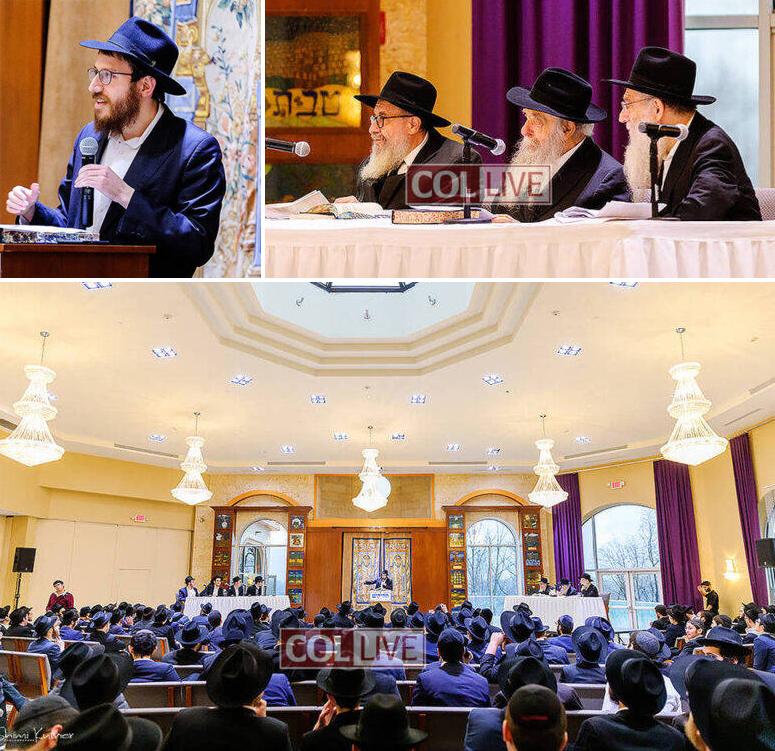
Rabbi Aryeh Citron presents a brief overview of the qualities a person should look for when seeking a future spouse based on Rabbinic literature and the writings of the Lubavitcher Rebbe. Full Story
January 17, 2021 – 4 Shevat 5781
Rabbi Aryeh Citron presents a brief overview of the qualities a person should look for when seeking a future spouse based on Rabbinic literature and the writings of the Lubavitcher Rebbe. Full Story
By Rabbi Aryeh Citron
What are the qualities a person should look for when seeking a future spouse? Although most of the Rabbinic literature focuses on the qualities one should seek when looking for a wife, it would seem that many of these qualities apply also to one looking for a husband.
The following is based on the writings of the Lubavitcher Rebbe as collected in Sha’arei Shiduchim, page 110 and in Nitei Gavriel, introduction to Shidduchim ViTna’im.
Fear of Heaven
The most important quality to search for in terms of a future spouse is Yirat Shamayim, fear of Heaven (Sha’arei shidduchim, page 112).
Kind Heart
One can learn from Eliezer’s search for a wife for Yitzchak that the most important quality when looking for a wife is that of kindness (see Gen. Chapter 24). This is why Eliezer’s only test to find the future wife for Yitzchak was if she would be kind enough to pour water for him and his camels. Eliezer was not at all concerned as to whether or not her family had money.
A Torah Scholar or the Daughter of a Torah Scholar
The Talmud (Pesachim 49a) says that a person should sell everything he has in order to marry the daughter of a Torah scholar and to marry his daughter off to a Torah scholar. The reason one should marry the daughter of a Torah scholar is that it is then more likely that his children will be Torah scholars. The reason one should marry his daughter off to a Torah scholar is that this will ensure that his daughter will be treated with respect as an ignorant person is more likely to mistreat his wife. In addition, by marrying one’s daughter off to a Torah scholar, one will be assisting in the mitzvah of supporting a Torah scholar.
It is noteworthy that while usually one need not spend more than 20% of one’s wealth to do a positive mitzvah (Rama, O.C. 656), this limitation does not apply in this case because it involves Torah learning. The Shitah Mekubetzet on Ketubot 50a proves from a story with Rabbi Akiva and Rabbi Tarfon in Vayikra Rabbah 34:16 that one may give more than 20% to support the learning of Torah. See also Ahavat Chessed 20:5.
According to the Zohar (Parshat Lech Lecha 91b, as understood by the Agra DePirka 87), one who marries the daughter of a Torah scholar can be assured that he is marrying his intended mate (“bashert”).
Ben Torah
The Lubavitcher Rebbe wrote, “One will achieve true satisfaction in life by marrying a Torah scholar (ben Torah) who studied Torah with Yirat Shamayim (fear of Heaven) in a yeshiva (Sha’arei Shidduchin, pg. 115).”
It’s Not About the Money
A shidduch was once proposed to Reb Yekusiel Yehudah Teitelbaum of Sighet, known as the Yitav Lev (1908 – 1883), for one of his children. The father of the (prospective) bride was a wealthy and prominent individual who had promised a tidy sum of money to support the young couple. The Sigheter Rebbetzin (Ruchel, daughter of Rabbi Moshe Dovid Ashkenazi of Tolcsva, Hungary) said, “Whenever a shidduch is proposed that involves money, one has to consider if the family and individual in question are worthy of this match in the merit of their qualities or not. If they are worthy, one may proceed with the match. But if not, one should not go ahead with the Shidduch as the quality of the individual and family should outweigh financial considerations.
In the Words of the Meiri
The Meiri writes (on Mishlei 14:1) “Do not marry a woman for her wealth or beauty because all of that will (eventually) depart ,and all that will be left will be her shortcomings. Choose a woman whose behavior is exemplary, and do not choose a woman for her money lest you become a slave to her (i.e., having to maintain her lifestyle). A wise woman will build a home with her good work whereas a foolish one will destroy it single-handedly.”
External Beauty
Just as the most important aspect of a house is its foundation and its functionality while its external beauty is secondary, so too when choosing a spouse. The external beauty should be secondary to the person’s “foundations” and true character (Sha’arei Shidduchin, pg. 119).
Three Considerations when Deciding
Rabbi Eliezer David Greenwald of Tzehlim and Satmar (1867 – 1928) writes in Keren LeDavid, (Parshat Shoftim pg. 170) that someone once asked the Gaon of Razla (Rabbi Yehudah Tzvi Eichenstien 1792 – 1847) for advice regarding a particular Shidduch. The Gaon explained that one should weigh three considerations before deciding on a shidduch. He based these on the consultations that the Jewish people would have before going to war in the time of King David (see Brachot 3b). They are
1) Common Sense
One must first decide, using one’s own logic, if the shidduch is a good one.
2) Torah Perspective
One should then consult with a Torah scholar if there are any Halachic considerations that must be considered and see if the shidduch is appropriate.
3) Ask the Tzadik
One should then ask a Tzadik for his opinion (and blessing) on the match.
No Extra Conditions
One should not add extra (trivial) conditions to what they are looking for in a spouse as this will only make it more difficult to find a Shidduch. Rather, one should focus on the important qualities and disregard the others (Sha’arei Shidduchim, pg. 113)
Sefardim and Ashkenazim
The Lubavitcher Rebbe was asked many times about shidduchim between Ashkenazi and Sefardi families. Here are several excerpts from his responses in which he strongly emphasized that this should not be a barrier to a Shidduch at all (Sha’arei Shidduchim, pages 133 – 135).
“As to the tone of your letter which indicates that you believe that marrying a girl from a Sefardic family is a compromise of some sort, G-d forbid and Heaven forfend (Chas Veshalom veChas Veshalom) to say such a thing. On the contrary, you should pursue the shidduch.”“Lately many shidduchim have taken place between Sefardim and Ashkenazim, and both sides are happy. These Ashkenazim and Sefardim are not the same as those from earlier eras (when the differences between the cultures was more pronounced). Nowadays, the two groups are much closer to each other than in the past.”
“If this is the only issue, certainly one should disregard it as lately hundreds and thousands of such shidduchim have taken place, and their marriages are strong.”
May all those who need a Shidduch find the right one, speedily!
To subscribe to Rabbi Citron’s weekly parsha email please click here To join the Likutei Torah Bytes (a daily 5 minute lesson of Likutei Torah on the parsha) Whatsapp group, click here
When you login first time using a Social Login button, we collect your account public profile information shared by Social Login provider, based on your privacy settings. We also get your email address to automatically create an account for you in our website. Once your account is created, you'll be logged-in to this account.
DisagreeAgree
Connect with
I allow to create an account
When you login first time using a Social Login button, we collect your account public profile information shared by Social Login provider, based on your privacy settings. We also get your email address to automatically create an account for you in our website. Once your account is created, you'll be logged-in to this account.