Rabbi Yaakov and Mushkee Raskin, Chabad of Jamaica, Montego Bay, Jamaica
By: Chaya Chazan
Our busiest tourist season is always December- April, as snowbirds flee the frigid temperatures up north. We’d had great success with a Chanukah concert the previous year, so I booked Alex Clare for another one this year.
Once the hurricane hit, I was stuck with a dilemma. I’d already sunk so much money into this concert, but my priority now was rebuilding what had been lost. Should we do the concert?
I thought about how the Rebbe would advise me to proceed, and I knew the Rebbe would tell me to “L’chatchiler ariber!” to jump over the obstacles instead of being bogged down by them.
I shared my dilemma with a group of Jews in Kingston, after the Shabbos afternoon meal post-hurricane had turned into an impromptu farbrengen.
“You should hold the concert here!” they recommended. “Ask the Governor General if you can use his residence, the King’s House – the most important house in the country.”
I thought it was a great idea and reached out, pitching a relief concert, with all proceeds to go to charity.
The Governor General was excited about the idea, and graciously lent the concert his patronage.
The event was beautiful, especially following the horrific attack in Sydney.
“I’ve never felt so Jewish,” one woman told us, as she dried the tears from her eyes. “Seeing a religious man singing Jewish melodies, lighting a huge menorah in front of King’s House and all these government officials – it fills me with awe and pride!”
—————-
Since we live in a gated community, visitors to our Chabad house usually call beforehand, so security will know to expect them.
So, I was surprised to get a call from the security booth, letting me know a man was there to see me. They showed me his ID, which identified him as Brent Mintzberg* from New Jersey, and I told the security officer to let him in.
I greeted him warmly and welcomed him in, but couldn’t help asking what had prompted this impulsive visit.
“I saw a picture on Instagram and knew I had to meet with you,” Brent explained. “I visit Jamaica very often, mostly for the music. I’m a huge reggae fan! I saw you posted a picture with Ziggy Marley, one of my favorite musicians, and I knew I had to come here right away.”
I knew exactly which picture he was referring to. I’d given Ziggy Marley yarmulkahs for sons, who are Jewish. I also gave him one of our ARK boxes, explaining that it stood for Acts of Routine Kindness. It was inspired by the Rebbe’s directive for all of humankind to do their best to bring Moshiach closer by performing acts of kindness whenever they could.
I asked Brent if he wanted to put on tefillin, and he agreed. We chatted for a while and parted ways, with Brent volunteering his support.
We didn’t have much contact for over a year, but when news of Hurricane Melissa spread, Brent rushed to his local Chabad house.
“I must put on tefillin for Jamaica!” he cried. He pulled out a wad of cash. “I want to buy a set for myself!”
Since that day, Brent hasn’t missed a day!
When he heard about our relief efforts, he joined in to fill our containers with desperately needed essentials.
The winds of the hurricane stirred up a lot – including Brent’s commitment to tefillin and intense tzedakah efforts!
————-
Danny* grew up in a religious home, but had veered away from all of it as a teenager. He was visiting Jamaica over Rosh Hashanah, and I asked him to join us for every tefillah, to ensure we had a minyan. The second day was especially challenging.
As our tenth, Danny was welcomed warmly every time he entered, and he loved the camaraderie, belonging, and tug of nostalgia. We kept in touch even after he returned to the States.
When he read my posts about the impending hurricane, he immediately commented.
What can I do to help?
I repeated what I’d written in my post – at that point, the best anyone could do was daven for us, and do a mitzvah in our zechus.
I haven’t put on tefillin in a while, Danny admitted. I’m going to put them on today, as a zechus for Jamaica.
We video chatted, and although the storm made service spotty, Danny gave tzedakah, put on tefillin, and we learned the daily portion of Tanya together.
It was touching and inspiring to see how Danny, and many others like him, went out of their way to do a mitzvah for our safety.
—————
Natalie* lived a six-hour drive from us, but as soon as I found out she was Jewish, I asked two bochurim to bring her some Jewish paraphernalia. She was politely grateful and thanked them for visiting.
I texted her every so often, inviting her for Shabbos or Yom Tov, assuring her she was welcome any time she was in Montego Bay, and informing her about upcoming events and shiurim. Natalie never responded to a single message, leaving me on read. She also never took me up on my invitation to drop by whenever she was in town.
After the hurricane, a friend from Negril called. “Rabbi, I know of a Jewish woman who doesn’t have any electricity or generator. Can you help?”
“Of course; I’d love to! Can you ask her to call me?”
“I tried that already. She’s too embarrassed,” my friend sighed.
“Embarrassed…? Of what?” I asked.
“It’s Natalie,” he explained. “When she told me she didn’t have a generator, I immediately told her to call you and ask for one. I’ve been avoiding Chabad for 12 years! she answered me. How can I break this silence by asking for their help? I told her Chabad is here for her, but she’s still too embarrassed.”
“Please tell her there are never any hard feelings!” I told him. “I’ll send a generator right away!”
——————–
I always fly a couple of bochurim down for Chanukah, as it’s one of our busiest seasons. Usually, the bochurim appreciate the tropical weather and fun, oceanside menorah lightings. This year, the mission was a little more challenging.
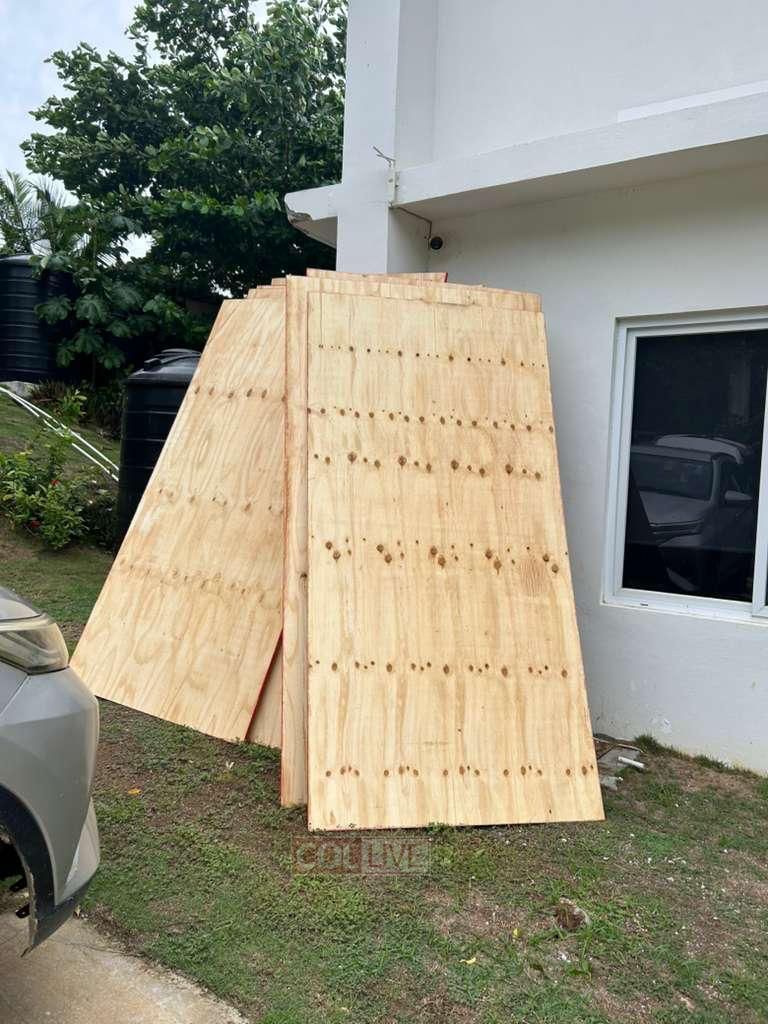
One day, we packed their car full of supplies and asked them to visit one of the hardest hit areas.
“I’m certain many people there would be grateful for these supplies. I know a few Jews in that area, and I’ll give you their addresses,” I told them.
They visited Gary*, one of the names on my list. Although Gary was Jewish, he was staunchly anti-religious. Anytime he’d been invited to put on tefillin, he’d refused.
As usual, when these bochurim offered him a chance to put on tefillin, he shook his head.
“Please?” they begged. “We drove three hours to come see you!”
Gary persisted in his refusal. It was a great disappointment to the bochurim, who were already down from all the destruction and suffering they’d seen. But they mustered up a smile and began unloading their trunk into his arms.
“Here’s a menorah for you,” they said, not giving him a chance to refuse. “Here, take these cookies. They’re delicious! Oh, and these biscotti, too. And here’s a box of matzah. You can never go wrong with matzah!” They unloaded three weeks’ worth of groceries into his foyer, while he looked on, dumbfounded.
“I-I don’t get it,” he finally said, as they stacked the last boxes. “Why are you being so generous to me?”
“We just want to help,” one bochur said, naturally.
Gary stood silently for a moment, then squared his shoulders and took a deep breath. “You asked me to put on tefillin before, and I refused. Well, I’ve… changed my mind. You’ve given me so much, and I want to give you something in return.” With that, he rolled up his left sleeve, expectantly.
————-
With cellular service out for the foreseeable future, we had to make home visits to ensure the safety and comfort of each of our friends. I breathed a sigh of relief when I approached the Pinto’s* door and found the home relatively intact. Mr. and Mrs. Pinto assured me that while they had sustained flood damage, they were doing well. We caught up for a while, until Mrs. Pinto suddenly remembered something.
“Oh, Rabbi! We have a surprise for you!” she burst out. “We just found out one of our neighbors, Nolan*, is Jewish!”
They showed me to his home and I introduced myself, giving him a hearty handshake and hug. Nolan had been living in Jamaica for years, but had never heard of us. Somehow, we’d never heard of him, either!
I sat in his kitchen as we talked, evidence of the hurricane’s damage all around, and couldn’t help but think: This is all thanks to Hurricane Melissa. Had there been cellular service, I would’ve called the Pintos and heard they were fine. I most probably wouldn’t have thought to visit them in person – and then I’d never have met Nolan.
Since then, Nolan has visited our Chabad house a few times, and the elderly, lost Jew has finally found his way back home after years in the proverbial dark.
————-
One of the many meaningful moments for us after the hurricane was fixing our menorah.
It sounds small. But it wasn’t.
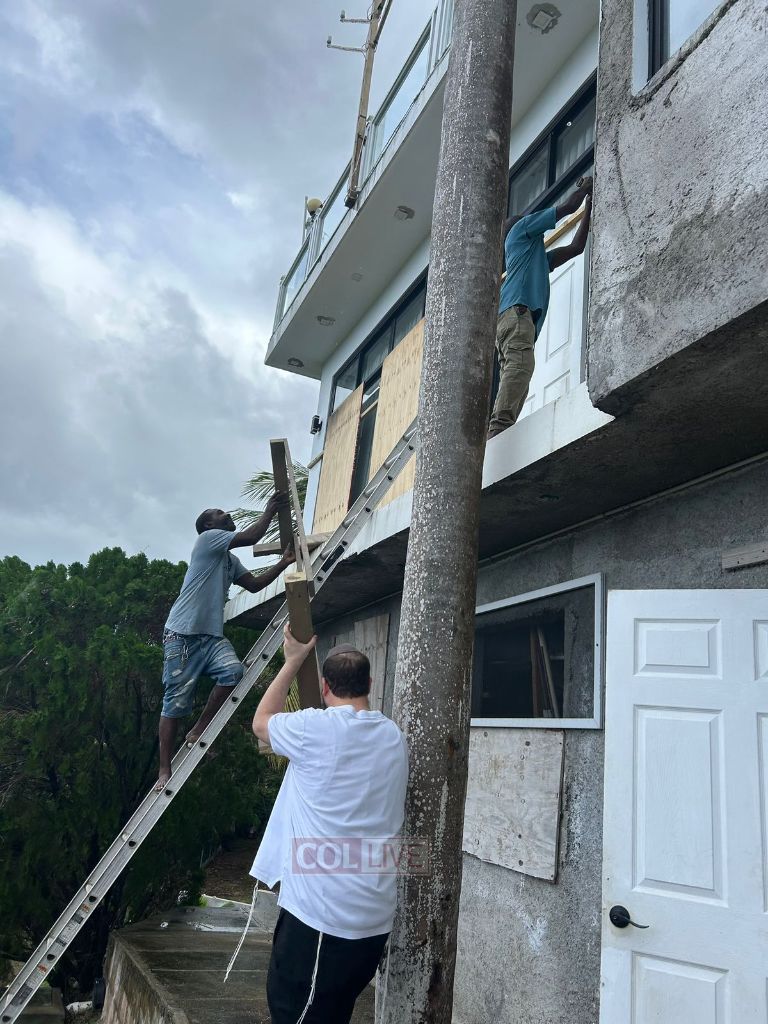
The hurricane smashed many things. Among them were our glass railing — and our tall, 16-foot, heavy steel menorah that stands proudly all year round facing the half moon golf course and Caribbean sea. It felt like us – still standing, but broken.
Going into Chanukah, we weren’t planning anything big as we do every year. Honestly, we weren’t planning much at all. We were focused on the Chanukah concert, on relief, on just keeping things moving. The usual horde of tourists were absent, so there’d be no hotel lightings as was usual, with hundreds of Yidden present. Our plan was to just turn the large menorah on, without an official ceremony, ad put our energy into home visits across all 14 cities of the island with the bochurim. That’s where the light was needed.
Then Erev Chanukah came — and everything changed.
We woke up and heard about the devastating tragedy in Sydney. Our fellow shluchim were murdered just for being Jews, openly celebrating Chanukah. We were shattered and devastated, but as chassidim we were taught by the Rebbe how to respond to terror — with light!
And suddenly, turning it on quietly didn’t feel right at all.
We said to ourselves we had to do something, even it wasn’t fancy or elaborately planned. Just something real. We couldn’t let the terrorists think they won. Our light can’t only shine on the last night, when the concert was scheduled. It has to shine every night – from the very first moment of Yom Tov!
So by 12 that day, we’d called the local Jews in our city for an early evening lighting. We reached about forty people. What happened next surprised us. Many locals came, and we even met Jews who live here and never came before – Jews who gave us every excuse in the book since we arrived in Jamaica.
And that hug — that moment when we all stood there together — that’s what got me.
After tragedy, something opens. People know instinctively that we have to gather; we have to be together. Lighting that hastily repaired menorah — broken, fixed, but still not perfect — reminded us of who we are.
We may be broken. But we rise.
Light doesn’t need perfection. It just needs to be lit.
And it will win!
*Names changed to protect privacy