
By Dovid Zaklikowski for COLlive and Hasidic Archives
Rabbi Avrohom Shmuel Bukiet had recently arrived in Israel as one of the Rebbe’s Shluchim to the Holy Land. He settled in the holy city of Tzfas when one day his young son was sick. Being that the local hospital was known to be inferior, he was told that it would be better for him to travel to the Poriya Medical Center south of Tiberias.
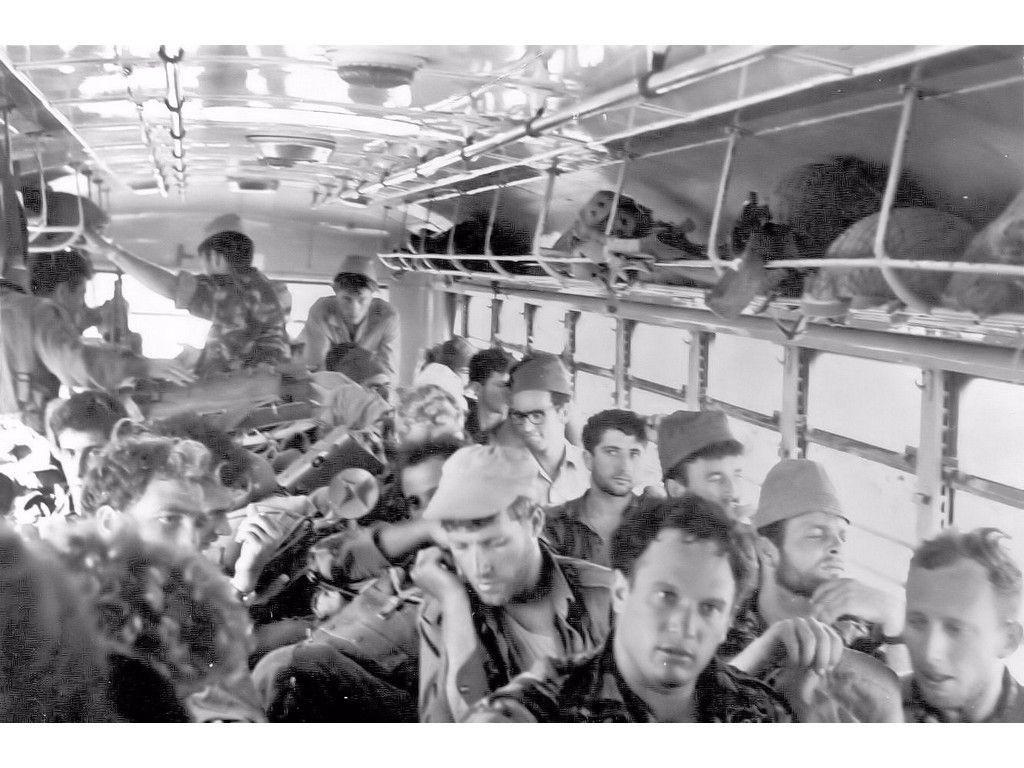
Gathering two-year-old Zalman in his arms, the rabbi embarked on the two-hour bus ride to the hospital. It was one of his first experiences on an Israeli bus: At each stop, more passengers got on, until there was hardly room to move. The air was thick with perspiration. Soon, however, Rabbi Bukiet noticed that there was something else in the air—tension.
Everyone was looking at one teenager who was sitting toward the front. An elderly man—Rabbi Bukiet thought he looked old enough to be her great-grandfather—was standing next to the girl with a look of annoyance on his face. “Would I be able to sit down?” he asked. She looked up, seemed about to reply, but noticing the disdainful looks of the other passengers, she turned away in silence.
The old man began muttering aloud. “Where is a little respect? Look at the new generation of sabras! They don’t know how to give the common courtesy afforded to the elderly in every other civilized society.”
Visibly angry, the man stormed off the bus at the next stop. As soon as he left, the other passengers began to discuss the incident among themselves. The girl was roundly, and audibly, condemned. Everyone had a comment, a novel expression of outrage to contribute. Throughout, the girl remained in her seat, facing the window.
Slowly, the bus began to empty as the passengers disembarked, throwing one last look of derision, or sotto-voice comment, at the girl.
The hospital was the last stop. As he picked up his son and prepared to get off, Rabbi Bukiet was shocked to see the girl in the front bend down and pick up a pair of crutches from beside her seat. Slowly, painfully, she limped to the door and down the stairs.
Rabbi Bukiet quickly recovered himself and ran after her. Did she need help, he asked. Was there anything he could do? She looked abashed and seemed barely able to speak. “Tell me,” he asked in his broken Hebrew, “why didn’t you just pick up the crutches? Everyone would have understood and left you alone.”
“I couldn’t,” she responded simply. “I just couldn’t.” She looked him in the eyes. “But what did you think while this was all happening?”
Rabbi Bukiet was ashamed of the thoughts he had harbored on the bus. He thought for a moment. Years later, telling the story, he would recall the final words of that unforgettable conversation: “It has been a long, hot, and tiring trip. But it was worth everything just to be a witness to this story.”
Find Hasidic Archives latest books on HasidicArchives.com Judaism in a Nutshell and The Edifice: Dating, Marriage and an Everlasting Home, also available on Amazon Prime.