
By Dovid Zaklikowski
Rebbetzin Chaya Mushka Schneerson, wife of the Rebbe, led a secluded life far from the limelight of the Chabad-Lubavitch movement. She shunned the honors or privileges she was offered by followers and admirers of the Chabad movement.
Several families were close to the Rebbetzin; most were friends, relatives, or old family ties from Europe.
Yet the Rebbe greatly relied on the Rebbetzin for personal support; some say she was the only individual with whom the Rebbe could speak openly. She was a well-read, perceptive and wise woman, and was said to be an equal intellectual partner to the Rebbe. Dr. Ira Weiss, the Rebbe and Rebbetzin’s cardiologist, described, “Their relationship was a very important part of the Rebbe’s life. He once explained to me that having daily tea with his wife was on par with other Jewish ritual observances.”
For the most part, the Chabad community did not know the vital role the Rebbetzin played in his daily life and communal activities. However, on the day of her funeral in February 1988, the Rebbe’s raw emotions and deep pain were apparent. From the moment he stood over her casket to the prayer services, and through the shiva, the Rebbe shed many tears, choking up as he spoke about her.
To New York City mayor Ed Koch the Rebbe said, “In everything that G-d does there has to be a part—an integral part—that is essentially good. However, the nature of every human is to try to entirely understand what happened. Therefore, in the future, may people experience only visible and revealed good.”
When a rabbinic leader told the Rebbe that his pain is the pain of the entire Jewish nation, the Rebbe replied, “Solace from the pain is only a half-comfort; it should be G-d’s will that there be complete comfort,” referring to the messianic era, when all tears will be wiped away.
On the fourth day of mourning, the Rebbe encouraged the dedication of new activities in his wife’s memory. “There should not only be resolutions, but actual activities initiated. As the mourning process of seven days, thirty days, and twelve months progress, so should the said activities,” the Rebbe requested.
The Rebbe added that the activities should be done in a peaceful manner. “When doing something in her memory, it should be done in a way that will give her gratification. Actions that are the opposite of peace and Jewish law do not provide satisfaction to her soul.”
In honest and revealing terms, the Rebbe continued, “One should not be despondent about this loss…More so, one needs to do as much as possible to influence the feelings of his or her heart.”
Dr. Weiss readily saw the deep effect the Rebbetzin’s passing had on the Rebbe, but the Rebbe was a man of action. Instead of becoming more reclusive, the Rebbe extended the time he spent with his followers. He spent more time interacting with people on the famous “dollar line,” where he would distribute crisp dollar bills for charity, and increased his participation in communal prayers. The Rebbe recognized that the only way to heal was through the expansion of his activities.
When someone told the Rebbe that the Rebbetzin was a “wonderful woman,” the Rebbe said, “In my opinion, your statement is an underestimation; G-d Almighty knows the truth. If everyone will try their best to emulate and fulfill her wishes, it would be the best gratification for her soul, and great news for the living person [myself] who remains after her.”
An excerpt from From Life to Life:
available on Amazon.
Bulk orders welcome [email protected].
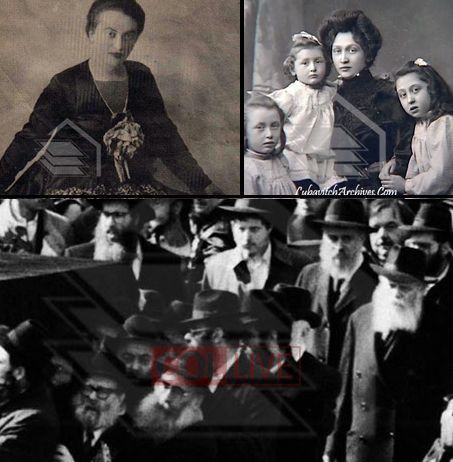
Photo: Rebbetzin Chaya Mushka Schneerson




Thanks for the story. Went through very hard year. Went to judaica world and picked up a copy. It is a really touching publication. It has a lot of food for thought, surely to accompany me for a long time.
wow very nice pictures thank you so much for sharing with us
the pictures of the rebitzen are amazing
what a photo of the Rebbetzins.
is it available on Kingston?