
By Getzy Markowitz
Moments before our forefather Jacob passed away, he dictated a final will to his cherished son Joseph. Jacob pressed his youngest child – Pharaoh’s deputy – to entomb him in the Cave of Machpeila in the land of Israel. He wished to be laid to rest along the rest of the Patriarchs and Matriarchs, in the plot purchased by Abraham two generations earlier.
Abraham buried Sarah at the Cave, and later he too was interred there. Isaac, Rebecca, and Leah followed. However, Rachel, Joseph’s mother from whom he was tragically orphaned in his youth, was buried in solitude on the side of a road at Bethlehem. Joseph was a child when his mother passed on, but the pain of what could be perceived as an injustice to Rachel had matured with age. Now, as Jacob’s soul was about to return to his maker, he had his son vow that he would not bury him in depraved Egypt, as retribution for what had been done to Rachel. He explained that the rationale for her internment at the roadside was buried in destiny. One day the Children of Israel would be exiled from their land, pass their mother’s tomb, and she would cry for their sake, piercing the heavens and evoking G-d’s mercy.
On the 9th of Av, a day when Jews mourn the destruction of both of Jerusalem’s holy temples, I accompanied a delegation of rabbis to recite traditional lamentations at the resting place of our restless mother Rachel. Hundreds of thousands of Jews were rightfully wailing at the day’s ground zero, the Western Wall. We, however, went to visit our mother who pleads on behalf of her children.
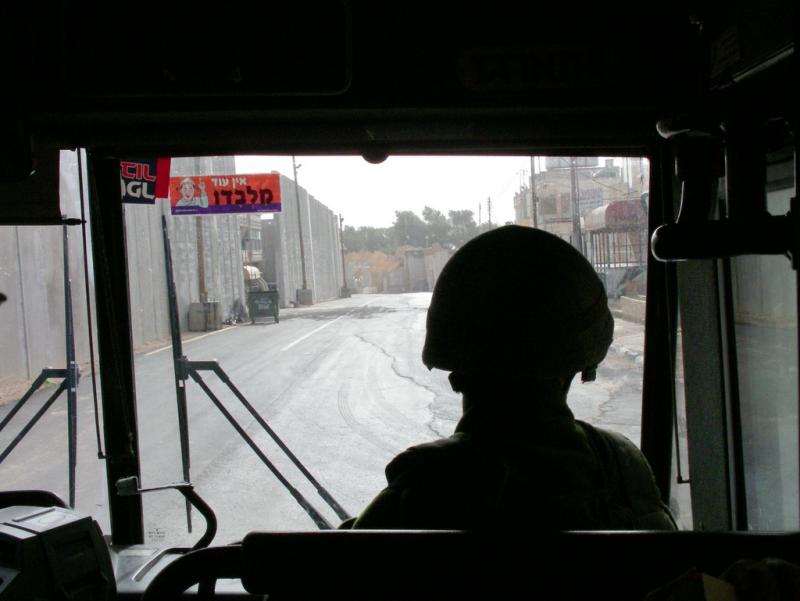
Arriving at the security checkpoint that awaits petitioners at Rachel’s tomb, I felt a touch of the resentment that Joseph might have harbored. The compound that houses our matriarch’s mausoleum is wedged among concrete security barriers that separate the West Bank from the Jewish State. One feels helpless witnessing how she lies there amidst unfriendly surroundings, just to be our aid when we are in need. It is heartbreaking to stand in the presence of a woman who sacrifices, even in the afterlife, for the broken-hearted.
Today, we are desperately in need of our mother’s love. As her children move beyond enemy lines, and as fears of enemies crossing the frontier intensify, we need Rachel’s uncontrollable tears to elicit G-d’s biblical call to her to contain them: “Thus said G-d: A voice is heard on high, wailing, bitter weeping, Rachel weeps for her children; she refuses to be consoled for her children, for they are gone. Thus said G-d: Restrain your voice from weeping and your eyes from tears; for there is reward for your accomplishment – the word of G-d – and they will return from the enemy’s land. There is hope for your future – the word of G-d – and your children will return to their border.”
Rachel’s tomb serves as a constant reminder of exile, as she painfully watched her children forced away. Beginning with the Babylonian Captivity and running through our current state of uncertainty, Rachel’s tomb represents our people’s constant yearning for home, and that yearning will never be laid to rest. Our mother is an advocate for her children’s rights promised to her millennia ago: the right of return, from our enemy’s lands, and to our broadened borders.


att #1:
your message seems to be:
“I have a problem with your personal encounters,
I have a problem with the places you visit, and all the many thiings you have to write about”
This is the style of writing. The personal touch makes it interesting to read, the essay is not just a piece of writing,
“Jacob pressed his youngest child – Pharaoh’s deputy -”
Was not Binyomin the youngest?
Rabbi Markowitz,
Thank you again for your article it’s great! But if you remember I love when you write ideas, but please stop to write about yourself! Please, Talk to Rabbi Jacobsen about this problem he can help you at.
Thanks.