
By COLlive reporter
In honor of Chanukah, Rabbi Nachman Wilhelm, Rosh Yeshiva of Online Smicha presents a special class about the holiday’s staple foods.
Two of the most known dishes during the 8 day festival are latkes (potato pancakes) and sufganiyot (jelly donuts), both of which are made with oil to celebrate the miracle in the Beis Hamikdash.
In this class, Rabbi Wilhelm brings two opinions from contemporary halachic authorities on which of the two is preferred to be eaten (naturally, there’s a machlokes).
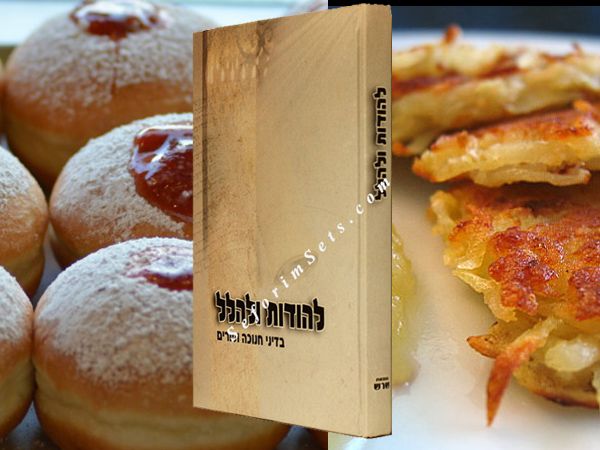
In addition, Rabbi Wilhelm released a new book titled “L’Hodos U’Lehallel,” a useful and easy to learn summary of the laws and customs of Chanukah and Purim, primarily based on the Alter Rebbe‘s Shulchan Aruch and Siddur.
Presented in a question and answer format in Hebrew, it reviews the laws of both holidays and gives insight to the blessings on the candles and the megilah from various sources.
The hardcover 210-page book has received positive haskamos from leading rabbis (on its original publication as a booklet), such as the late Rabbi Menachem Klein, Dayan Rabbi Zalman Nechemia Goldberg, head Chabad rabbi in Israel Rabbi Yitzchak Yehuda Yaruslavski and Rabbi Sholom Ber Chaikin of Cleveland.
To quote one point from the new book, said by R’ Pinchos of Koritz: During the lighting of the candles of Chanukah, the hidden light is revealed and that is the light of Moshiach.
The book is sold in all Judaica and book stores in Crown Heights and on the website SeforimSets.com.


That’s why you wear those funny hats. Nobody at the time of Matan Torah or the Mishnah or the Gemorah wore a hat like that. But your Rebbe did. So you don’t have reshus to change it. Same thing with latkes. It doesn’t matter what they did before they had potatoes. Now that we (Ashkenazik Yidden) have a minhag of eating latkes we are most certainly NOT allowed to go out from it! Got it?
Over the centuries, different Jewish communities throughout the world have found a variety of ways to incorporate both oil and dairy into their Chanukah meals.
One of the most famous, Israeli sufganiyot, may actually derive from a yeast dough pastry mentioned in the Talmud. These pastries were cooked in oil and called sufganin (absorbent) because they absorbed a lot of oil in cooking. They did not contain milk, but were sweetened and perhaps even filled with honey and the fact that they were cooked in oil led to the pastries becoming a Chanukah staple early on.
This is not true! Donuts are fine during Hanukkah. Potatoes became popular after they were introduced from the New World in the 1500’s. Nobody heard about potato latkes before that. People think that food was readily available back then; it was hard to get, and would have anything that was kosher during Hanukkah if they were lucky enough to have food. Potatoes grow almost anywhere. That is why latkes became popular; there were potatoes available for food at the time and probably very little of anything else.
Anyone that claims that Latkes are the food that our fore-fathers ate during Hanukkah is missing an important fact: latkes require potatoes, and potatoes were not known in Europe before the discovery of America. Latkes must have been introduced after 1492 probably by some liberal Israeli. In other words, the minhag of eating latkes does not pre-date 1492 – not even in White Russia. Not a single Jew before Columbus – including the sages of the Gemara – would have considered having latkes during Hanukkah, because there were no potatoes back then outside of the Americas. Why would anyone be… Read more »
Donuts have no kesher to Chanukah. It’s a invention of non-religious Israelis. Who says we have reshus to change minhag avoseinu? I’m not bothering to waste my time watching this video. It’s a pashut zach that my family ate latkes in Lita and White Russia and I and all my sons and daughters will do the same.
Donuts are fine during the year. We do not eat them on Chanukah.
I really enjoyed it!
Presumably you mean the beis Yosef’s shulchan aruch as there is no alter rebbe on Chanuka and Purim