
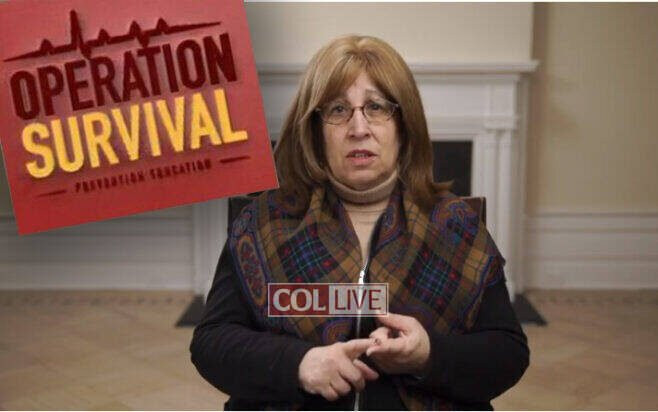
By Dr. Rona Novick, PhD for Operation survival’s prevention 101 series
To detect bullying in the classroom, teachers must be keen observers of their students’ interactions. They must pay attention to the social climate and social fabric. This means noticing who works with whom and who never has a partner. It means looking for those subtle signs of eye rolling every time somebody answers a question. Teachers must look at who brought invitations to school and who did they give them to. They need to notice who plays with whom during recess.
Beyond noticing all of that, teachers must also use their powers as educators to create a culture of kindness that values everyone’s input. Teachers can do this in subtle and in grand ways. A subtle method is for teachers to instruct students that when anyone, teacher or student, is speaking, everybody should orient his or her body toward the speaker and make eye contact.
There are also many ways to create an inclusive culture on a much grander scale. For example, a kindergarten classroom was getting a new student mid-year. The day before the new student came, the teacher said, “We are taking down all the pictures and emptying all the cubbies because tomorrow we are a new class. Today, we are the class without Charlie, and tomorrow, we are a new class because we have a new member.” This was a powerful message that conveyed how much the teacher valued every individual in the class.
Teachers must be proactive, setting up rules and procedures that communicate how everyone is valued, everyone matters, and everyone is treated nicely. Teachers must also be reactive. When adults see bullying happen and do nothing, they send two really dangerous messages. They send a message to the bully that this behavior is tolerated and condoned. Even more dangerous and potentially deadly, this inaction tells the victim, you are not protected or cared for. Even adults will let this happen to you. We can’t afford for children to feel the level of desperation that comes from that kind of non-response from adults.
Teachers play an important role in teaching children to treat their peers with kindness, but it is not only the teacher’s job. Parents also need to be involved in teaching their children how to interact appropriately with their peers. Together, teachers and parents can create a generation that does not resort to and does not tolerate bullying.
(Interview with Dr. Rona Novick, PhD for Operation survival’s prevention 101 series)




I’ve heard it said that bullying is connected to insensitivity in the home, like between the parents, or parents not mediating with issues between children, arguements, lack of sensitivity (which could include loshon hara being spoken out in the open of the house, etc) and more. It makes sense, and I would try it myself to be more careful. This is something which needs more information. Its horrific, and in the Jewish community? I would be more than upset if my kid was part of that.
My daughter has been bullied and when I realized who the bullies were and who the families were it all made sense. Not that it is an excuse, but a major factor is the home life. I explained it to my daughter as well people who hurt tend to hurt others. Thankfully where she goes to school there is zero bullying tolerance and swift action was taken.
to br127
We address some of these issue here:
https://collive.com/how-can-i-prevent-my-child-from-being-a-bully/
Wonderful article, if only the teachers would go along with your suggestions. How would you suggest parents handle a teacher that bullies a student/s?