By Robert C. Pollack, Shore Line Times
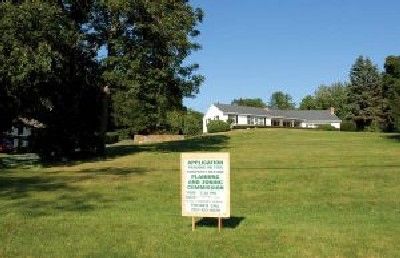
A hundred and fifty strong, they crowded into the community center last week at the Guilford Planning and Zoning Commission hearing over the Chabad of the Shoreline synagogue proposed for 181 Goose Lane.
Opposition to the synagogue is led by Dr. Donna Criscenzo, who conducts her medical practice on the ground floor of the spacious home she lives in right next to the proposed 17,000 square foot building.
She has repeatedly said it would change the quality not only of her life but the lives of everyone in the immediate neighborhood and has claimed the 5.3 acre site is simply not the appropriate place for such an institution in an R-5 zone.
Her neighbors have objected it would make already untenable traffic on Goose Lane – already difficult to cope with during rush hours – almost impossible, a claim strongly denied by Chabad attorney Marjorie Shansky. She has cited a traffic study that said the increase in traffic would be minimal as no more than 100 or so people are expected to use the facility at any one time.
But neighbors insist the religious institution – which would include a day care center and summer camp – is too big for the targeted property and would dramatically change the character of the neighborhood.
Religious institutions are allowed in all Guilford zones if they meet special permit requirements, which Chabad backers insist theirs does.
The opponents disagree.
Shansky says the property is ideal for a synagogue because it is down the street from Yale-New Haven Shoreline Medical Center and is bordered by the biggest industrial site in town. She denies neighbors’ claims it would reduce their property values.
At last week’s hearing, Chabad – a Hasidic Jewish organization now operating out of a small office in Branford – spent virtually the entire time presenting its case.
The hearing was therefore continued until Sept. 17.
Attorney Edward Caseslla, hired by opposing neighbors to represent them at the hearings, has filed a lawsuit seeking a temporary injunction that would halt construction of the synagogue should it win PCZ approval, pending settlement of the suit. It is based on a covenant by the property’s previous owner that said only a house or farm could be created on the property.