

This year, the Chassidus in Color Art Contest is back—and winners will be announced at a May 18th event at the Jewish Children’s Museum.
Submissions open on Rosh Chodesh Adar, March 2nd. So painters and digital artists of all experience levels across the Jewish world are getting to work on their newest masterpieces. They have until 11 Nissan, April 9th, to submit their work.
If their art makes it to the final rounds, they’ll see it prominently displayed for three weeks at the Betzalel Art Gallery or the Maor Art Gallery—in Crown Heights and Prospect Heights, respectively- with the opportunity to sell. Winners will receive cash prizes, as well as prizes sponsored by ArtToFrame and EZRI designer bags.
Here are 2 featured submissions:
Naomi Estrin, 17
Naomi Estrin is a 17 year old junior, studying at Beis Chana Miami. She lives with her family in Lauderhill, FL, and as a distraction from homework, dabbles in various forms of art, including chalk pastel, portraits, graphic design, and pyrography. She says, “Art helps me visualize Chassidus through a wider lens, making abstract concepts more personal and practical.”
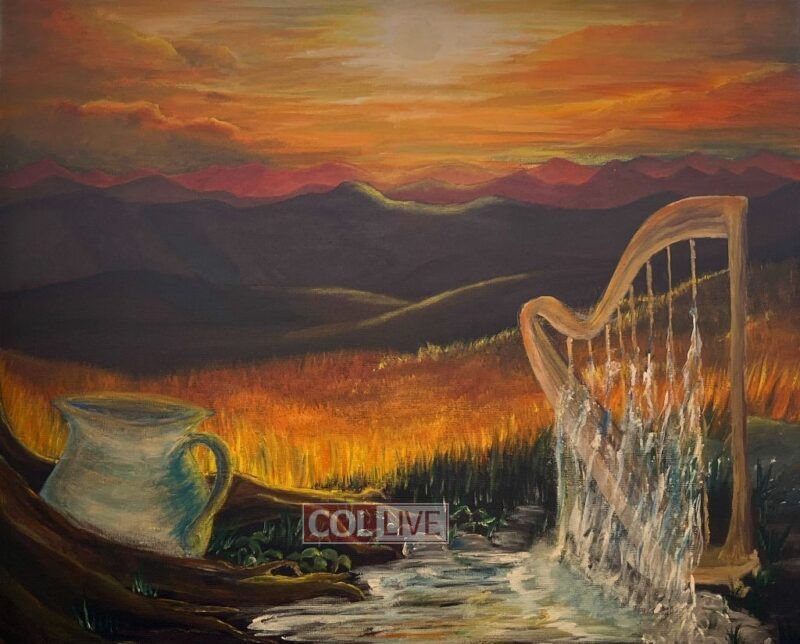
Title: Ties of Eternity
After the Second Beis Hamikdash was destroyed, Rabbi Yochanan ben Zakkai recognized the grave danger Judaism was facing. With the Beis Hamikdash in ruins and many of the Mitzvos no longer applicable, he understood that something had to be done to preserve the heart of Jewish life. Therefore, he instituted nine Rabbinic laws to ensure that the service of the Beis Hamikdash would be remembered and held dear among the Jewish people throughout the long and bitter exile. One of these enactments was the tradition of washing our hands before eating bread—a reminder of the Kohanim washing their hands before eating the Lechem Hapanim or Terumah.
However, these laws were not only intended to serve as memories of a bygone era. Rabbi Yochanan ben Zakkai understood that without strong ties to the past, there would be no hope for the future, and the present would be bleak. By instituting simple, everyday acts—such as washing before bread—he ensured that we would remain eternally connected to both our past and our future through our actions in the present.
More than that, fulfilling these Rabbinic practices can awaken within us a deep longing to return to our homeland and to the way we once served Hashem—in the Beis Hamikdash. Simply by washing one’s hands before eating bread, or by fulfilling any of the other Rabbinic enactments, one is reminded of the days when Hashem’s presence dwelled in the Beis Hamikdash and all the Mitzvos could be fully observed. A sense of discomfort with remaining in exile begins to stir within, and the individual yearns for Hashem to redeem us from Galus immediately.
Through engaging with the physical world and infusing holiness into even the most mundane actions—such as eating bread—we are actively bringing closer the time when our relationship with Hashem will transcend the bounds of nature. This will be the era of the “eighth level”—when the eighth string of the holy harp of Dovid Hamelech will sing its divine melody. And it is then that we will witness the fulfillment of the prophecy: “ומלאה הארץ דעה את ה׳ כמים לים מכסים”—”The world will be filled with the knowledge of Hashem as the waters cover the sea.”
Featured Submission #2
Maya Fuchs, Alpharetta Georgia
“Niggun shel Geulah/A Melody of Redemption”
This painting was inspired by Miriam the Prophetess leading the women of Israel in song and dance after crossing the Red Sea in Exodus 15. I was struck by their celebration with timbrels, carried in faith that redemption would come. What resonated with me most deeply was the powerful image of women expressing their spiritual connection to Hashem with such joy, strength, and certainty. Their faith felt active, embodied—an expression of trust that went beyond words. The sparks of light in the piece symbolize nitzotzot, hidden sparks of holiness that are elevated through acts of goodness. This idea comes from the teachings of the AriZal and was further emphasized by the Lubavitcher Rebbe, who taught that every mitzvah, no matter how small, has the power to lift the world closer to redemption. I tried to express that visually through the upward spiral of golden light. The verse from Az Yashir Moshe, though not directly included, helped shape the emotional core of the piece, reflecting G-d’s enduring kindness. The painting speaks to the movement of faith—both personal and collective—as something deeply rooted in joy and connection. Ultimately, it’s about women’s spiritual strength, the sparks we lift, and our ongoing role in the journey toward redemption.
Shemot (Exodus) – Chapter 15, Pri Etz Chaim – p.12; p.45, Hayom Yom: Cheshvan 1
Acrylic paint and marker on canvas panel, accented with faux glass shards with a Gloss varnish
The Chassidus in Color Art Contest is hosted by ChassidusApplied.com and enjoys an exclusive media partnership with COLLive.com.
For full rules, prize information, and to SUBMIT, please visit: chassidusapplied.com/chassidusincolor
For inquiries, questions, or comments, please text 203-687-6436 or email [email protected].
To join the WhatsApp broadcast: message: WhatsApp Group Invite
—
Chassidus in Color has also has teamed up with Tzivos Hashem to launch a special art competition for young artists—with two tracks giving artists aged 7-10 and 11-14 their own shot at hefty prizes.
The Chassidus in Color Art Contest has teamed up with Tzivos Hashem to launch a special art competition for young artists—with two tracks giving artists aged 7-10 and 11-14 their own shot at hefty prizes. Chayolim have until Lag B’Omer to submit their Geulah-themed art through Tzivos Hashem’s website, using their parent’s account.
Read more and enter the contest here.


Love seeing these.
The Rebbe shlit”a corrected Boruch Nachshon o”h on his painting of a harp that “[about the strings] there needs to be seven or ten (Medrish Tehillim 33:1), sometimes four, but never six.”
She did eight for the one of Moshiach not six?
wasn’t correcting just pointing out