
Twenty years ago, during Chanukah, I stood with family and friends in a New York courtroom while jurors pronounced a guilty verdict for the terrorist gunman who murdered my 16-year-old son, Ari.
The shooter, a livery cab driver named Rashid Baz, was a Lebanese national living in the United States as a conditional alien. Armed with an Uzi, a Glock pistol, a street-sweeper shotgun and a .380 automatic, Baz turned his weapons on a van full of Jewish kids on the Brooklyn Bridge on March 1, 1994. After the guilty verdict a year and a half later, Baz was sentenced to 141 years in state prison.
Back then, cell phones were rare, there was no social media and there were no federal anti-terrorism laws on the books. Despite Baz’s terrorist motivations, for years his crime was treated as a random act of violence by a lone gunman rather than an act of terrorism against innocent Jewish Americans. It took seven years to finally get recognized as terrorism.
In the two decades since Baz’s trial, I have become, a reluctant expert on terrorism. I’ve lectured to thousands of law enforcement officials from the United States and other countries around the world, met one-on-one with counterterrorism officials, and spoken to countless civic groups about terrorist threats.
Last February, I was invited to a summit at the White House focused on countering violent extremism that took place just days after the Charlie Hebdo attacks in Paris. The mayor of Paris attended, as did the mayor of Brussels, which has become an unregulated hub for militant Islamists.
As last month’s attacks in Paris and last week’s attack in San Bernardino make clear, things have gotten worse since last February, not better.
Here’s what we do know: Terrorists come in all styles. They use guns, as Syed Farook and Tafsheen Malik did in San Bernardino. They use knives, as Palestinian assailants do in Israel. They use bombs, as terrorists have done in Brussels, London and Madrid. They’re men and women, homegrown and foreign-born.
For the most part, U.S. law enforcement agencies have done a fantastic job of protecting us. Aside from the 2,972 innocents killed on 9/11, 130 people in America have been killed by terrorism since 1990, according to FBI statistics. You have a far greater chance of being killed by lightning.
Terrorism, of course, gets far more attention, and rightly so. Terrorists inspired and supported by ISIS are plotting their next targets. In Iraq and Syria, ISIS has been capturing land, amassing vast financial resources, exploiting women as sex slaves, gaining valuable battlefield experience and strengthening its home base. Through social media, ISIS is recruiting followers all over the world.
Without vigilance, terrorism can spread like a scourge. We need to be more proactive, and we need a long-term plan. Here’s what I propose:
l We know young people are most susceptible to the Islamic State’s radical propaganda. Rather than holding more conferences of experts, we need to develop an action plan for making sure our young are not lured by ISIS’s message. Law enforcement bodies need to employ younger recruits to address the social media challenge.
– Instead of watering down the Patriot Act, we need to give all levels of law enforcement more tools to fight terrorism, with the appropriate oversight. Our criminal justice system must prosecute terrorists to the full extent of the law, and our prisons must be places that counter radicalization, not breed it.
– Donald Trump’s rhetoric notwithstanding, we must overhaul immigration laws, which have barely changed since my grandparents came to America in the 19th century. We need laws that work for the challenges America faces today. Make it far easier to remove those suspected of terrorism — and prevent them from coming into the country in the first place — without indulging in silly proposals aimed at Muslims broadly.
– The federal government should swiftly pass a bill called Ari’s Law — which designed to control the sale of dangerous gun kits. It’s languishing; pass it. We need to be alert to, and systematically choke off, all the ways would-be murderers get ahold of assault rifles.
– Finally, communities should be involved in their own protection. Parents, teachers and faith leaders need to pay far greater attention to what is happening in their families, schools and places of worship, and speak up when necessary.
It’s Chanukah, a time of miracles, and I believe in miracles. Nothing will bring back my handsome, blue-eyed Ari, but what we do today can help save the lives of countless others. It’s time to act.



When the Rebbe spoke about large families, was he speaking only to Jews? Because part of the problem in America is that the more productive, industrial and socially responsible families are barely reproducing. The reality is that the Muslims are coming, the Muslims are coming and the Muslims will be reproducing. As long as we still have a democracy – there is power in numbers. Responsible families should see to it that they leave their one child with a group of siblings. If you get what I mean. We need a young culture of educated, civilized, individuals. If the younger… Read more »
May Hashem bless “the work of your hands,” born out of the most unimaginable pain and bring the Geula NOW.
Keyn yehi ratzon, Amen!
Penina Metal
I remember those t-shirts moshiach now
Wonderful and to the point
definitely very informative
Yasher Koach
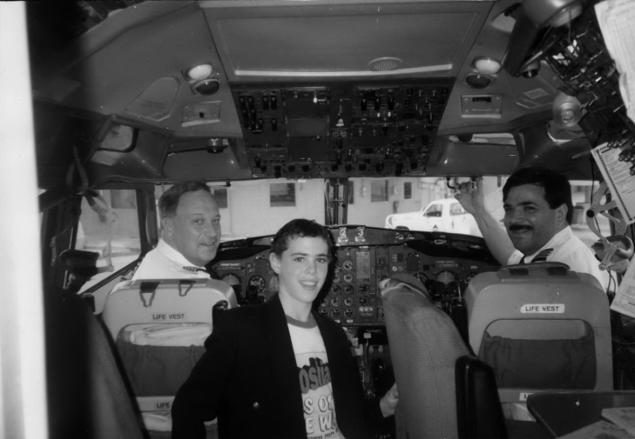
I like the shirt that he is wearing in the picture
Devorah you are a light in this dark world !!!
Devoree,
Keep Ari alive by protecting people from terrorism. Thank you for growing awareness and fighting for the safety of civilized people. May Hashem see your hard work and bring the geula quickly so we can all reunite and rejoice with our loved ones.
Goldy kurz
I really didn’t know all that. This article taught me a lot that I need to know.
Love you,
Mindy